

What maintenance practices are necessary to preserve the appearance and integrity of a shiny black powder coat finish over time?
Preserve a shiny black powder coat finish by cleaning it regularly with mild soapy water, a soft cloth or sponge, and clean water, while avoiding abrasive pads, aggressive chemicals and pressure that could mark the surface. Inspect the coating for chips, scratches, corrosion or damaged edges, and address defects promptly to prevent moisture and contaminants reaching the metal beneath.
Preserving a shiny black powder coat finish requires more than routine cleaning. The main practices are preventing mechanical damage, controlling exposure to corrosive conditions, keeping water from becoming trapped around the component, and repairing coating defects before they extend into the underlying metal. A maintenance plan should reflect the component’s location, handling, assembly method and level of exposure.
Prevent mechanical damage during use and handling. Powder coating is durable, but a glossy surface can show scuffs, impact marks and loss of gloss more readily than a textured finish. Protect coated parts from contact with bare steel, sharp edges, abrasive packaging and metal-to-metal movement during transport or installation. Use suitable separators, padding or lifting methods, and avoid dragging components across benches, floors or storage racks. Where parts are assembled together, check that brackets, fixings and moving interfaces cannot rub against the finish.
Control the surrounding environment. Salt, industrial pollutants, moisture and chemical vapours can gradually affect both the coating and the metal beneath it. Components exposed to coastal air, road spray, processing residues or high humidity need a more carefully planned maintenance regime than parts used indoors in a dry, controlled environment. Keep the finish away from prolonged contact with standing water, damp packaging and contaminated deposits. Where the design permits, provide drainage and ventilation so moisture cannot remain around joints, folded edges, recesses or fixing points.
Pay particular attention to edges, joints and fixings. These areas are more vulnerable because coating coverage can be more difficult to maintain around sharp transitions and assembled interfaces. During installation, avoid overtightening fixings or placing tools directly against the coated surface. Use compatible washers, gaskets or spacers where they prevent abrasion and reduce water traps. If dissimilar metals are joined, consider whether the assembly could encourage galvanic corrosion, particularly in a damp or contaminated environment.
Deal with damage using a controlled repair process. A chip or scratch should not simply be covered with an incompatible household paint. First establish the extent of the damage and whether the exposed metal shows signs of corrosion. Remove loose material using a method that does not spread the damage, prepare the affected area appropriately and use a repair product suitable for the powder-coated substrate and the conditions of use. A local repair may protect the metal, but it will not always reproduce the original gloss, colour depth or visual uniformity of a shiny black finish. For prominent components or widespread damage, professional assessment and recoating may be more appropriate.
Manage contact with chemicals. Oils, hydraulic fluids, solvents, cutting fluids, cement residues and other process contaminants should not be allowed to remain on the coating. Establish procedures for containing spills and identify substances used near the coated parts before installation. Chemical compatibility depends on the formulation of the powder coating, concentration, temperature and exposure time, so the coating specification or technical information should be consulted where regular chemical contact is expected.
Use a documented maintenance schedule. Record the component’s exposure conditions, installation date, cleaning and repair activities, and any recurring damage patterns. Review the coating after severe weather, construction work, changes in nearby processes or unusual chemical exposure. This helps distinguish normal surface soiling from loss of adhesion, corrosion or a coating-system problem, and allows repairs to be planned before the defect affects a larger area.
Where the finish is critical to appearance or the component is exposed to demanding conditions, ask the powder-coating specialist to confirm the appropriate coating specification, repair method and inspection criteria. Good maintenance cannot compensate for an unsuitable coating system, poor substrate preparation or incorrect application, so long-term performance also depends on selecting and applying the finish correctly at the outset.
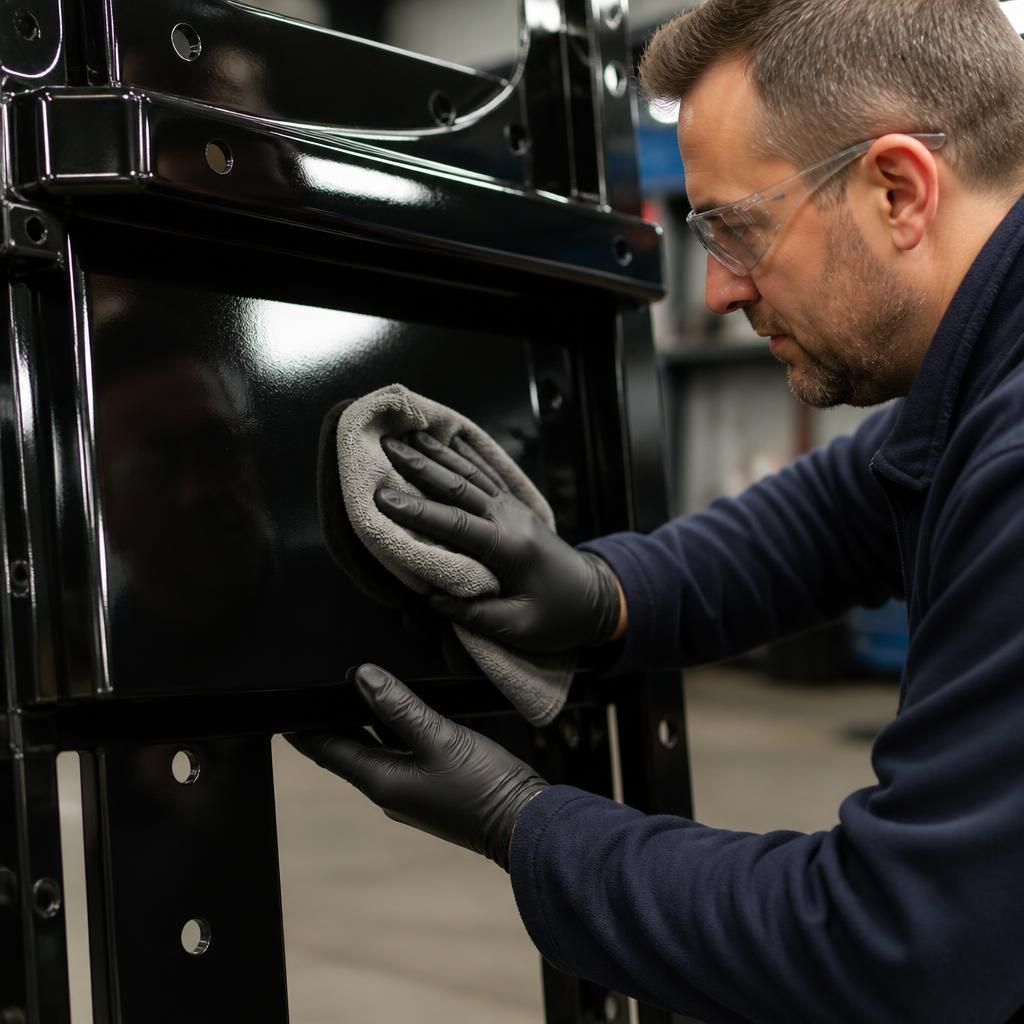
Do not treat a shiny black powder coat like automotive paint by applying polish, wax or cutting compound without checking compatibility first. Abrasive products can reduce the gloss, while some silicone- or wax-based products may leave residues that affect future repairs or recoating. If a surface treatment is being considered, confirm that it is suitable for the specific powder-coating system and intended service conditions.
For appearance-critical components, assess the finish under consistent lighting rather than relying only on touch. This makes it easier to distinguish removable deposits from genuine gloss loss, staining or surface damage, so corrective work can be based on the condition of the coating rather than on an unsuitable polishing attempt.