

What are the key considerations when selecting a powder colour paint for metal components?
When selecting a powder colour paint for metal components, assess the component’s operating environment, required corrosion and wear resistance, finish and colour requirements, substrate preparation, and the coating system’s suitability for the application process. Also consider colour matching, batch consistency, film thickness, curing requirements and any relevant industry or environmental specifications.
Selecting a powder colour paint for metal components involves more than choosing a shade from a colour chart. The specification should also match the powder chemistry to the component, accommodate its geometry and tolerances, define acceptable appearance limits, and provide the technical documentation needed for repeatable production.
Choose the powder chemistry for the component’s intended use. Different powder types have different characteristics, processing windows and limitations. A thermoset powder may be appropriate for many fabricated metal parts, while a thermoplastic coating such as nylon may be considered where the specification calls for particular resistance to impact, abrasion or chemicals. The choice should be based on the complete duty of the component rather than colour availability alone. Confirm that the proposed product is suitable for the substrate and any other materials joined to it, such as inserts, welds or bonded sections.
Assess the component’s design before approving the coating. Recesses, narrow channels, sharp edges, deep cavities and overlapping parts can affect powder coverage and appearance. Holes, threaded areas, bearing seats and mating faces may need masking or protection. Rack contact points also need to be positioned so that the component can be coated effectively without compromising important visible or functional surfaces. Discussing the drawing or representative parts before final selection can identify areas where the coating may affect assembly, electrical contact, movement or dimensional fit.
Set practical appearance criteria. A colour can look different depending on gloss level, texture, viewing angle, surrounding colours and lighting conditions. For that reason, approval should be based on an agreed sample or standard viewed under defined conditions, rather than on a screen image or an isolated verbal description. State which surfaces are critical, the acceptable level of visual variation, and whether small differences in texture, gloss or orange peel are permissible. This is particularly important where coated parts are assembled alongside other painted or finished components.
Check how the finish will be handled after coating. Powder-coated parts may be machined, assembled, packed, stacked or transported after application. The selected system should be compatible with these operations, including any required masking removal, touch-up procedure or protection of exposed edges. If the component will be fastened using threads, pressed into another part or assembled with tight clearances, the coating specification should be reviewed against those tolerances before production is authorised.
Review technical data, not just the colour reference. Request the product data sheet and confirm the recommended application conditions, cure schedule, storage requirements, film characteristics, test methods and limitations. Where components are safety-critical or subject to customer approval, retain the relevant declarations, test results and batch information. A clear specification should identify:
- the powder type and approved colour reference;
- the required gloss or texture category;
- the substrate and any restrictions on associated materials;
- the surfaces requiring masking or special handling;
- the agreed visual acceptance standard;
- the inspection and documentation requirements; and
- the procedure for dealing with repairs, rejected parts or future repeat orders.
Consider repeat supply and specification control. A colour used on recurring batches should be supported by a controlled reference, retained approval sample and consistent product identification. Avoid relying on descriptions such as “dark grey” or “satin black” without a defined standard. If the original powder becomes unavailable or the formulation changes, a replacement should be assessed against the approved reference before it is introduced into production. Keeping records of the selected product and approved appearance helps prevent uncertainty when different batches or coating providers are involved.
Account for masking, handling and inspection in the overall selection. A seemingly suitable powder may become impractical if it requires extensive masking, unusual racking or difficult inspection. These requirements can increase preparation time and the risk of handling marks or rework. They should therefore be considered alongside the powder’s technical properties when comparing options, particularly for components with complex geometry or several critical faces.
For a reliable decision, provide the coating specialist with the component drawing, substrate details, intended use, assembly tolerances, appearance standard and any customer or regulatory requirements. Representative parts or test panels can then be used to verify the proposed colour and finish before the specification is released for full production.
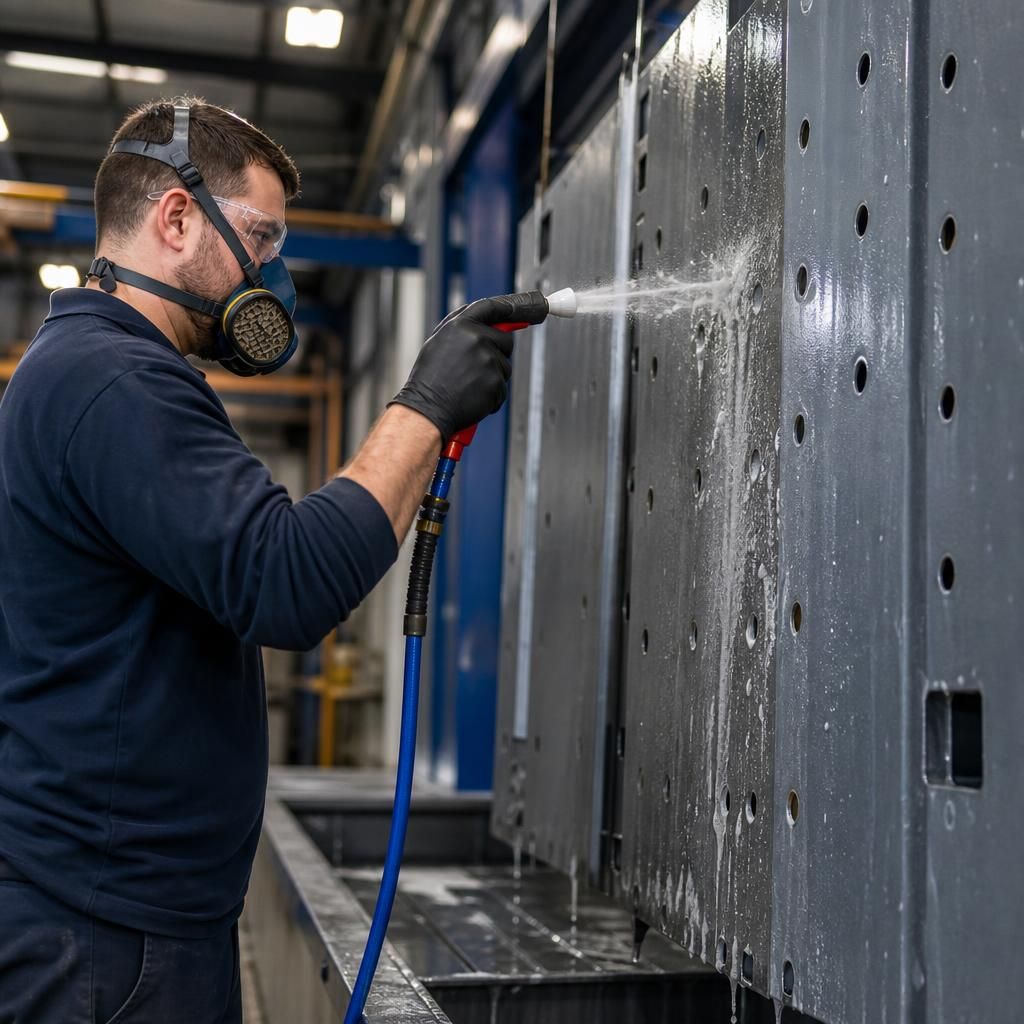
Surface preparation is a key consideration when selecting a powder colour paint for metal components because the substrate affects adhesion, corrosion protection and final appearance. Mild steel, galvanised steel and aluminium may require different cleaning and pre-treatment methods, and residues such as oil, mill scale, oxidation or welding contaminants can prevent the coating from performing as intended.
Confirm that the proposed powder system is compatible with the planned pre-treatment and the condition of the metal. Where components combine different substrates, the preparation process should address each material without creating an incompatible surface for the coating. This should be agreed before production, particularly for parts exposed to moisture, chemicals or outdoor conditions.