

What are the environmental benefits of using powder colour paint over other coating methods?
Powder colour paint can reduce environmental impact compared with many liquid coating methods because it is typically solvent-free, produces little or no VOC emissions during application, and allows unused powder to be collected for reuse. Its durable finish can also reduce the need for frequent recoating, lowering material use over a component’s service life.
Powder colour paint can offer environmental advantages over many liquid coating methods because it uses material efficiently, produces less coating-related hazardous waste and avoids the liquid waste streams associated with solvent-based applications. The overall benefit depends on the powder formulation, application equipment, curing process, pre-treatment and how waste is managed.
Efficient use of coating material
Powder is applied as a dry material and can be directed onto a grounded metal component using electrostatic attraction. This helps the powder adhere to the target surface rather than being carried away as airborne overspray. Suitable equipment can collect powder that does not reach the component, allowing it to be managed separately and, where quality controls permit, recovered for use. This can reduce the quantity of unused coating that becomes waste compared with an application method where excess liquid has to be discarded.
Material efficiency also depends on the shape of the component, the required film thickness, application settings and colour changes between batches. Recovered powder may not be appropriate for every specification, particularly where different colours or finishes have been mixed. A responsible process therefore considers both recovery potential and the quality requirements of the finished part rather than assuming that all overspray can be reused.
Less liquid and hazardous waste
Liquid painting can create waste in the form of leftover paint, contaminated thinners, solvent-soaked wipes, used filters and cleaning residues. Powder coating generally avoids the need to store and dispose of these liquid coating mixtures. It also produces a dry overspray stream that can be contained and handled through an appropriate waste procedure.
This does not mean that powder coating produces no waste. Contaminated powder, masking materials, filters, packaging and preparation residues still require correct disposal. Pre-treatment can also involve cleaning chemicals, conversion coatings or rinse water. The environmental assessment should therefore cover the complete preparation and coating operation, not just the powder itself.
Reduced solvent-related impacts
Compared with solvent-based liquid systems, powder coating can reduce the need to purchase, store and handle volatile cleaning and thinning products. This can lower the risks associated with solvent storage and reduce the volume of solvent-contaminated waste generated during routine production. The extent of the benefit varies according to the chosen pre-treatment system and the cleaning products used to maintain the coating line.
Potentially lower impact across the component’s life
A correctly specified coating can help metal components retain their protective and visual properties for longer, reducing the environmental burden associated with removing an existing finish and preparing the component for another coating operation. This is particularly relevant for manufactured parts used in demanding industrial, construction and automotive environments. The result depends on selecting a formulation and pre-treatment suitable for the component’s exposure conditions; an unsuitable coating can fail prematurely regardless of the application method.
Energy use must be included in the comparison
Powder coating requires an oven or other controlled curing system, so the energy used for heating and maintaining the cure temperature is an important part of its environmental profile. A comparison with liquid paint should consider the energy source, oven efficiency, batch loading, component mass and curing schedule rather than treating powder coating as impact-free.
Energy use can be managed through accurate cure control, efficient oven operation, suitable loading plans and avoiding unnecessary reheating. Powder should only be specified where its required cure conditions are compatible with the component and production process. A lower-temperature formulation may be appropriate in some cases, but it must be selected against the technical requirements of the part rather than on environmental claims alone.
How to assess the environmental benefit in practice
- Identify the coating material used, including its formulation and any relevant environmental documentation.
- Review how overspray, filters, contaminated powder and packaging are collected and disposed of.
- Include pre-treatment chemicals, rinse water and cleaning materials in the assessment.
- Measure or estimate curing energy alongside application and extraction requirements.
- Consider the expected service conditions and the risk of premature coating failure.
- Compare the complete process with the proposed liquid or alternative coating system, rather than comparing coating materials in isolation.
For manufacturers and fabricators, this whole-process approach gives a more accurate result than focusing on one environmental feature. A powder coating specialist can help assess the component, batch process, finish requirements and waste arrangements so that the selected colour paint provides an appropriate balance of environmental performance and technical protection.
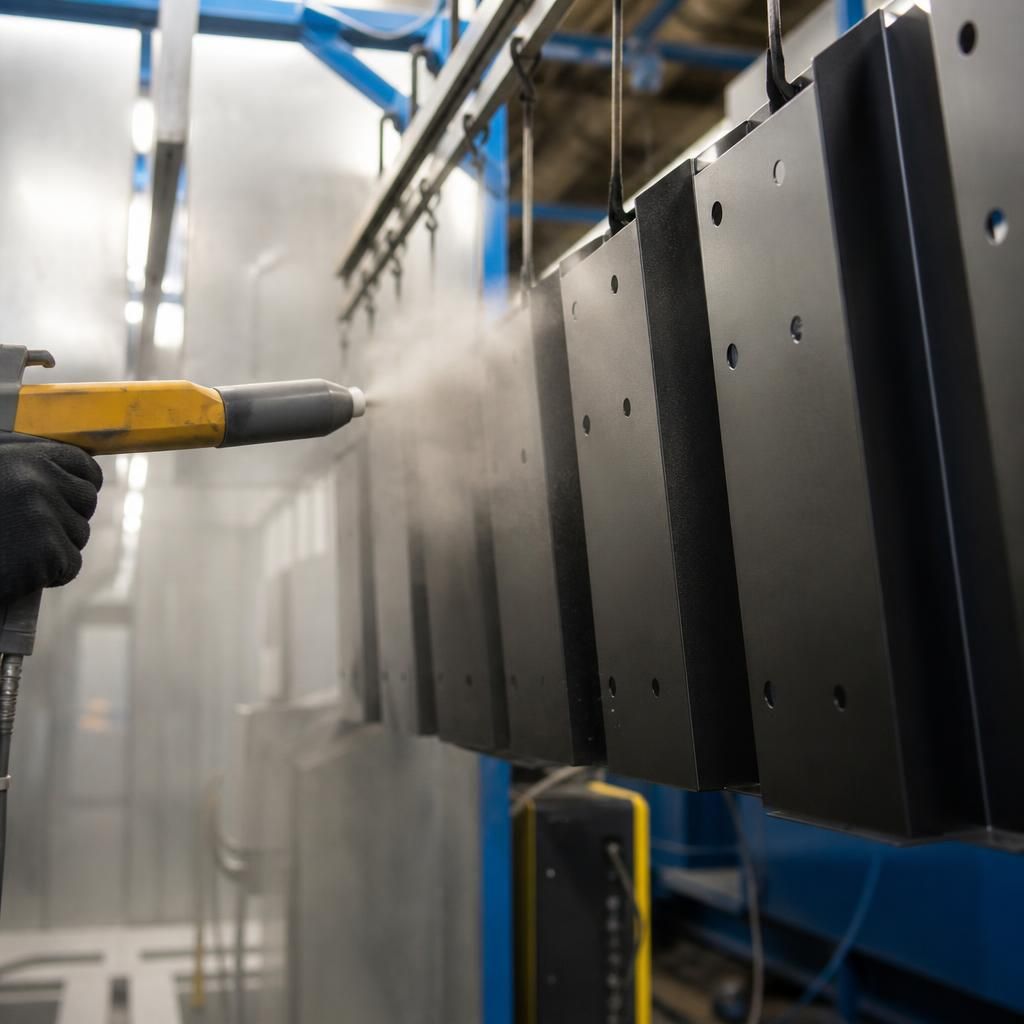
Powder colour paint can support lower environmental impact when it helps achieve a consistent finish first time. Controlled electrostatic application and curing can reduce the risk of uneven coverage, defects and rejected components, avoiding the additional powder, preparation materials and energy that rework would require.
This benefit depends on correct film thickness, component preparation, masking and cure control. For batch production, reviewing defect and rework rates alongside coating waste gives a more useful environmental comparison than assessing the powder formulation alone.