

How do clear and black powder coatings enhance the durability of metal components in industrial applications?
Clear and black powder coatings enhance metal component durability by forming a tough, bonded barrier that helps resist moisture, corrosion, abrasion and chemical exposure. Clear coatings preserve the underlying metal’s appearance, while black coatings provide the same protective layer with an opaque finish suitable for demanding industrial applications.
Clear and black powder coatings enhance the service life of metal components by combining a correctly prepared substrate with a continuous, cured polymer film. Their durability depends not only on colour, but also on the powder chemistry, coating thickness, pretreatment, curing conditions, part design and environment in which the component will operate.
Surface preparation is the foundation of durability. Oil, grease, mill scale, rust, dust and other contaminants can prevent the coating from bonding properly. Preparation may include cleaning, mechanical treatment and a suitable chemical pretreatment for the metal involved. This creates a more consistent surface and helps reduce the risk of premature peeling, under-film corrosion and weak adhesion. Areas such as welds, sharp corners, recesses and overlapping joints require particular attention because contamination or inadequate coverage in these locations can create early failure points.
The coating specification should match the working environment. A component used indoors in a relatively clean atmosphere has different requirements from one exposed to road salt, industrial pollutants, persistent moisture, sunlight or frequent handling. The selected powder system should therefore be assessed against the likely chemical exposure, temperature range, ultraviolet exposure and mechanical contact. Clear and black are appearance choices; the resin system and performance specification determine much of the resistance to the operating conditions.
Application quality affects the protective result. Powder is normally applied as a dry, electrically charged material so that it is attracted to the grounded metal component. Consistent application helps produce an even film, while suitable masking protects threads, mating faces, electrical contact points and other areas that must remain uncoated. Part geometry also matters. Recesses, internal corners and Faraday cage areas can receive less powder than exposed faces, so application settings and component handling must be controlled to achieve appropriate coverage.
Curing converts the applied powder into a functional coating. The coating must reach the required cure condition throughout the component, rather than simply appearing dry at the surface. Part mass, wall thickness, configuration and oven conditions can influence how heat reaches the metal. Insufficient curing may reduce adhesion and mechanical performance, while unsuitable curing conditions can affect appearance or coating properties. For batch work, consistent loading and repeatable process control are important because changes in component size and arrangement can alter the curing result.
Clear powder coatings are useful where the underlying metal, texture or finish is intended to remain visible. They can protect a decorative or prepared surface without replacing it with an opaque colour. This makes surface quality especially important: scratches, weld marks, discolouration and uneven preparation remain visible through a clear finish. A clear coating should therefore be specified with realistic expectations about transparency, gloss and the appearance of the substrate beneath it.
Black powder coatings provide an opaque finish and can give components a consistent visual appearance across different areas of a fabricated assembly. They are widely suited to industrial parts where a uniform black surface is required alongside protection. However, black does not remove the need for careful preparation or inspection. Surface defects, sharp edges, poor coverage and adhesion problems can still compromise performance, even when they are less obvious visually than they might be beneath a clear finish.
Component design can either support or limit coating durability. Sharp edges may receive a thinner film than broad, flat surfaces, while narrow gaps can retain cleaning chemicals or moisture. Drainage, access for preparation, suitable radii and avoidance of unsealed crevices can all help the finished component perform more reliably. Where two coated parts move against one another or are assembled under pressure, the specification should also account for abrasion, dimensional tolerances and areas where the coating may be damaged during installation.
Inspection should consider more than colour and gloss. A practical quality assessment may include visual checks for runs, pinholes, bare areas, contamination and uneven finish, together with checks appropriate to the agreed specification for film build, adhesion and cure. Edges, holes, welds and masked areas should be examined because these locations often reveal process problems that are not apparent on large exposed faces.
In service, both finishes benefit from removing dirt and deposits before they become established. Cleaning methods should be compatible with the coating and should avoid unnecessarily aggressive chemicals, abrasive tools or practices that could mark the surface. Damage that exposes the metal should be assessed promptly, particularly where the component is exposed to moisture or corrosive substances, since a local defect can allow corrosion to develop beneath the surrounding film.
For industrial metal components, the most durable choice is therefore the finish specified around the complete use case rather than colour alone. Clear is appropriate when the underlying appearance must remain visible; black is appropriate when an opaque, uniform finish is required. In either case, accurate preparation, controlled application, complete curing, suitable part design and inspection provide the basis for dependable long-term performance.
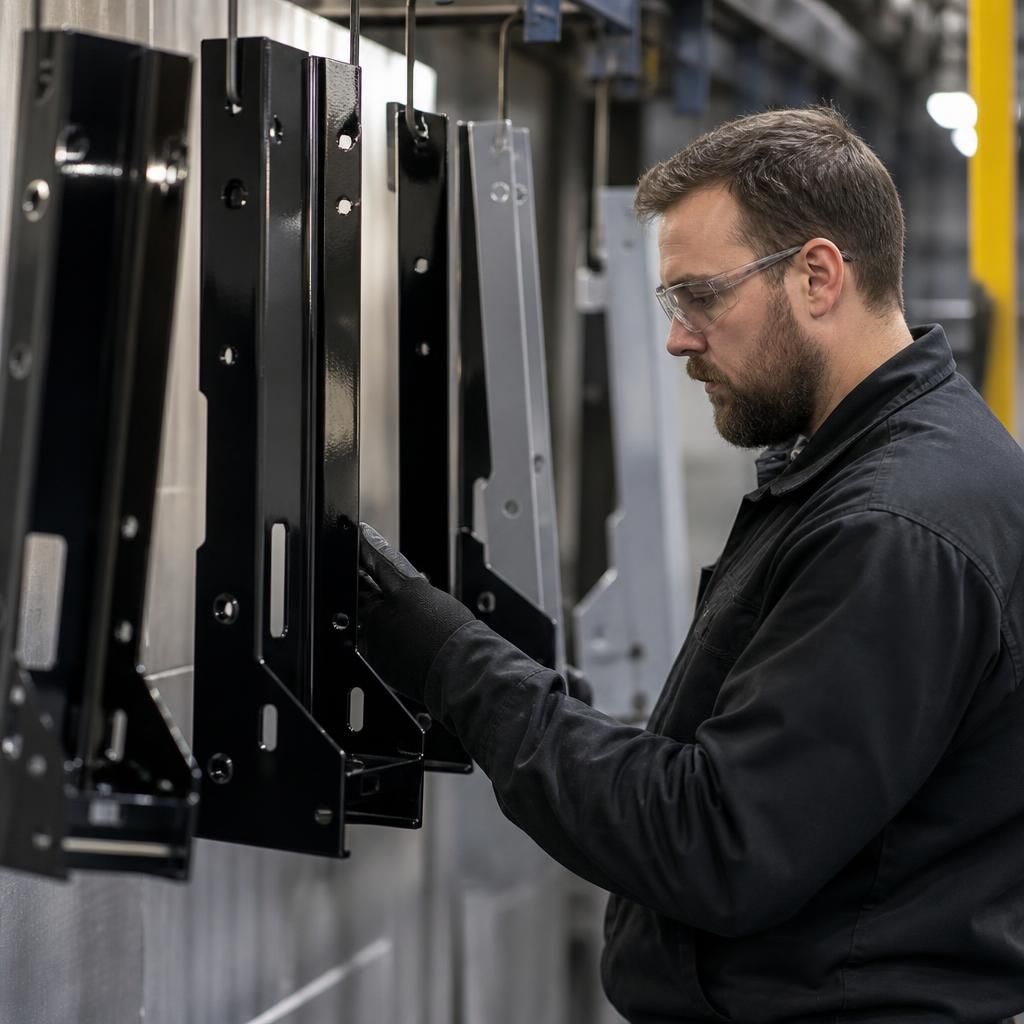
The durability of a powder-coated component also depends on compatibility between the coating system and the base metal. Aluminium, galvanised steel and previously treated surfaces can behave differently during preparation and curing, so the specification should account for the substrate rather than treating every component in the same way.
Galvanised parts may require suitable preparation to remove surface residues and manage gases released during heating, while aluminium may need treatment that supports reliable coating adhesion. If these issues are overlooked, bubbling, peeling or loss of adhesion can develop beneath an otherwise sound-looking clear or black finish. Identifying the metal, existing treatment and service conditions before coating helps ensure that the selected system supports long-term protection.