

What specific advantages do black protective powder coatings offer for automotive applications?
Black protective powder coatings give automotive metal parts a durable barrier against corrosion, abrasion, road salt and routine chemical exposure. They also provide a consistent, uniform black finish that improves appearance while helping protect components such as brackets, chassis parts, wheels and fabricated assemblies.
Black protective powder coatings offer automotive manufacturers a repeatable, hard-wearing and visually consistent finish for metal components. Their main advantages are controlled film build, strong resistance to handling and impact, reduced solvent use during application, and compatibility with the clean, understated appearance commonly required for automotive parts.
Consistent coverage across production batches
Powder coating is applied as a dry, electrostatically charged powder before being cured into a continuous film. This allows the coating process to be controlled closely across repeated components, helping manufacturers achieve consistent appearance and coverage from one batch to the next. Correct racking, grounding, masking and curing are important, particularly where parts have recesses, threaded sections, sharp edges or several joined surfaces.
Controlled application can also help avoid some defects associated with liquid coatings, such as runs, sags and uneven wet-film build. The final result is useful where brackets, housings, support parts or fabricated assemblies must look consistent when fitted together, even if they are produced in separate production runs.
Protection during manufacture, fitting and servicing
Automotive components are often handled several times before they reach the vehicle: during fabrication, transport, assembly and servicing. A properly cured powder film provides a robust surface that is less easily marked by normal contact with tools, fixtures and adjacent parts than many less durable finishes. This can help preserve the component’s appearance and reduce handling-related defects before installation.
For parts exposed to stone impact, vibration or repeated contact, the coating specification should be selected for the actual service conditions. Powder coating is not automatically suitable for every automotive location; the resin chemistry, pretreatment and film thickness all affect performance. Areas subject to severe impact, constant heat or aggressive fluids may require a specialist formulation and validation testing.
Design flexibility for visible and concealed parts
Black is available in different gloss levels and surface textures, allowing the finish to be matched to the role of the part. A smoother finish may suit visible trim or housings, while a textured finish can help disguise minor surface irregularities on fabricated components and provide a more technical appearance. The selected finish should not be treated as purely cosmetic: texture, film build and cure conditions can affect cleaning, masking and the way the coating covers edges and recesses.
Black can also provide a visually unified appearance across components manufactured from compatible metal substrates. This is useful for assemblies containing brackets, covers and structural pieces that need to appear as part of one design, although substrate preparation remains essential to prevent differences in surface profile or pretreatment from showing through.
Lower solvent use in the coating process
Powder coating is supplied without the liquid solvents used in conventional solvent-borne paint systems. This can reduce solvent-related emissions during application and avoids the need to manage liquid paint thinners in the same way. Overspray collection and recovery may also be possible in suitable automated systems, subject to the equipment and powder specification. These process benefits can be relevant to automotive manufacturers reviewing material handling, workplace controls and waste management.
They do not remove the need for appropriate extraction, personal protective equipment, powder handling controls or oven management. Environmental performance depends on the complete process, including pretreatment, curing energy, rejected parts and the end-of-life route for the coated component.
Electrical and functional considerations
Once cured, powder coatings generally form an electrically insulating layer. This can be useful on selected brackets, housings and support components where isolation from the substrate or reduced surface conductivity is required. It can also create a risk if an earth connection, bonding point or electrical contact must remain exposed. Designers should identify contact areas before coating so that they can be masked or treated correctly.
Similarly, black powder coating should not be specified solely because a part is used in an automotive environment. Exhaust-adjacent components, engine-bay parts and components exposed to sustained high temperatures need a coating system rated for those conditions. The coating supplier or finisher should assess the substrate, operating temperature, fluid exposure, salt environment, expected mechanical contact and required appearance before confirming the specification.
In practice, the strongest automotive case for black protective powder coating is where a metal part needs a repeatable finish that combines functional surface protection with controlled appearance and efficient production handling. Proper cleaning, pretreatment, application and curing are what allow those advantages to be achieved; the black colour itself does not compensate for an unsuitable coating system or poorly prepared metal.
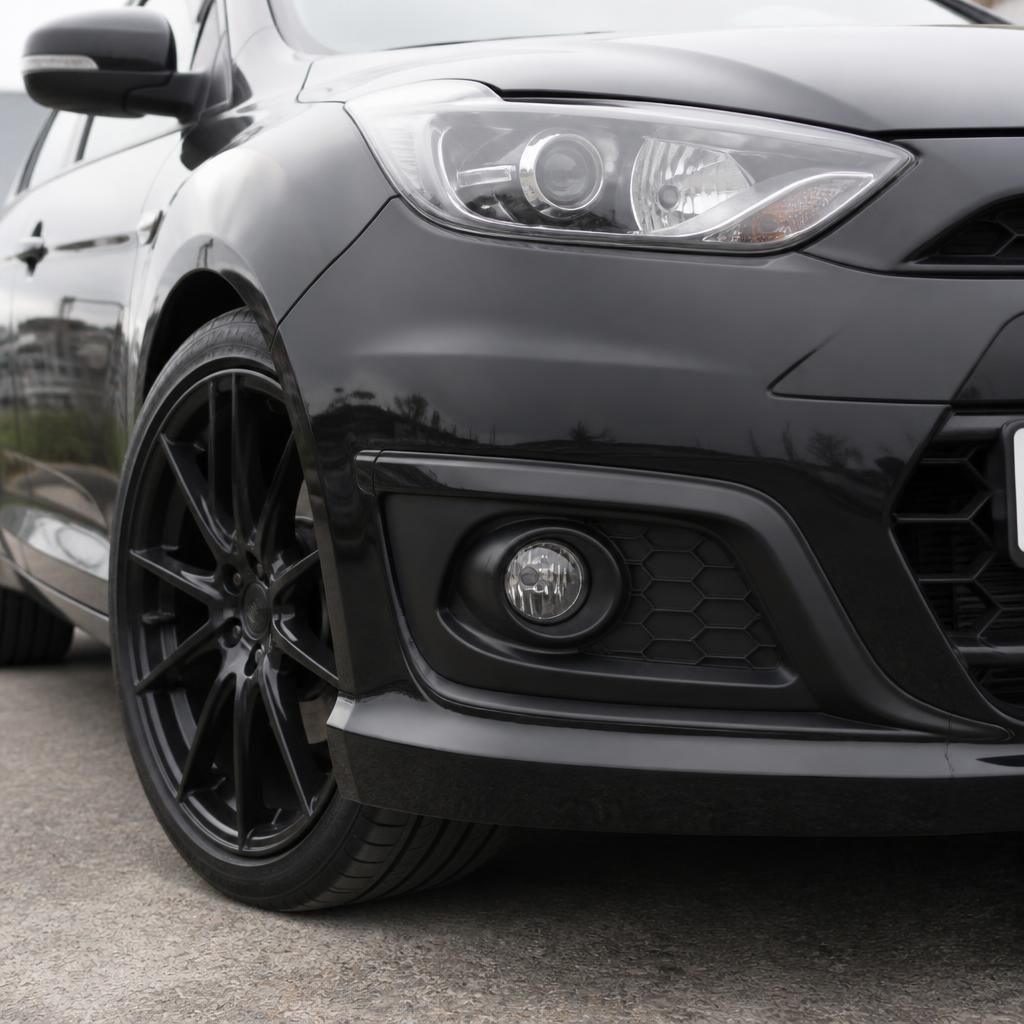
Black protective powder coatings can help automotive components retain a consistent appearance during outdoor exposure, provided the formulation is selected for the required level of ultraviolet and weathering resistance. This is particularly relevant to visible brackets, housings, wheels and exterior metal assemblies, where fading, chalking or loss of gloss can make parts appear mismatched over time. The appropriate resin and finish should be confirmed against the component’s exposure conditions, as not every black powder coating is intended for prolonged sunlight or weather exposure.
Discuss your automotive black protective powder coating requirements
Discuss your automotive component requirements with a powder-coating specialist to assess the substrate, operating conditions and suitable black coating specification. Provide details of the parts, expected exposure and required finish to support an informed coating recommendation.