

What maintenance is required to ensure the longevity and effectiveness of black protective powder coatings in industrial environments?
Maintaining black protective powder coatings requires regular inspection, gentle cleaning and prompt repair of chips, scratches or areas where corrosion may begin. Use non-abrasive methods and suitable cleaning agents, while checking joints, edges, fixings and exposed surfaces for mechanical damage or chemical attack so defects can be addressed before they spread.
Maintaining black protective powder coatings in industrial environments requires a planned, risk-based regime covering chemical exposure, abrasion, moisture, handling and any changes to the operating process. The objective is not simply to keep the surface presentable; it is to preserve the coating’s barrier function so that the underlying metal remains protected throughout the component’s service life.
Set the maintenance approach according to the working environment. Components exposed to indoor humidity, outdoor weather, road contaminants, salt, process chemicals, abrasive dust or frequent washdown do not all require the same controls. The maintenance plan should identify the substances and conditions affecting each coated item, including chemical concentration, contact time, temperature and whether contaminants can collect in joints, recesses or horizontal areas. Changes to production chemicals, cleaning products or operating temperatures should trigger a review of coating compatibility.
Control chemical exposure. Powder coatings can be affected by prolonged contact with aggressive chemicals even when brief contact is tolerated. Spills should therefore be removed in accordance with the site’s chemical-handling procedures rather than being left to evaporate or dry on the surface. Cleaning agents should be checked for compatibility before use, particularly where they contain strong acids, alkalis, solvents or abrasive additives. Where a coating is exposed to a process fluid, the maintenance record should identify the fluid and the manufacturer’s suitability information for the specific coating system.
Prevent avoidable mechanical damage. Coated parts should be lifted, stacked and transported in a way that prevents metal-to-metal impact and rubbing. Suitable separators, clean supports and non-abrasive contact points can reduce scuffing during storage or internal movement. Fixtures, clamps, conveyors and access equipment should also be checked for areas that repeatedly contact the coating. If damage occurs in the same location, changing the handling method or adding protection is usually more effective than repeatedly repairing the surface.
Manage water and contamination traps. Effective drainage helps prevent standing water from remaining against the coating, especially around folded sections, fasteners, seams and sheltered interfaces. Where practical, components should be positioned so that water, process residues and cleaning fluids can run off rather than collect. Deposits in concealed areas can retain moisture and contaminants, so the maintenance plan should include those areas rather than concentrating only on visible faces.
Pay particular attention to interfaces and fixings. Powder-coated components may be connected to uncoated steel, stainless steel, aluminium, rubber or treated timber. In damp or contaminated conditions, dissimilar materials in electrical contact can contribute to galvanic corrosion. Isolation washers, compatible sealants or suitable joint detailing may be required, depending on the design. Fasteners should be replaced with compatible items if their corrosion or movement could damage the surrounding coating. Care is needed when tightening or removing fixings so that tools do not score the finish.
Account for heat, sunlight and process changes. Black finishes absorb more solar and radiant heat than lighter colours, so coated parts in direct sunlight or near hot equipment may experience higher surface temperatures. The coating system must remain within its specified service conditions, and repeated heating and cooling should be considered where components are moved between hot, cold or wet areas. New heat sources, insulation changes or process alterations should be assessed before they are introduced.
Keep coating records. A useful record should identify the component, coating specification, exposure conditions, cleaning products, repairs, recurring damage and any changes in appearance or performance. Photographs can help compare the same locations over time, while trend information can show whether deterioration is linked to a particular process, location or handling stage. This supports planned intervention and helps distinguish isolated operational damage from a wider coating-system issue.
Use an appropriate repair decision. Minor local damage may be suitable for preparation and touch-up using a compatible repair material, but a repair should not conceal active corrosion, contamination or poor adhesion. Larger areas, repeated failures, widespread chalking or coating separation may require assessment and preparation of the affected component before recoating. The repair method should match the original coating’s performance requirements; an incompatible product can create a weak boundary or a misleadingly sound appearance.
For critical assets, maintenance requirements should be agreed at the specification stage and reviewed after installation. The coating’s intended environment, substrate preparation, film build, repair method and acceptable condition should be recorded so that future maintenance decisions are based on the actual system rather than appearance alone.
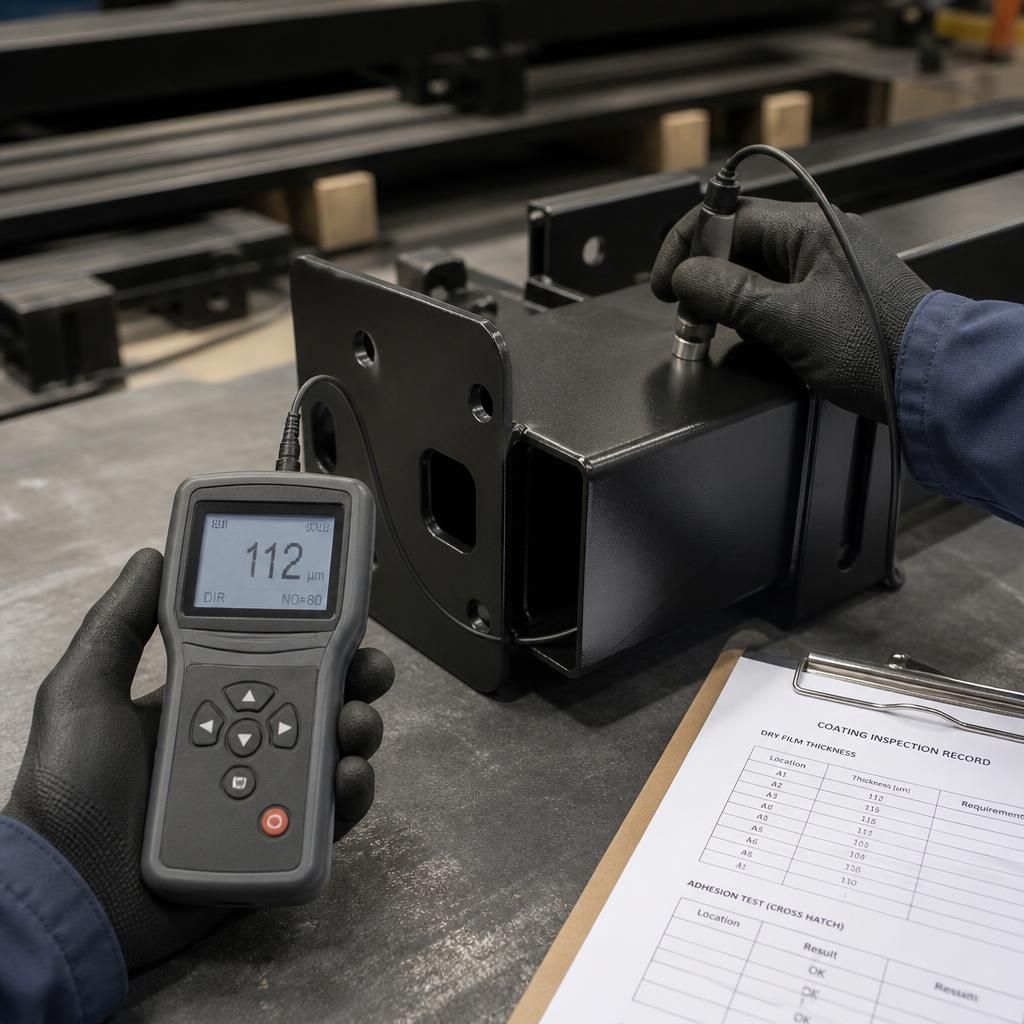
Visual inspection does not always reveal a loss of protective performance. Where the application is critical or deterioration is suspected, maintenance assessments may include dry-film thickness measurements, adhesion testing or suitable checks for discontinuities. The method should match the coating system, substrate and exposure conditions, and any test location should be repaired where the test has disturbed the finish.
These checks are particularly useful after a significant impact, unusual chemical exposure, process change or repair. Comparing results with the original coating specification can help determine whether the surface remains serviceable or needs more extensive preparation and recoating. A sound-looking black finish should not be treated as proof that the coating barrier is still intact.