

What maintenance is required for black protective powder-coated surfaces to ensure longevity?
Maintain black protective powder-coated surfaces by inspecting them regularly, cleaning with mild detergent and water, and removing contaminants such as salt, oils and industrial deposits before they accumulate. Avoid abrasive tools and harsh chemicals, and arrange professional assessment of chips, scratches or exposed metal so local damage does not develop into corrosion.
Longevity of a black protective powder-coated surface depends on controlling the conditions that affect the coating, not simply keeping it visually clean. Maintenance should combine suitable handling, protection from prolonged moisture and chemicals, prompt control of mechanical damage, and records of the coating’s condition so that deterioration can be addressed before the substrate is affected.
Manage moisture and drainage
- Prevent water from remaining in recesses, joints, folded sections or around fixings. Poor drainage can keep the coating and the underlying metal damp for extended periods.
- Check that designed drainage paths remain clear and that components are positioned so water can run off rather than collect.
- Give particular attention to interfaces between coated parts and other materials, where trapped moisture can contribute to corrosion or staining.
Where components are installed outdoors or in humid industrial areas, the surrounding design is part of the maintenance strategy. Seals, gaskets and jointing materials should remain in good condition, while damaged sealant should be replaced with a product compatible with the coating and the substrate.
Reduce mechanical and thermal stress
- Use suitable lifting, storage and handling methods so coated parts are not dragged across hard surfaces or placed against sharp edges.
- Use protective spacers or non-abrasive supports when stacking components, particularly where their weight could mark the visible face.
- Prevent repeated impact from tools, pallets, fasteners or adjacent metalwork during installation and subsequent servicing.
- Consider heat exposure when components are installed near engines, furnaces, exhausts or other hot equipment. The coating system should be appropriate for the actual operating temperature, including temperature cycling.
Black finishes can show scuffs, rub marks and surface changes more readily than some lighter colours, so handling controls are important even when the coating remains firmly bonded.
Control chemical exposure
Maintenance teams should identify the substances that may contact the coated component during production, storage and use. Cutting fluids, solvents, hydraulic oils, acidic residues, alkaline materials and cleaning agents can affect appearance or coating performance if they are incompatible with the coating system. Safety data and the coater’s care guidance should be checked before introducing a new chemical, disinfectant or treatment.
Where chemical contact is part of normal operation, review the exposure conditions rather than relying solely on the coating colour or appearance. Concentration, temperature, contact time and whether the substance can become trapped against the surface all influence the risk.
Protect edges, fixings and interfaces
Edges, drilled holes, cut-outs, weld areas and fixing points are often more vulnerable than broad, flat faces because coating coverage may be thinner or interrupted. During installation, avoid enlarging holes or forcing fasteners in a way that damages the surrounding finish. Dissimilar metals should also be assessed at contact points, especially in damp or chemically active environments, because galvanic effects may cause corrosion at the interface.
Any repair material must be compatible with the original powder coating, the substrate and the service conditions. A cosmetic marker or unsuitable liquid paint may conceal a defect without restoring the required protective performance. For significant damage, preparation, corrosion treatment, colour matching and recoating should be specified by a competent coating professional.
Keep a maintenance record
For industrial assets, record the component location, coating system where known, installation conditions, chemicals encountered and any repair work. Compare observations over time rather than assessing appearance in isolation. Changes such as loss of gloss, chalking, blistering, lifting at edges, staining beneath fixings or repeated marking can indicate that the service environment or handling method needs attention.
When a coating is exposed to severe industrial, marine, high-temperature or high-traffic conditions, the maintenance plan should be based on the actual environment and the powder manufacturer’s technical guidance. This approach helps distinguish normal cosmetic wear from signs that the protective function of the coating may be declining.
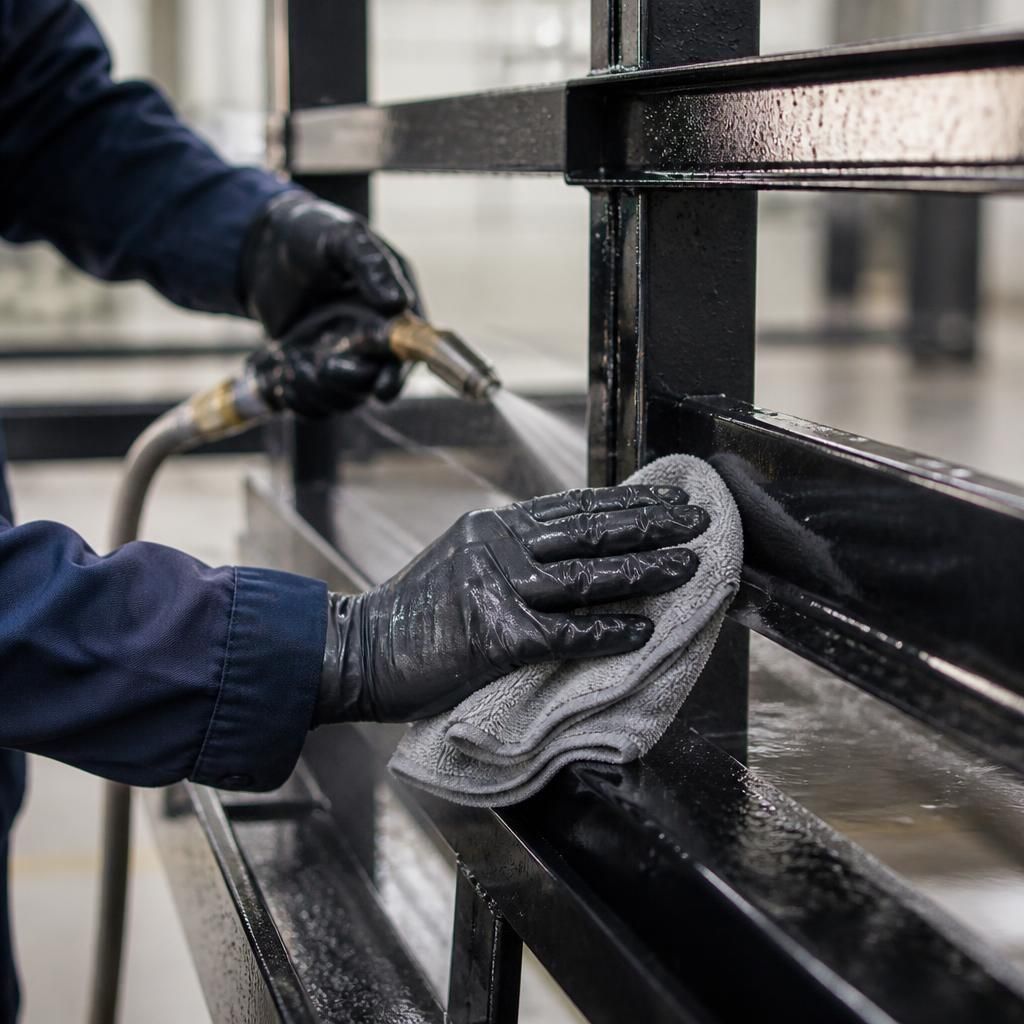
Cleaning equipment can affect the coating as much as the cleaning solution. Avoid directing high-pressure water, steam or concentrated spray at edges, joints, fixings and existing chips, as force can drive moisture beneath a weakened coating and worsen lifting. Use a controlled spray and a soft, non-abrasive cloth or brush, then allow the surface to drain and dry. If pressure washing is necessary in an industrial setting, confirm the suitable pressure and method against the coating system’s care guidance first.
Discuss maintenance requirements for your black protective powder-coated surfaces
Discuss the maintenance requirements for your black protective powder-coated surfaces with a specialist to identify suitable cleaning methods, inspection points and repair considerations. Provide details of the component, operating environment and any substances it encounters so the guidance can be matched to its service conditions.