

What specific preparation steps are necessary to ensure optimal adhesion and finish for black powder coated sheet metal?
Optimal adhesion and finish on black powder coated sheet metal depend on thorough cleaning, degreasing and removal of rust, mill scale, oxides and existing coatings before application. The sheet must then be suitably pre-treated, completely dry, free from contamination, and carefully masked or plugged where coating is not required before inspection and curing.
Optimal adhesion and finish on black powder coated sheet metal depend not only on surface preparation, but also on part design, handling, racking, powder selection, application control and curing. These steps determine whether the coating reaches all required areas, forms an even film and develops the intended hardness and appearance without defects such as pinholing, cratering, runs or uneven gloss.
Confirm the substrate and specification first. Identify the sheet metal type, thickness, previous treatment and intended service environment before coating. Mild steel, galvanised steel, aluminium and previously coated components can require different treatment and powder systems. The specification should define the required black shade, gloss level, texture, film thickness, corrosion performance and areas that must remain uncoated. It should also identify whether the component will be exposed to weather, chemicals, abrasion, heat or frequent handling.
Review the component design before it reaches the coating line. Tight folds, deep returns, narrow channels and overlapping sections can restrict powder access and make curing less uniform. Hollow or enclosed sections should have suitable drainage and venting. Without adequate vents, trapped air or moisture may expand during oven heating and cause pinholes, blistering or other surface defects. Drainage holes also help prevent liquids collecting inside the component during processing.
Control edges, corners and welds. Very sharp edges can receive less effective coverage than adjacent flat areas because powder tends to pull away from the edge during application and curing. Where the design permits, a small radius or softened edge helps produce more consistent coverage. Welds should be continuous where required, smooth and free from spatter. Porous welds, trapped contaminants and poorly finished joints can release gas in the oven, leading to pinholes or bubbles in the black finish. Weld dressing should be consistent with the required appearance, since uneven grinding marks may remain visible beneath a smooth or high-gloss coating.
Remove temporary fabrication materials. Adhesive labels, marker residues, protective films, cutting fluids, silicone-based products and unsuitable lubricants can interfere with coating performance. Silicone contamination is particularly troublesome because it may cause craters or areas of poor wetting that are difficult to correct. Components should therefore be handled with clean equipment and kept away from sources of oil, dust and other airborne contamination after preparation.
Allow for material-related gas release. Cast, porous, heavily welded or previously treated metal may release gas as it heats. A controlled pre-bake or suitable outgassing procedure may be considered where the substrate and powder system allow it. This is a process decision rather than a universal step: excessive heating can affect dimensions, surface condition or the performance of the selected powder. A trial component is useful when the metal type, fabrication method or coating history is unusual.
Plan racking and electrical contact points. Parts need secure support throughout spraying and curing, with sufficient spacing to allow the powder cloud to reach the visible faces and recessed areas. The contact point must provide a reliable earth path for electrostatic application. Poor contact can reduce transfer efficiency and produce weak or uneven deposition. Contact marks should be placed in an area that will be hidden, trimmed or otherwise acceptable, while still supporting the component safely without distortion.
Racking should also prevent parts touching one another in the oven. Contact between wet powder surfaces can damage the finish, and inadequate spacing may create shaded areas with less consistent heating. Large or flexible sheet components may need additional support to limit sagging or movement during the curing cycle.
Choose a powder suited to the application and appearance requirement. Black is not a single finish: different formulations can provide varying levels of gloss, texture, weather resistance, chemical resistance and hardness. Interior and exterior components may require different powder chemistries. A smooth black finish will show dents, grinding marks and uneven welds more readily than a textured finish, while a textured coating can alter the apparent depth and uniformity of the colour. The selected product should be compatible with the substrate, pretreatment and specified service conditions.
Apply the powder consistently. Gun settings, spray distance, line speed, powder flow, voltage and part geometry all affect film build. Excessive film thickness can obscure detail, create uneven texture or contribute to curing problems. Insufficient deposition may leave weak coverage, especially on edges, corners and recessed features. Operators should check the powder application across representative surfaces rather than judging the finish from one easily accessible face.
Electrostatic settings may need adjustment for deep recesses, Faraday cage areas and complex folds. Excessively high voltage can cause back-ionisation, which appears as roughness, pinholes or a disturbed surface. Consistent earthing, appropriate spray technique and controlled powder recovery practices help limit these defects.
Use the correct curing schedule for the actual metalwork. Powder cures according to the part’s metal temperature and the product manufacturer’s specified time and temperature, not simply the oven display setting. Heavy sections may take longer to reach the required temperature than thin sheet, while different component loads can change heat transfer. Under-curing may leave the coating soft or poorly bonded; over-curing can alter colour, gloss and finish. The curing profile should therefore be verified on representative parts, particularly where thicknesses or component shapes vary significantly.
Inspect before releasing the batch. Quality checks should cover colour and gloss consistency, visible contamination, coverage of edges and recesses, coating thickness, cure and adhesion. Adhesion testing may be appropriate for the specification, while a visual inspection under consistent lighting can identify craters, pinholes, scratches, orange peel and areas of uneven texture. Dimensions, masked interfaces and contact areas should also be checked where the powder build could affect assembly.
For repeat production, record the material, powder system, application settings, oven profile, rack arrangement and inspection findings. This creates a practical reference for future batches and helps distinguish a substrate issue from an application or curing issue. Where the component design or coating requirement is complex, discussing these details with a specialist powder coating provider before fabrication can prevent avoidable rework and help establish a suitable preparation and process specification.
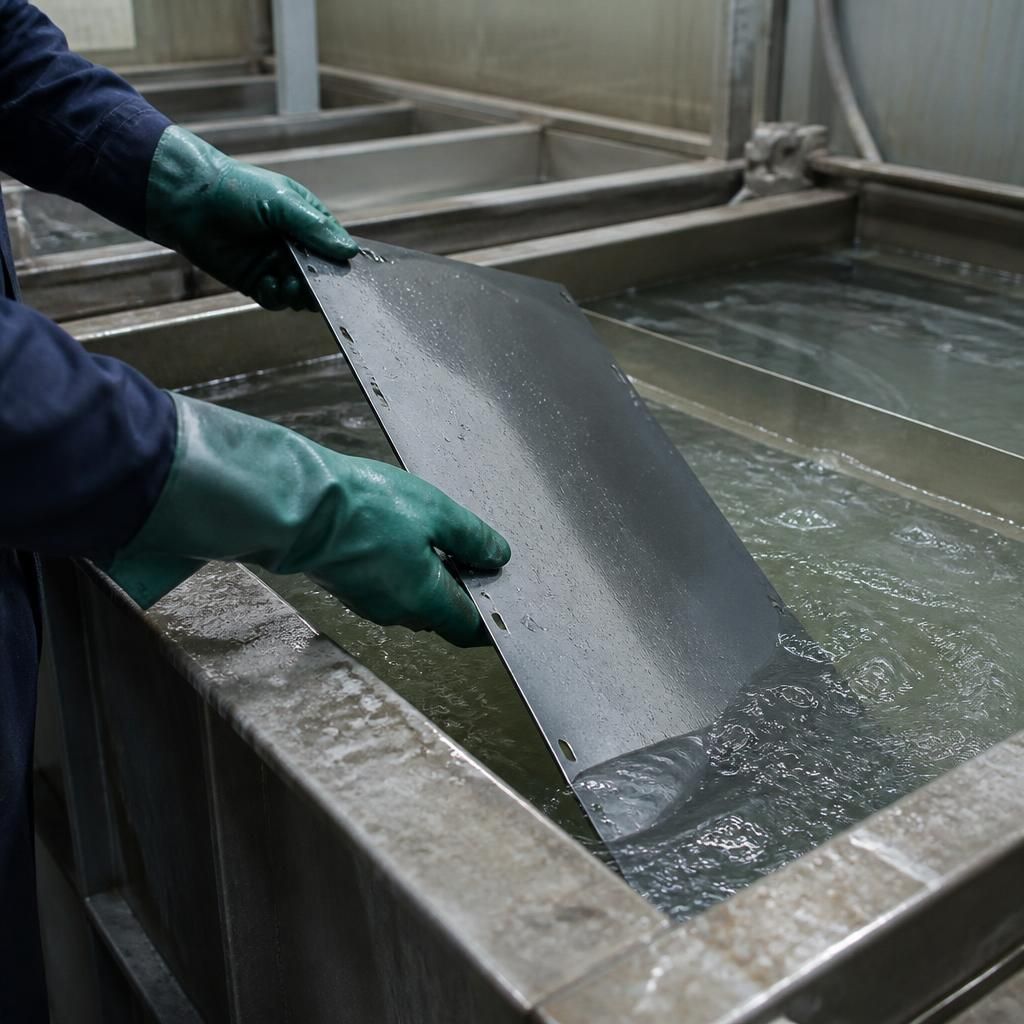
Chemical pre-treatment is a critical stage between cleaning and powder application. Once contaminants and oxides have been removed, the sheet metal may require a substrate-appropriate conversion treatment to improve the bond between the metal and the powder coating, while also supporting corrosion protection beneath the black finish.
The treatment must match the material, whether mild steel, galvanised steel or aluminium, and should be followed by controlled rinsing where required. Residual chemicals or rinse deposits can cause poor adhesion, staining or surface defects, so the metal must be thoroughly dried before powder is applied. The correct pre-treatment sequence should be confirmed against the coating specification and the sheet metal supplier’s requirements.
Discuss your black powder coated sheet metal preparation requirements
Discuss your black powder coated sheet metal requirements with a specialist, providing the material, component design, intended environment and finish specification. This allows the preparation and coating process to be considered before production begins.