

What are the key benefits and applications of choosing black powder coated sheet metal for industrial purposes?
Black powder-coated sheet metal provides a tough, consistent finish that improves resistance to corrosion, abrasion and everyday industrial wear while giving components a uniform appearance. It is used for equipment enclosures, panels, guards, cabinets, brackets and fabricated parts across manufacturing, construction, automotive and other industrial applications where both protection and presentation matter.
Black powder coated sheet metal combines a formed steel or aluminium substrate with a dry, heat-cured coating. Its main industrial benefits are repeatable surface quality, design flexibility, straightforward cleaning and a finish that can be specified for the environmental conditions in which the metal will be used. The black colour is an appearance choice rather than a separate protective technology, so the powder chemistry, surface preparation and curing conditions remain important.
Key benefits for industrial use
- Consistent finish across batches: Powder application can produce an even colour and surface texture across multiple parts when the metal is prepared and cured under controlled conditions. This is useful where components are manufactured in batches and need to look consistent when assembled.
- Choice of surface texture: Black coatings can be specified in finishes such as smooth, textured or fine-textured, subject to the selected powder system. Texture can influence the visual character of a part and may help disguise minor handling marks that would be more noticeable on a high-gloss surface.
- Good design flexibility: Coated sheet can be used for folded profiles, formed covers and fabricated assemblies rather than only flat panels. This allows the finish to be incorporated into practical designs without relying on a separate wet-painting stage after installation.
- Simpler routine cleaning: A correctly selected and fully cured coating normally provides a sealed, non-porous surface that can be cleaned using suitable methods for the coating specification. This is valuable on equipment installed in workshops, plant rooms and other areas where dust or general industrial residue may accumulate.
- Reduced liquid overspray and solvent use: Powder coating is applied as a dry powder rather than as a solvent-borne liquid paint. Unused powder may be recoverable in suitable application systems, although the environmental performance depends on the powder, preparation chemicals, curing energy and waste controls used for the particular job.
- Useful visual identification: Black is widely used where a neutral, unobtrusive appearance is required or where coated parts need to coordinate with machinery, building fittings or other metalwork. Different gloss levels and textures can help distinguish external faces, access sections or separate product ranges.
Typical industrial applications
Black powder coated sheet metal is commonly selected for metalwork that must combine a controlled appearance with a practical, cleanable surface. Examples include ventilation and air-handling covers, plant-room access panels, electrical and control-system housings, machine bases, shelving components, agricultural equipment panels and internal transport fittings. It is also used for architectural metalwork and commercial fit-outs where dark metal surfaces are required on trims, screening, service covers or structural infill panels.
In manufacturing, the material is suitable for fabricated covers and guards around production equipment, provided the chosen coating is compatible with heat, oils, cleaning products and other substances encountered in service. Construction-related uses can include service enclosures, plant housings and metal elements within commercial or industrial buildings. Automotive and transport applications may include interior panels, brackets, covers and other formed parts, with the specification determined by exposure, temperature and contact requirements.
Important specification considerations
The best result depends on matching the coating system to the substrate and operating environment. Indoor dry conditions may require a different powder from outdoor exposure, high humidity, frequent washing or contact with industrial chemicals. Polyester-based systems are often considered for exterior use, while other chemistries may be selected for particular indoor or chemical-resistance requirements. The correct choice should be confirmed against the powder manufacturer’s technical data rather than inferred from the black colour alone.
Fabrication sequence also affects the result. Cutting, drilling, welding and forming after coating can damage the finished surface or leave exposed edges, so parts are commonly prepared and fabricated before they are sent for coating. Weld spatter, oil, scale and fabrication residue must be removed, and the pre-treatment must suit the metal being coated. Where a design includes concealed faces, threaded holes or close-fitting joints, these areas should be reviewed in advance because powder adds a measurable film thickness and may affect assembly tolerances.
For industrial projects, the specification should therefore identify the base metal, part dimensions, intended environment, required gloss or texture, masking points and any performance requirements such as chemical, temperature or outdoor exposure resistance. A specialist powder coater can use this information to assess whether black powder coating is appropriate and whether the parts should be supplied in batches, collected for preparation and coating, or returned for assembly within the wider manufacturing process.
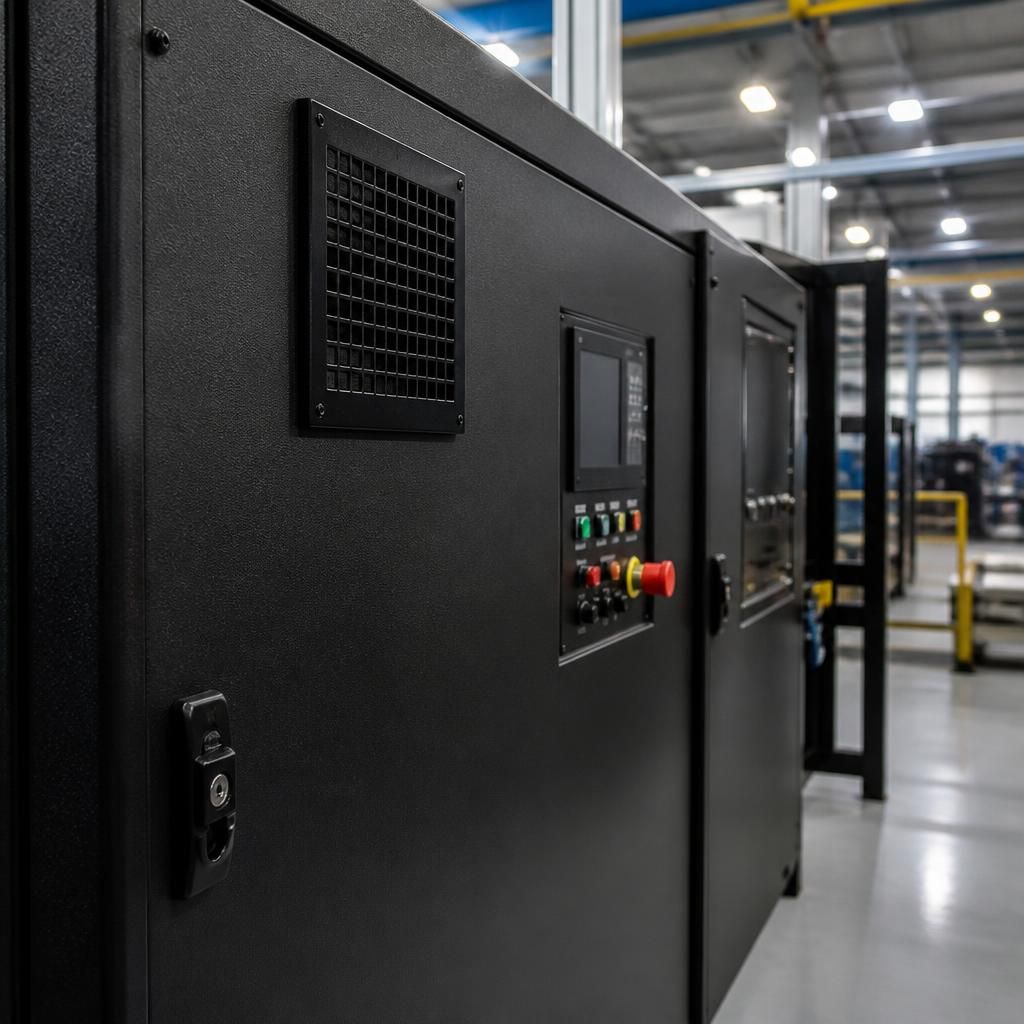
Black powder coating can serve a visual function as well as a protective one. Where a low-gloss or fine-textured finish is specified, it can reduce distracting reflections from equipment housings, machine guards and control-panel surrounds compared with a highly reflective surface. This may help keep openings, indicators and access points visually distinct in environments with strong artificial lighting.
The required appearance should be agreed alongside the part’s practical use. A matt, smooth or textured black finish will produce different levels of reflection and may suit different areas of the same assembly. For this reason, the coating specification should identify the required gloss and texture rather than referring to “black” alone.
Discuss Your Black Powder Coated Sheet Metal Requirements
Discuss your sheet metal requirements with a powder-coating specialist, including the substrate, component dimensions, intended environment and finish specification. This information helps determine whether black powder coating is suitable for the application and how the parts should be prepared.