

What maintenance is required to prolong the lifespan of black powder coated metal sheets?
Prolong the lifespan of black powder coated metal sheets by cleaning them with a mild detergent and soft cloth, inspecting regularly for scratches or corrosion, and repairing any coating damage promptly. Avoid abrasive tools, harsh chemicals and prolonged exposure to standing water, which can weaken the finish and allow corrosion to develop.
Maintaining black powder coated metal sheets involves controlling their exposure, protecting vulnerable edges and fixings, and addressing coating deterioration before the metal substrate is affected. The coating itself is durable, but its service life depends on the surrounding environment, installation details and the type of stresses imposed on the sheet.
Control the operating environment
- Prevent contact with materials that can attack the finish, including cement residue, mortar, plaster, concentrated salts, solvents and incompatible sealants.
- Where sheets are used in industrial or coastal environments, assess exposure to airborne chemicals, salt deposits, moisture and abrasive dust. These conditions may require a more closely managed maintenance plan than an indoor, low-contamination application.
- Keep the coating away from continuous heat sources, flames and hot process equipment unless the coating system has been selected for that temperature range. Excessive heat can cause colour change, loss of gloss or premature breakdown of the binder.
- Reduce repeated impact from tools, moving equipment and loose materials. A powder coating can be damaged by sharp or heavy contact even when the surrounding surface remains intact.
Protect edges, holes and fixing points
Cut edges, drilled holes, folded sections and areas beneath fasteners deserve particular attention because the coating may be thinner, interrupted or mechanically stressed at these locations. During installation, use suitable fixings, washers and protective interfaces where required, and avoid overtightening, which can chip the finish or distort the sheet. Replace damaged or deteriorated fixings rather than allowing rusting hardware to contaminate the coated surface.
Ensure that sheet joints, overlaps and formed details do not trap moisture or debris. Good drainage and ventilation help the metal dry between periods of exposure. Where the design permits, avoid crevices in which water can remain against an edge or fixing for extended periods.
Manage contact with other materials
Some metals and building materials can create compatibility problems when they remain in damp contact with powder coated steel or aluminium. Isolating washers, gaskets or other suitable barriers may be needed between dissimilar metals, particularly where an electrolyte such as rainwater or condensation is present. Sealants and tapes should also be checked for compatibility with the coating; products containing aggressive solvents or plasticisers can stain, soften or otherwise affect the finish.
Do not stack coated sheets directly against wet timber, treated materials or contaminated packaging. During storage, provide dry, ventilated conditions and prevent water from becoming trapped between sheets. Use separators that will not mark the finish, and avoid dragging one coated sheet across another.
Account for movement and load
Thermal expansion, vibration, flexing and repeated loading can gradually stress a coating, especially around fixings, bends and joints. The supporting structure should prevent excessive movement, while installation should allow for the movement expected in the finished assembly. If a sheet is being used as cladding, panelling or part of equipment, investigate persistent vibration or rubbing rather than treating the resulting marks as a cosmetic issue only.
Black finishes can also show changes in gloss and colour more readily than lighter finishes, particularly where different parts of an installation receive unequal sunlight or heat. If visual consistency matters, retain the original coating specification and record the relevant colour, gloss level, substrate and application details before replacement or remedial work.
Deal with deterioration appropriately
Small areas of wear should be assessed to determine whether the damage is limited to the surface or has exposed the underlying metal. A compatible repair coating may be suitable for minor local defects, but it should be selected for adhesion, colour, gloss and environmental resistance rather than simply matched by appearance. Test any repair material on an inconspicuous area where practical, as a localised repair may remain visible on a black finish.
Widespread chalking, blistering, flaking, loss of adhesion or corrosion indicates that the coating system needs a more detailed assessment. Recoating normally requires controlled preparation and compatibility checks; applying a new layer over unstable material can conceal the problem without restoring protection. Severe deterioration may make removal and complete reprocessing more appropriate than repeated spot repairs.
Keep maintenance records
For industrial installations, record the coating specification, substrate, installation date, exposure conditions, repairs and any changes to the operating environment. This information helps distinguish normal weathering from chemical attack, mechanical damage or a substrate-related problem. It also provides a useful basis for selecting the correct preparation and recoating method when the existing finish eventually reaches the end of its serviceable life.
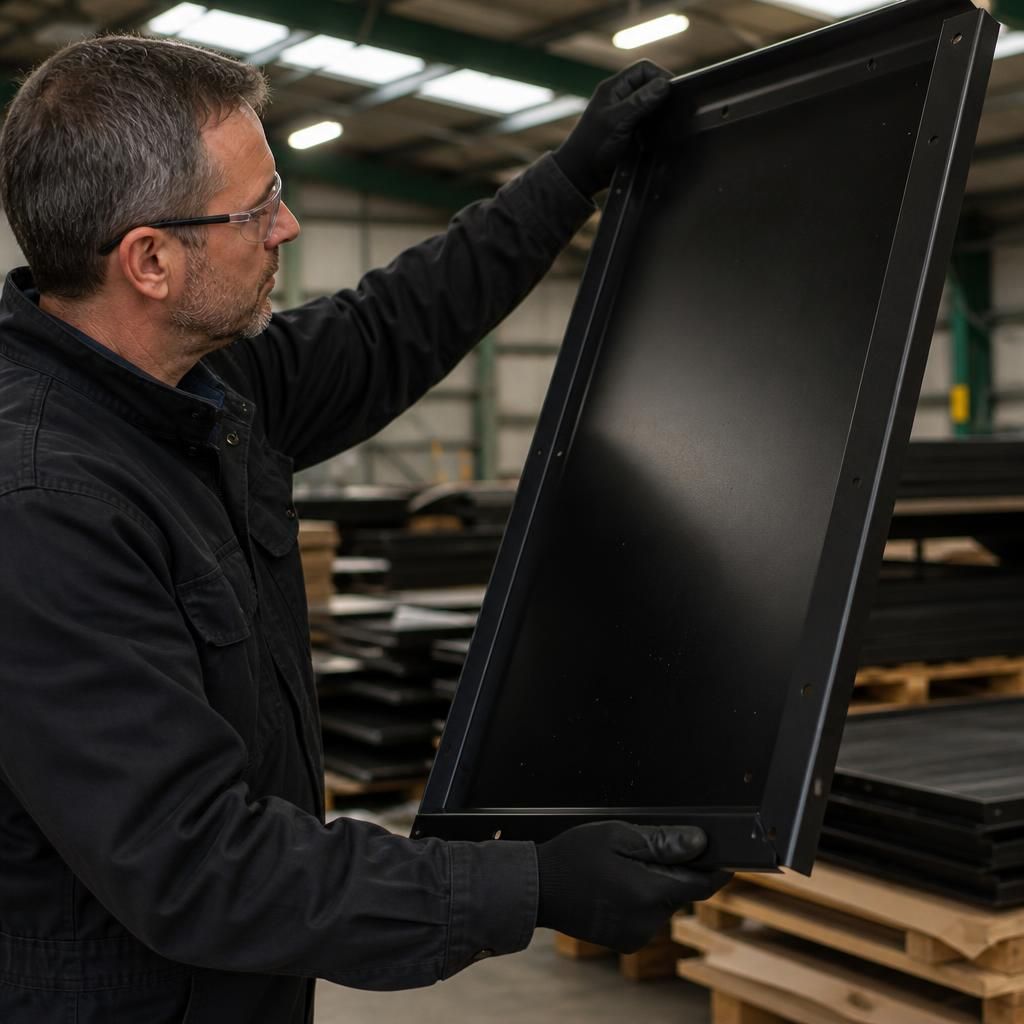
Inspect both faces of each black powder coated metal sheet, not just the visible surface. Corrosion can develop on the rear face, beneath overlaps or where the sheet meets a supporting frame while the exposed face still appears sound. During planned inspections, check concealed edges, underside surfaces, support interfaces and areas shielded from natural drying.
- Look for rust staining, bubbling, lifting coating, trapped debris and persistent dampness.
- Pay particular attention to enclosed panels and areas where access is restricted.
- Remove obstructions only where this can be done without damaging the coating or compromising the assembly.
- Record concealed deterioration separately from cosmetic changes on the exposed face, as it may indicate a drainage, ventilation or installation problem.
Finding deterioration on a hidden surface should prompt an assessment of the surrounding assembly rather than a cosmetic repair alone. The underlying cause may need to be corrected before any affected coating is repaired or the sheet is returned to service.
Need advice on maintaining black powder coated metal sheets?
If your black powder coated metal sheets show persistent coating failure or exposed metal, discuss their condition and intended environment with a powder coating specialist before arranging repairs or recoating. Powder-coatings.co.uk can advise on suitable preparation and coating options for industrial metal components.