

What are the benefits of using black powder coated metal sheets over other finishes?
Black powder coated metal sheets provide a tough, consistent finish that can resist wear, corrosion and weathering when the metal is correctly prepared and the coating is properly applied. Compared with liquid paint and some uncoated or plated finishes, powder coating offers a smooth, uniform appearance with strong practical performance and a versatile black aesthetic.
Black powder coated metal sheets offer a practical combination of finish control, process efficiency and design flexibility. Their main advantages over liquid paint, bare metal and some plated finishes are the way the coating is applied, the range of surface effects available, and the consistency that can be achieved across repeat batches.
Key benefits include:
- Consistent coating application: Powder is applied as a dry, electrically charged material and then cured onto the prepared sheet. This allows the coater to control coverage and film build more consistently than many on-site liquid painting methods, where runs, brush marks, dust inclusion and uneven drying can affect the result.
- A clean, controlled appearance: Black powder coating is available in different gloss levels and textures, allowing the finish to be selected for the intended product design. A specified finish can also help manufacturers maintain a consistent appearance across panels, enclosures, brackets and other sheet-metal components.
- Good resistance to handling damage: Correctly cured powder forms a cohesive film that is less vulnerable to chipping and marking during normal handling than some conventional decorative paint systems. The actual result depends on the powder specification, preparation, cure schedule, substrate and the conditions the finished sheet will face.
- Efficient use of coating material: Powder is applied without a liquid carrier. Overspray may be collected and reused in suitable controlled systems, although reclaim procedures depend on the equipment, colour requirements and coating specification. This can make powder coating a more controlled process than methods where liquid paint and solvent evaporate during application.
- Reduced reliance on solvent-based application: Powder coating does not require the same liquid solvent carrier used by many traditional paint systems. This can simplify the coating process and reduce solvent emissions at the point of application, while the curing oven still requires energy and appropriate process controls.
- Design flexibility: Black is suitable for industrial equipment, architectural components, vehicle parts, cabinets and fabricated assemblies where a neutral finish is required. Different textures and sheen levels can be used to distinguish components, manage reflected light or achieve a particular visual specification without changing the underlying metal sheet.
Compared with bare metal, powder coating gives the sheet a defined surface finish rather than leaving the appearance dependent on the natural condition of the substrate. Bare steel and aluminium can develop visible handling marks, oxidation or surface variation, whereas a specified coating provides a more controlled design result. Bare metal may still be preferable where electrical conductivity, heat transfer or the natural metallic appearance is the priority.
Compared with liquid paint, powder coating is often better suited to repeat production because the dry application and oven cure can be built into a controlled manufacturing process. It does, however, require suitable curing conditions. Large sheets, assembled items or components containing heat-sensitive materials may need a different approach, and colour changes, masking requirements and substrate thickness must be considered before production.
Compared with plated finishes, powder coating can provide a wider choice of visual effects without relying on a metallic deposit to create the appearance. Plating may be selected for particular electrical, dimensional or specialist engineering requirements, so the best option depends on the function of the sheet rather than appearance alone. Powder coating is particularly relevant when the specification calls for a coloured, textured or low-maintenance exterior finish.
The performance of black powder coated metal sheets also depends on factors that are separate from colour. The metal must be cleaned and prepared correctly, the powder must be compatible with the substrate and the curing cycle must suit the product data. Edges, cut-outs, fixing points and areas affected by fabrication need particular attention because contamination, sharp edges or inadequate preparation can reduce coating performance locally.
Black is not automatically the best coating choice for every environment. Outdoor exposure, ultraviolet light, moisture, chemicals, abrasion, temperature and contact with dissimilar metals should all be considered when selecting the powder type and substrate. A standard architectural or general-purpose powder may not be suitable for aggressive industrial conditions, so the coating specification should match the operating environment.
For B2B projects, the practical advantage is that black powder coating can combine a specified appearance with a repeatable production process for batches of metal sheets and components. Powder-coating specialists such as Powder-coatings.co.uk can advise on preparation, coating selection and production requirements for manufacturers, fabricators, construction firms and automotive businesses across the Midlands, with collection and delivery options available.
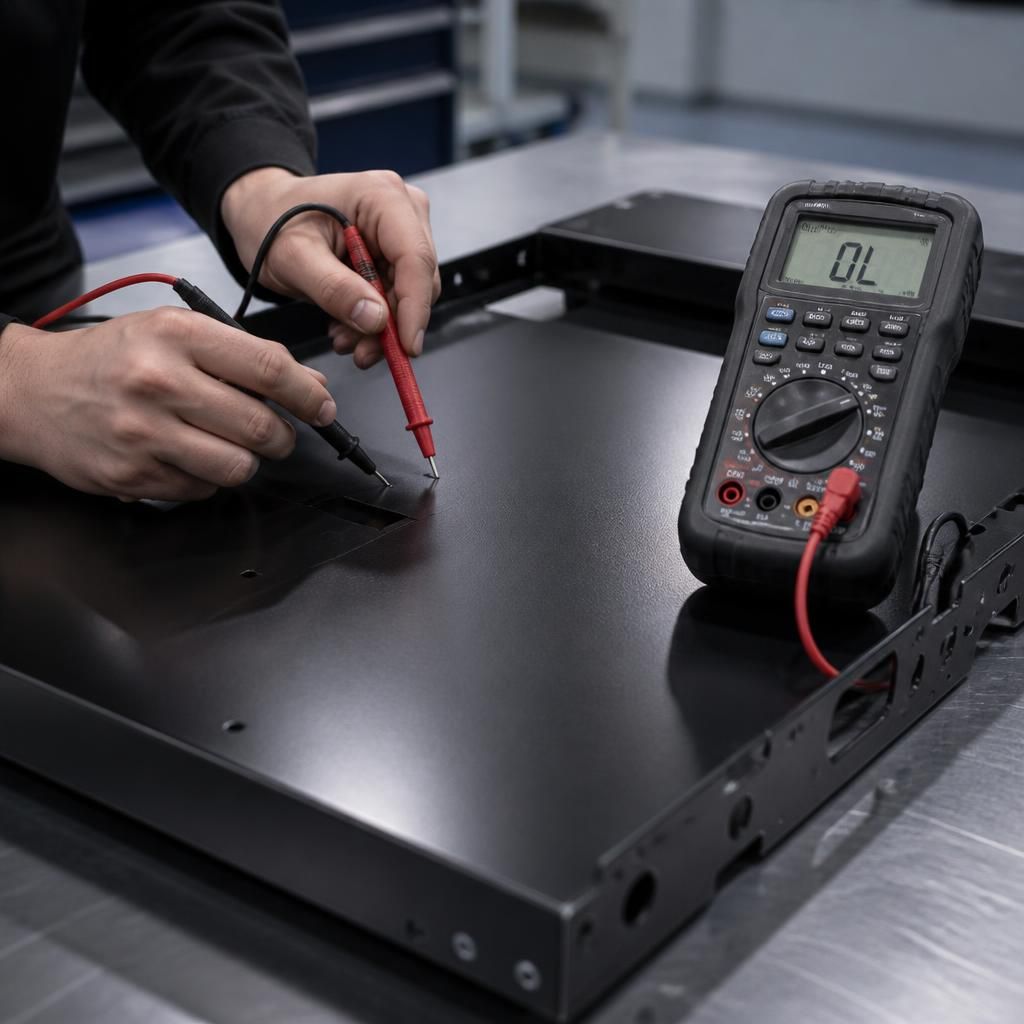
One additional benefit of black powder coated metal sheets is that the cured coating can provide electrical separation from the metal substrate. Unlike bare steel or aluminium, the finished surface is generally non-conductive, which can help reduce unintended contact between the sheet and adjacent conductive parts. This may be useful for equipment panels, cabinets, guards and fabricated enclosures where surface protection and electrical isolation are both relevant.
This property must be treated as a specification point rather than assumed from the colour or appearance. The powder formulation, coating continuity, film thickness, edges, fixing points and any areas removed during fabrication all affect performance. Where electrical insulation is important, the coating should be selected and tested for the required application rather than used as a substitute for a separately certified insulation system.
Discuss your black powder coated metal sheet requirements
If you are comparing finishes for a metal sheet project, discuss your substrate, dimensions, operating environment and required appearance with the Powder-coatings.co.uk team. This will help establish whether black powder coating is suitable and identify the preparation and coating specification required.