

How does the choice of metal substrate impact the effectiveness and longevity of the black powder coating on metal sheets?
The metal substrate affects how well black powder coating adheres, resists corrosion and withstands service conditions over time. Steel, aluminium and galvanised metal each require suitable preparation and coating conditions, because surface cleanliness, oxide layers, zinc chemistry and thermal behaviour can determine the finish’s effectiveness and longevity.
The substrate determines how consistently a black powder coating can be applied and how reliably the finished sheet performs in service. Its composition, surface condition, thickness, stiffness, geometry and response to heat all influence the coating specification, pretreatment and curing requirements. A black finish is therefore not equally effective on every metal sheet simply because the same powder is used.
Carbon steel is commonly selected where rigidity, impact resistance and structural strength are important. Its relatively stable surface provides a suitable base for powder coating when mill scale, rust, oil and fabrication residues have been removed. The steel grade and previous processing still matter: heavily scaled material, flash rusting or embedded abrasive particles can create local defects that become visible through a black finish. Steel sheets with cut edges, drilled holes or welds also need particular attention because these areas can retain contamination and may have a different surface profile from the surrounding sheet.
Steel thickness affects the coating operation as well as the finished component. A thin sheet can heat and cool differently from a heavy section, while a large, rigid sheet may require careful racking to prevent distortion during handling and curing. If the sheet is not supported correctly, movement or contact with the rack can damage the uncured powder or leave areas with incomplete coverage. These considerations affect the consistency of the coating film across the full part.
Aluminium offers lower weight and good resistance to atmospheric corrosion, making it useful where mass, appearance or ease of fabrication is important. Its natural oxide layer is tightly bound to the surface but must be treated appropriately for powder coating. Aluminium alloys can also contain constituents that behave differently during pretreatment, so the alloy, temper and manufacturing history should be identified where performance is critical. Surface marks, extrusion lines and polishing patterns may remain visible beneath a black coating, particularly when a smooth or low-gloss appearance is specified.
Aluminium’s lower stiffness compared with steel can influence handling and racking. Large sheets may flex, and contact points can leave marks or interfere with uniform powder deposition. The substrate can also transfer heat differently during curing, so the coating process must be based on the actual metal temperature rather than oven air temperature alone. Incorrect heat exposure may result in under-cured powder, excessive curing or variation in gloss and colour across the sheet.
Galvanised steel has a zinc layer that provides additional protection to the underlying steel. That layer is beneficial in corrosive environments, but it introduces coating considerations that do not apply in the same way to untreated steel. The zinc surface may vary in texture and chemistry, and freshly galvanised material can retain residues from the galvanising process. If preparation is unsuitable, the powder may show poor wetting, pinholes, cratering or local adhesion failure. Zinc can also release gases during heating, which may produce surface defects in the cured film.
For galvanised sheet, the coating specification should account for the condition and age of the zinc surface, the galvanising method and the required appearance. A high-appearance architectural finish may require more controlled preparation than a functional coating where minor surface variation is acceptable. The zinc layer can also be damaged at cut edges, drilled areas and fabricated joints, leaving those locations more dependent on the quality of the powder coating system.
Substrate choice also affects how defects are seen. Black coatings provide strong visual contrast, so pinholes, surface texture, thin coverage and disturbed areas can be more apparent than they would be with a lighter or textured finish. This does not necessarily mean that black powder is less durable; it means that surface preparation and film uniformity have a greater influence on perceived quality. The intended gloss level and texture should therefore be considered alongside the metal grade.
The most important substrate-related checks before coating include:
- Confirming the metal type, grade, alloy or galvanised condition.
- Inspecting for rust, mill scale, oxide, oil, silicone, moisture and fabrication residues.
- Checking welds, seams, folded edges, holes and cut edges for contamination or sharp projections.
- Assessing whether the sheet is flat, adequately supported and suitable for racking.
- Matching pretreatment to the substrate rather than applying one process to every metal type.
- Confirming that the curing schedule suits the sheet thickness and the powder coating specification.
For demanding applications, a representative sample or test panel can reveal issues that are not obvious from the bare sheet. It can be assessed for appearance, coverage, adhesion and resistance appropriate to the intended environment. This is particularly useful when combining different substrates within one project, as identical black powder may produce different surface appearance or process results on steel, aluminium and galvanised sheet.
In practice, the longest-lasting result comes from treating the substrate and powder coating as one system. Selecting a suitable metal grade, controlling fabrication quality and using substrate-specific preparation are as important as choosing the black powder itself. A coating specialist can use the part drawings, substrate details, service environment and required appearance to determine whether the proposed metal sheet and coating process are compatible.
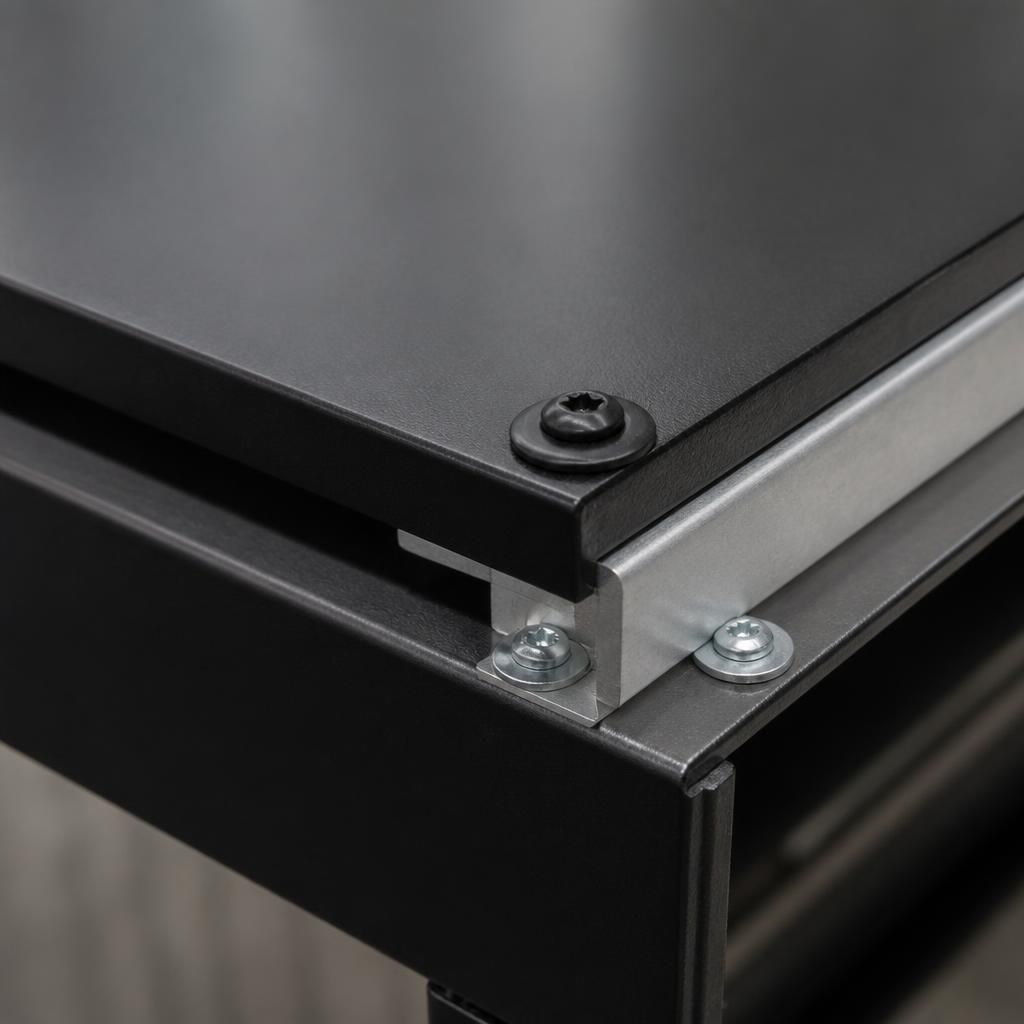
Where a black powder-coated sheet is assembled with a different metal, the joint can influence coating longevity as much as the sheet itself. Steel and aluminium expand at different rates when temperature changes, which can place stress on fasteners, folded sections and coating edges. Direct contact between dissimilar metals may also create galvanic corrosion if moisture reaches an exposed cut edge, drilled hole or damaged area.
For these assemblies, the coating specification should be considered alongside the fixing method and joint design. Suitable isolating washers, sleeves or sealants can reduce direct metal-to-metal contact, while protecting exposed edges helps prevent corrosion from developing beneath the finish. This is particularly important for outdoor panels and components subject to repeated heating, cooling or moisture exposure.
Discuss Your Black Powder Coated Metal Sheet Requirements
If you are selecting a black powder-coated metal sheet, discuss the substrate, dimensions, service environment and required finish with a powder-coating specialist before production. This helps establish a coating specification suited to the metal and intended application.