

What maintenance practices can optimise the lifespan and performance of black powder coated metal products in industrial applications?
Regular inspection, gentle cleaning, prompt repair of damage and control of corrosive exposure help black powder coated metal products retain their protective performance and appearance. Maintenance should also include checking joints, fixings and drainage points so moisture, contaminants or mechanical wear do not compromise the coating or the underlying metal.
Optimising the lifespan and performance of black powder coated metal products requires a planned maintenance programme based on the coating system, operating environment and type of use. The most effective approach combines exposure control, suitable handling, compatible cleaning materials, protection of vulnerable interfaces and documented condition checks.
Match maintenance to the exposure category. Components installed indoors in a dry, controlled environment generally require less intervention than those exposed to condensation, road salt, industrial chemicals, abrasive dust or persistent ultraviolet radiation. Maintenance schedules should therefore reflect the actual location and duty of each component rather than applying one routine to every product. Areas exposed to airborne contaminants or frequent wash-down may need more attention because deposits can retain moisture against the coating or concentrate corrosive substances.
Control contact with incompatible substances. Powder coating can be affected by prolonged exposure to aggressive chemicals, solvents, strong alkaline or acidic cleaners and process residues. Operators should identify the substances that may contact the component and confirm their compatibility with the coating specification. Spills should be dealt with using the approved procedure for that coating and application, avoiding untested solvents or improvised chemicals. Where metalwork is used near chemical processing, secondary shielding, splash guards or improved drainage can reduce repeated exposure.
Prevent mechanical damage during use and handling. Scraping, impact from tools, contact with forklifts and movement against adjacent metalwork can chip or abrade the finish. Components should be lifted with suitable protective materials rather than dragged across hard surfaces, and storage arrangements should prevent coated faces rubbing together. Where repeated contact is unavoidable, consider protective buffers, redesigned contact points or a coating system selected for the expected abrasion and impact duty.
Manage thermal and environmental movement. Black finishes can absorb more solar radiation than lighter colours, so outdoor products may experience greater surface heating. Repeated heating and cooling can place stress on the coating and on joints between dissimilar materials. Allowing for movement in the original design, avoiding trapped water and ensuring that ventilation or drainage routes remain clear can reduce the effects of thermal cycling and condensation. Any change in operating temperature or process conditions should prompt a review of whether the existing coating remains suitable.
Give particular attention to interfaces. The coating is only one part of a metal assembly. Seals, gaskets, weld zones, cut edges, threaded connections, hinges and areas beneath brackets may behave differently from broad coated surfaces. Compatible sealants and touch-up materials should be used where required, while fasteners should be checked for looseness, galvanic compatibility and signs of corrosion. Water should not be allowed to remain trapped between overlapping parts or inside hollow sections.
Use an appropriate repair procedure. If the finish is damaged, the repair should begin by identifying the cause rather than simply covering the visible mark. Remove loose material and contamination using a method that will not enlarge the affected area, then use a compatible repair coating recommended for the service environment. A local liquid touch-up may be suitable for minor cosmetic damage, but larger areas, repeated failures or corrosion beneath the film may require professional preparation and recoating. Repairs should be recorded so recurring damage can be linked to handling, design or site conditions.
Keep maintenance records. A useful record identifies the component, coating specification, installation location, exposure conditions, maintenance materials used and any defects found. Photographs and notes on colour change, gloss loss, blistering, chalking, under-film corrosion or adhesion problems make it easier to identify trends. Records also help determine whether the maintenance interval is appropriate and provide evidence when a coating system or design detail needs to be reviewed.
- Confirm the powder coating specification is suitable for the intended indoor or outdoor exposure.
- List chemicals, process residues and contaminants that may contact the coated surface.
- Protect coated parts during transport, installation and subsequent industrial handling.
- Keep drainage, ventilation and movement provisions clear at interfaces and hollow sections.
- Use only repair products and preparation methods compatible with the original coating system.
- Review recurring defects to address their underlying cause rather than repeatedly treating the symptom.
Where a component is approaching the end of its serviceable condition, recoating should be considered before corrosion has spread beneath the film or weakened the substrate. The required preparation will depend on the existing coating, the extent of damage and the intended service environment. For batch work or specialist applications, the original coating specification and maintenance history should be supplied to the powder coating provider so the preparation and replacement finish can be assessed accurately.
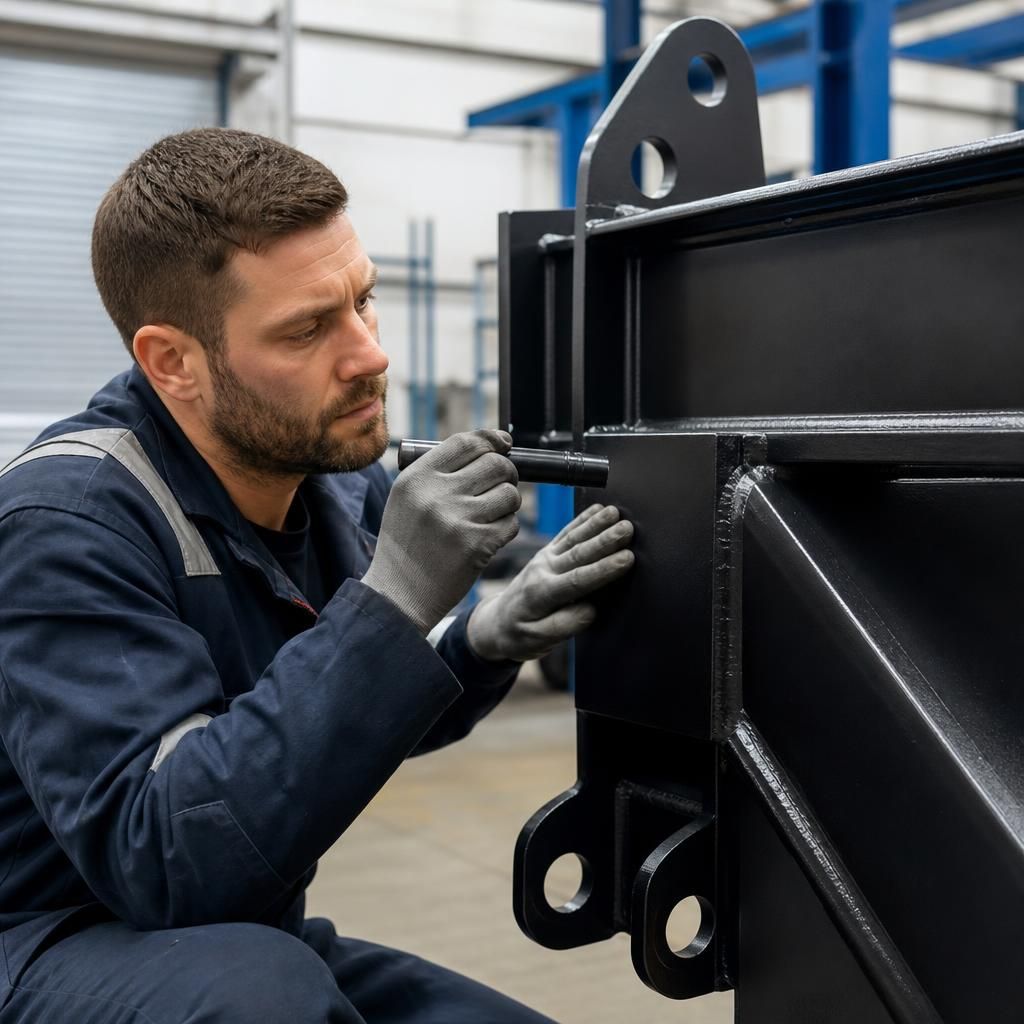
Post-event inspection is a targeted maintenance check carried out after an incident that could have affected the coating or substrate. It should follow significant impact, overheating, flooding, chemical spillage, dismantling, or abnormal process conditions rather than waiting for the next routine inspection.
Examine the affected area and nearby interfaces for dents, cracking, softening, discolouration, blistering, exposed metal or loss of adhesion. Remove the cause where possible, record the finding and obtain a coating assessment before returning the component to service if the damage extends beyond a superficial mark. This approach helps identify hidden deterioration before moisture or contaminants reach the underlying metal.
Discuss Your Black Powder Coated Metal Maintenance Requirements
Discuss your black powder coated metal maintenance requirements with a coating specialist, providing the product’s exposure conditions, coating specification and any recurring defects so suitable inspection, repair or recoating options can be assessed.