

What are the maintenance requirements for black powder coated metal products?
Black powder coated metal products generally require routine cleaning with mild detergent and water, followed by thorough rinsing and drying. Regular inspections should identify chips, scratches, corrosion or damaged seals early, while abrasive tools and aggressive chemicals should be avoided to protect the coating.
Maintenance for black powder coated metal products is primarily preventive: preserve the coating, control the conditions around the metal, and deal with any coating failure before moisture reaches the substrate. The correct approach depends on the product’s exposure, use, geometry and the powder system specified, so the original coating manufacturer’s care instructions should take precedence.
Establish a condition-based maintenance plan. Components used indoors in controlled environments generally need less intervention than those exposed to weather, industrial pollutants, road salt, high humidity or frequent handling. Include powder coated items within the site’s planned maintenance schedule and adjust the inspection frequency when the operating environment changes. Areas that retain water, collect deposits or experience repeated impact deserve particular attention.
- Control water retention: check that parts remain correctly positioned and that drainage paths are not blocked. Persistent dampness at joints, folded sections, fixings or horizontal surfaces can increase the risk of corrosion beneath a damaged coating.
- Protect against impact: use suitable lifting, storage and handling methods so that tools, pallets, chains and other metal parts do not strike or scrape the finish. Where components are removed for maintenance, support them on clean, non-abrasive surfaces.
- Manage contact points: review areas where coated parts rub against one another or against machinery. Repeated movement can wear the finish even when the surrounding coating remains intact. Reducing unnecessary contact or using compatible protective interfaces can help limit mechanical damage.
- Check fixings and interfaces: examine bolts, washers, hinges, brackets and seals as part of the wider assembly rather than treating the coating in isolation. Loose or incompatible components can permit movement, trap moisture or damage the coating at an edge.
Deal with local damage promptly. A chip, cut or exposed edge should be assessed to determine whether the substrate is affected and whether the item can be repaired in situ. Remove loose material carefully, prepare the affected area using a method suitable for the coating and substrate, and use a compatible repair product where appropriate. A touch-up coating may improve local protection, but it will not always reproduce the original colour, gloss level, texture or edge coverage. Significant damage, underfilm corrosion, widespread blistering or coating delamination should be referred for a formal repair or recoating assessment.
Consider the whole exposure environment. Black surfaces can show dust, mineral deposits, marks and changes in gloss more readily than some lighter or lower-sheen finishes, particularly where the item is exposed to sunlight. Heat cycles, ultraviolet radiation, condensation, chemicals and airborne contaminants can gradually alter appearance or performance. Keep process chemicals, solvents, cutting fluids and other contaminants from remaining in contact with the coating, and confirm chemical compatibility before introducing a new substance near the component.
Use records to identify recurring problems. Maintenance documentation should note the component location, coating specification where known, exposure conditions, damage found, repair materials used and any change in appearance or corrosion. Repeated damage in the same position may indicate an underlying design, installation, drainage or handling issue rather than a simple need for more frequent care.
Before refurbishing a black powder coated product, establish whether the existing film is sound enough to retain. Recoating over contamination, corrosion or poorly adhered material can conceal the problem and reduce the reliability of the new finish. Where the product is part of a larger industrial assembly, coordinate coating maintenance with the inspection of welds, joints, seals, fixings and the supporting structure. This gives a more accurate view of the product’s condition and helps prevent failures being attributed to the powder coating alone.
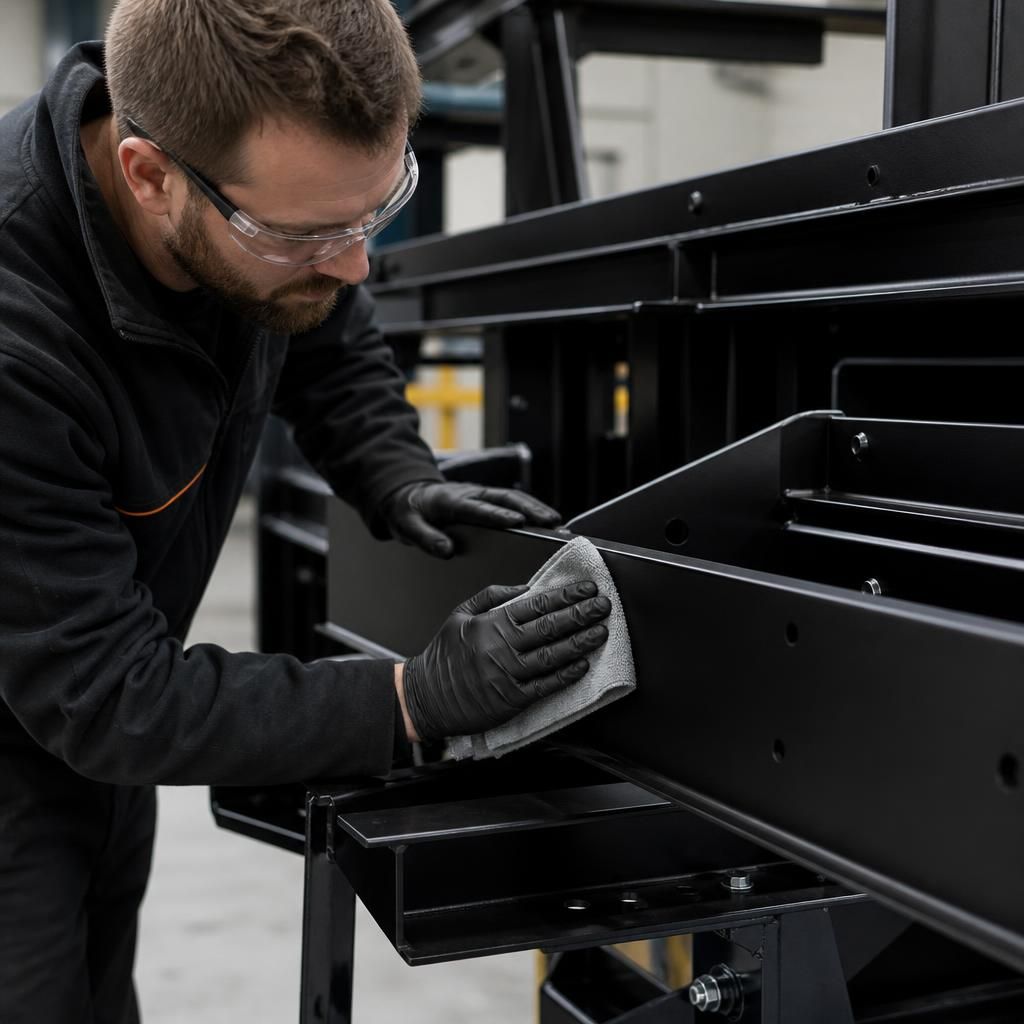
Cleaning should be carried out in a way that removes contamination without forcing water or cleaning solution into joints, seams and coating defects. Allow heat-affected surfaces to cool before washing, loosen deposits with water first, and use a clean, soft cloth or sponge rather than rubbing dry dirt across the finish. Take particular care around coating edges, drainage points and seals, where trapped moisture can contribute to corrosion.
After cleaning, inspect the surface while it is dry and well lit. This makes it easier to distinguish removable deposits from genuine changes such as staining, gloss loss, blistering or exposed metal, helping maintenance teams decide whether routine care is sufficient or whether the component needs further assessment.