

What steps should be followed for the proper application of zinc epoxy primer?
Proper zinc epoxy primer application involves degreasing and abrasive preparation of the metal, removing dust and contaminants, then mixing the two components in the specified ratio. Apply an even coat within the product’s recommended conditions and film thickness, allow the primer to cure fully, and inspect the surface before applying any subsequent coating.
Proper zinc epoxy primer application is a controlled process that matches the primer system to the metal, prepares the work area and application equipment, applies the material within its usable working life, and verifies the finished film before overcoating. The aim is to create a continuous, well-adhered zinc-rich layer that can support the subsequent coating system without defects or premature breakdown.
1. Confirm the coating system and substrate requirements
Before starting, check that the selected zinc epoxy primer is suitable for the metal, service environment and intended topcoat. Review the product data sheet and safety information for compatibility, recommended application method, recoat requirements, curing conditions and handling precautions. Different substrates may require different preparation standards or additional treatment, particularly where existing coatings, welds, sharp edges or repairs are present.
Inspect the component for design features that could affect coating quality. Narrow gaps, enclosed sections, drain holes, threaded areas and deep recesses can trap coating material or prevent adequate coverage. Decide in advance which areas must remain uncoated, such as electrical contact points, machined faces, bearing seats and threaded holes.
2. Protect areas that must remain free from primer
Mask machined surfaces, fixing points and other exclusion zones before application. Use materials that will not shed fibres, leave adhesive residue or react with the coating. Masking should be secure enough to withstand handling and spraying, while still allowing a clean edge when removed. Components should also be positioned so that the primer does not collect in corners, run onto protected surfaces or pool inside cavities.
3. Prepare the application area and equipment
The application area must be clean and organised, with suitable ventilation and controls to prevent airborne dust or other contamination settling on the wet film. Confirm that spray guns, hoses, brushes, rollers, mixing vessels and measuring equipment are clean and appropriate for the primer. Poorly cleaned equipment can introduce cured particles, oil or incompatible residues into the coating.
For sprayed application, set up the equipment in accordance with the primer manufacturer’s instructions. The correct nozzle, pressure and spray pattern help control atomisation and reduce dry spray, overspray and uneven deposition. Brushing or rolling may be suitable for small areas, repairs or complex details, but the chosen method should be capable of producing the required film profile.
4. Condition and combine the components correctly
Allow the separate components to reach the recommended application condition before combining them. Stir each component as directed so that settled zinc and other solids are evenly dispersed. Add the components in the specified order and mix thoroughly without incorporating excessive air. If the instructions require an induction period or filtering before use, follow that procedure.
Only prepare an amount that can be applied within the stated pot life. The mixture may remain fluid after its usable life has passed, but its adhesion, flow and curing performance may no longer be reliable. Do not extend pot life by adding unapproved solvent, and do not return used or partially cured material to the original container.
5. Apply the primer in a controlled sequence
Plan the application so that difficult areas are coated before broad exposed faces. Work into welds, corners, edges and other areas that are prone to early corrosion, then apply the main coat using consistent passes. Keep the application direction and overlap controlled, avoiding excessive manipulation of material that has begun to set.
Edges and welds may require stripe coating or local attention where specified by the coating system. The purpose is to prevent thin coverage at changes in profile, not to create heavy ridges. Runs, curtains, pinholes, missed areas and excessive overspray should be corrected in accordance with the product instructions rather than simply covered with another coat.
6. Observe the interval before further coating
Once the primer has been applied, protect it from condensation, rain, dust, impact and chemical contamination while it cures. The correct interval before applying a topcoat depends on the product, film build and surrounding conditions. Applying too soon can trap solvent or interfere with adhesion; waiting beyond the permitted recoat window may require additional treatment before the next layer is added.
The primer should be sufficiently cured for the planned handling and overcoating operation, not merely dry to the touch. Where the coating system specifies a particular surface condition before overcoating, use that requirement as the acceptance point.
7. Check the completed primer film
Quality checks should cover the whole component, including edges, recesses, welds and masked boundaries. Look for missed sections, runs, craters, pinholes, blistering, contamination, poor adhesion or visible areas of uneven application. Confirm that masking has not caused lifting or left adhesive contamination at the coating edge.
Where required by the coating specification, use suitable inspection equipment to verify dry film thickness and record the results. Measurements should be taken across representative areas rather than relying on one reading. If defects or inadequate coverage are found, remove loose or defective material, prepare the affected area as directed and repair it with compatible primer before the next coating stage.
8. Record the application details
For industrial work, retain the product identification, batch information, mixing details, application method, environmental observations, inspection results and any repairs carried out. This record helps establish traceability and makes it easier to investigate defects or plan future maintenance. Zinc epoxy primer should then be overcoated only with a compatible system and handled according to the completed coating’s curing requirements.
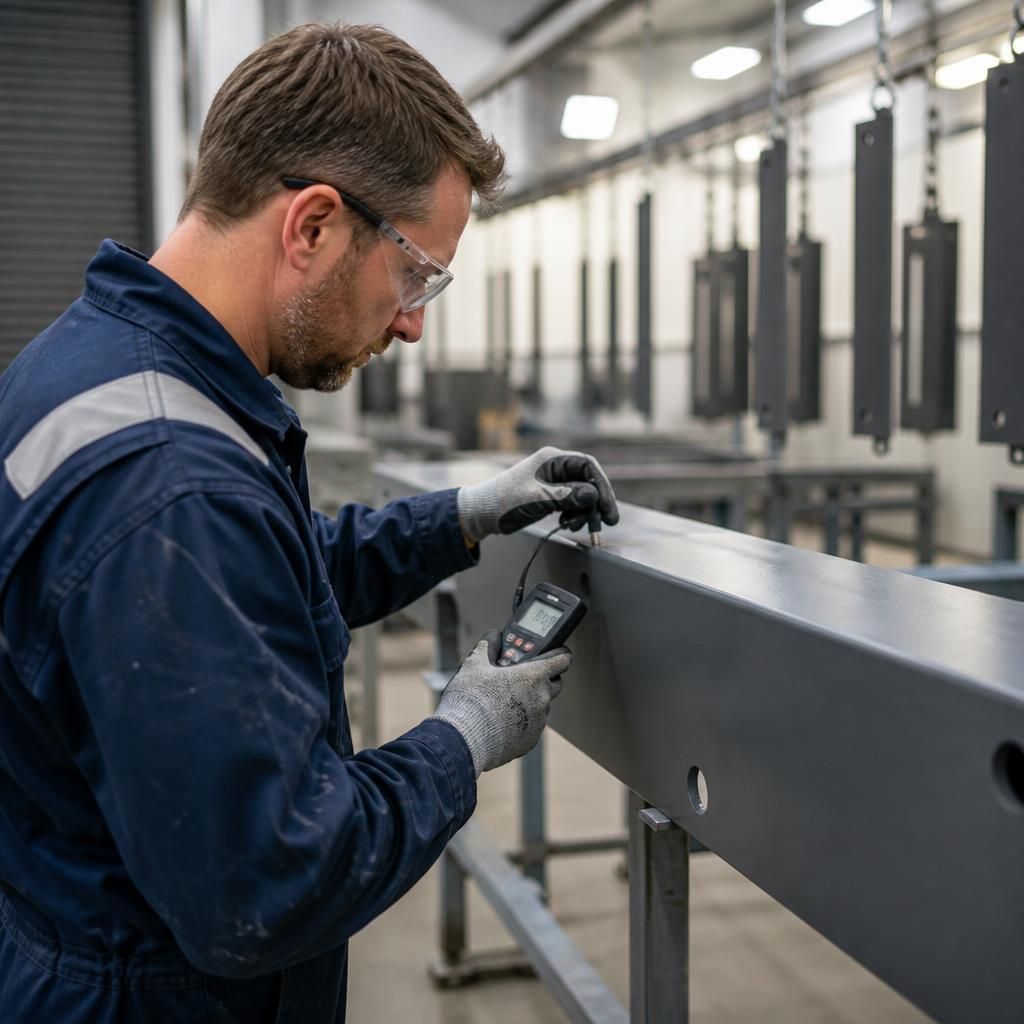
Monitor the conditions at the metal surface, not just the surrounding air. Before and during application, check the steel temperature, air temperature, relative humidity and dew point, because a surface that is too cool can develop invisible moisture even when it appears dry. If condensation forms beneath the primer, adhesion and corrosion protection may be compromised. Record these observations with the application details and proceed only when they fall within the limits stated in the product data sheet.