

What are the key benefits of using zinc epoxy primer for metal protection?
Zinc epoxy primer provides strong corrosion protection by combining zinc’s sacrificial action with epoxy resin’s durable, well-adhered barrier. It also offers a sound foundation for subsequent coatings, helping protect metal surfaces against moisture, chemicals, abrasion and demanding industrial conditions.
Zinc epoxy primer benefits metal protection by providing a technically robust first coat within a multi-layer coating system. Its main value is not simply the presence of zinc, but the way the primer creates a controlled, durable base for subsequent protective layers while helping the finished system withstand service conditions that would challenge less specialised primers.
- Improved protection at local coating defects: Properly formulated zinc epoxy primer can continue to protect exposed areas around minor scratches, pinholes or impact damage, provided the zinc particles are correctly incorporated and electrically connected within the dry film. This gives the coating system greater tolerance of small, localised defects than a purely inert primer may provide. It does not remove the need to repair significant damage or prepare the affected area correctly.
- Strong mechanical performance: The epoxy binder produces a hard, cohesive film that can resist handling, contact and moderate mechanical wear. This is particularly useful for fabricated components that must be moved, stored or assembled before the complete coating system is put into service. The exact resistance depends on the formulation, cured film thickness and the conditions experienced by the part.
- A reliable base for compatible topcoats: Zinc epoxy primer helps establish a consistent starting surface for finishing coats such as epoxy, polyurethane or other approved systems. A uniform primer layer can reduce variations in the final appearance and helps the topcoat perform more consistently across welds, edges and larger fabricated areas. Compatibility must always be confirmed, because some topcoats require a specified primer type, recoat interval or surface preparation before application.
- Better control of coating-system design: Using a dedicated primer allows the protective system to be selected in layers rather than relying on one coating to perform every function. The primer can be chosen for its interaction with the metal substrate, while intermediate and finishing coats can be selected for properties such as colour retention, chemical resistance or ease of cleaning. This makes zinc epoxy primer useful where the coating specification must be matched to the component’s actual service environment.
- Suitability for demanding fabricated components: The primer is commonly considered for structural steelwork, machinery parts, fabricated frames, plant components and other metalwork where a basic decorative coating would not provide an adequate specification. It can be incorporated into systems designed for industrial exposure, although the required preparation, dry-film thickness and finishing coats depend on the environment and the relevant project specification.
- More consistent quality assessment: Zinc epoxy systems can be inspected using established coating-control checks, including surface cleanliness, profile, wet or dry film thickness, curing condition and visual uniformity. This provides a practical basis for identifying problems such as missed areas, runs, insufficient coverage or contamination before later coats are applied. Early detection is valuable because defects are generally easier to correct at the primer stage than after the full system has cured.
- Protection of complex metalwork: When applied correctly, the primer can cover a range of fabricated details, including plates, sections, brackets and welded areas. Care is still needed at sharp edges, corners, crevices and weld transitions, where coating coverage may be reduced. Edge preparation, stripe coating or a suitable application sequence may therefore be necessary to obtain the intended level of protection.
These benefits depend on the primer being part of a properly specified system. The metal must be prepared to remove rust, mill scale, oil, salts and other contaminants; the surface profile must be suitable; and the mixed material must be applied within the manufacturer’s stated conditions. Moisture, condensation, incorrect mixing, excessive film thickness or recoating outside the permitted interval can reduce performance even when the product itself is appropriate.
Selection should therefore consider the metal type, anticipated exposure, preparation method, application equipment, required finish and the compatibility of every later coat. For components that will face immersion, high temperatures, aggressive chemicals or severe abrasion, a zinc epoxy primer may need to be combined with a specifically selected intermediate and topcoat rather than used alone. Its benefits are greatest when the complete coating specification, preparation standard and inspection procedure are treated as one system.
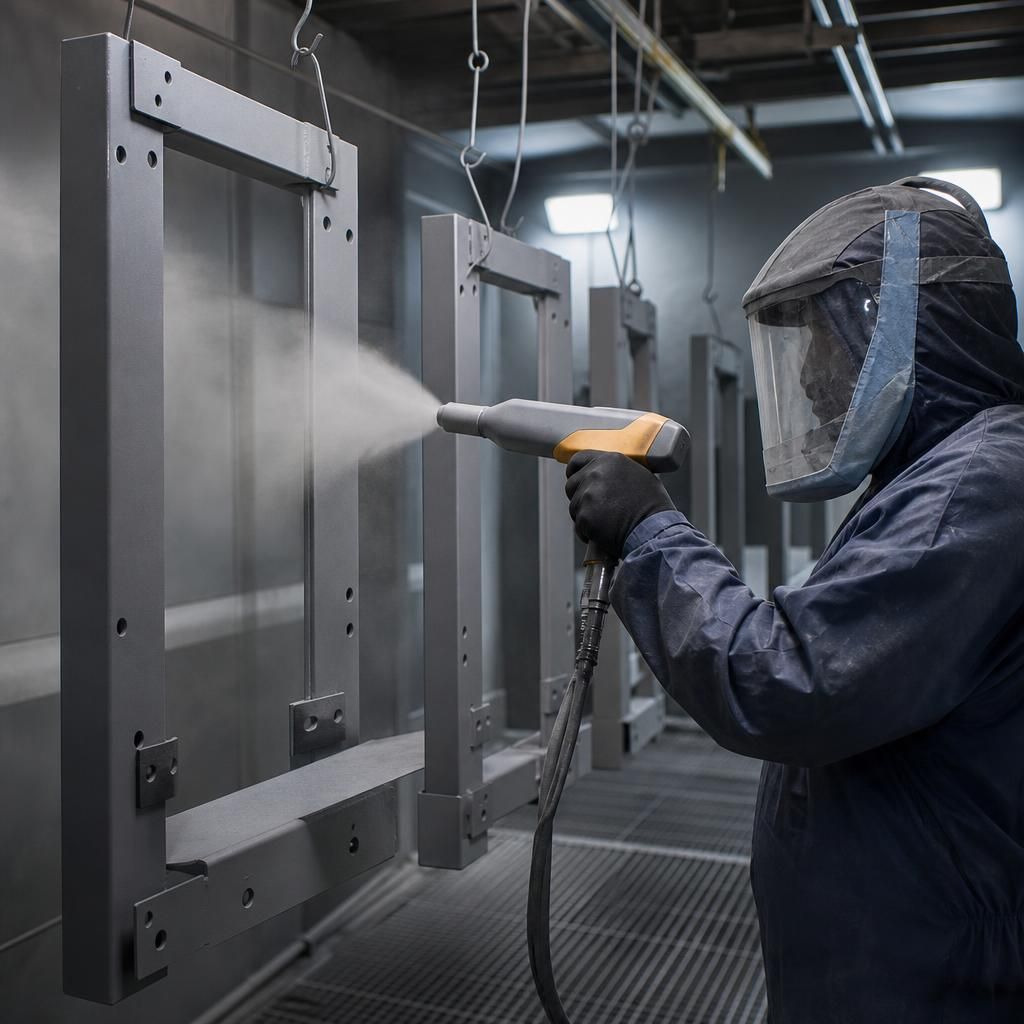
A further benefit of zinc epoxy primer is that it helps preserve the condition of the metal substrate beneath the finishing system. By limiting corrosion at the steel surface, it can help reduce the gradual pitting, surface roughening and material loss that may interfere with accurate assembly, close-fitting joints or the appearance of finished components.
This is particularly relevant to fabricated parts with machined interfaces, bolted connections or defined clearances. The primer cannot compensate for poor preparation or severe existing corrosion, and exposed damage still requires repair. However, when it forms part of a correctly specified coating system, it helps maintain the usable condition of the component rather than treating corrosion only after it has become visible.
Discuss Your Zinc Epoxy Primer Requirements
If you are assessing zinc epoxy primer for a specific component or coating system, discuss the metal type, service environment and required finish with a coating specialist. This will help establish whether the primer is suitable and what preparation and subsequent coats are needed.