

How does the zinc in epoxy primer act as a protective barrier against corrosion?
Zinc in zinc epoxy primer protects steel through a combination of barrier and sacrificial action. The epoxy film restricts moisture, oxygen and salts from reaching the metal, while zinc can corrode preferentially to the steel when the coating is damaged, helping reduce corrosion at exposed areas.
Zinc in an epoxy primer protects steel by combining electrical, chemical and physical protection. Zinc particles are distributed through the epoxy binder so that, once the coating has cured, they can support cathodic protection at exposed or damaged areas while the surrounding film helps isolate the steel from corrosive conditions.
The sacrificial effect is an electrochemical process. When steel, zinc and an electrolyte such as dampness are present, zinc is generally more active than steel. If the zinc particles are in suitable electrical contact with the substrate and with one another, zinc becomes the preferred site for oxidation. This causes the zinc to release electrons, helping make the steel surface less likely to oxidise at a small exposed area. The zinc is gradually consumed rather than the steel corroding first.
Corrosion products formed from the zinc can also have a useful secondary effect. They may accumulate around a scratch or small discontinuity and partially obstruct the route taken by water and dissolved salts. This can slow the movement of the electrolyte towards the steel. The protection is therefore not simply a matter of the zinc layer being physically thick; it depends on the formulation, particle distribution, electrical continuity and the condition of the coating.
The epoxy component performs several supporting functions:
- It binds the zinc particles into a coherent primer film.
- It adheres the coating to correctly prepared steel, limiting pathways beneath the film.
- It provides resistance to water, chemicals and mechanical handling appropriate to the selected formulation.
- It creates a stable base for compatible intermediate or finishing coats.
There is an important balance between the two ingredients. A primer containing too little zinc may not provide sufficient particle-to-particle and particle-to-steel contact for effective galvanic protection. Conversely, a film must still contain enough epoxy binder to hold the particles together, adhere to the substrate and resist service conditions. Product selection should therefore be based on the coating system and exposure environment rather than zinc content alone.
Preparation of the steel is critical because zinc cannot reliably protect contamination, loose mill scale or poorly bonded rust. Oil, grease, salts, dust and weak corrosion products can interrupt electrical contact and create concealed corrosion sites. A suitable preparation process produces a clean, appropriately profiled surface, allowing the primer to make consistent contact with the steel and develop adhesion as it cures.
Application also affects the protective mechanism. Uneven coverage, pinholes, dry spray, runs, excessive thinning or insufficient curing can leave weak points in the film. Edges, welds, corners, bolt areas and recessed sections need particular attention because they are more difficult to coat uniformly and may experience greater exposure. The specified wet-film or dry-film control, recoating interval and curing conditions should be followed for the chosen product.
Zinc epoxy primer is normally one part of a complete corrosion-control system. A compatible epoxy intermediate coat or suitable topcoat can add sealing, chemical resistance, colour and resistance to abrasion or weathering. The additional coats are especially important where the finished component will face persistent moisture, industrial contaminants, immersion, ultraviolet exposure or repeated mechanical damage. The primer’s sacrificial action should not be treated as permission to leave large areas of steel exposed.
Protection becomes less effective when the coating is extensively damaged, when zinc particles have been consumed, or when corrosion has spread beneath a poorly adhered film. Inspection should therefore look for scratches, blistering, lifting at edges, rust staining and impact damage. Repairs generally involve removing unsound material, cleaning the exposed steel and reinstating a compatible primer and finish rather than simply painting over the defect.
In practical terms, zinc provides the electrochemical safeguard, while the cured epoxy film provides adhesion and resistance to the environment. Their performance depends on correct formulation, steel preparation, application, curing and maintenance as a complete system.
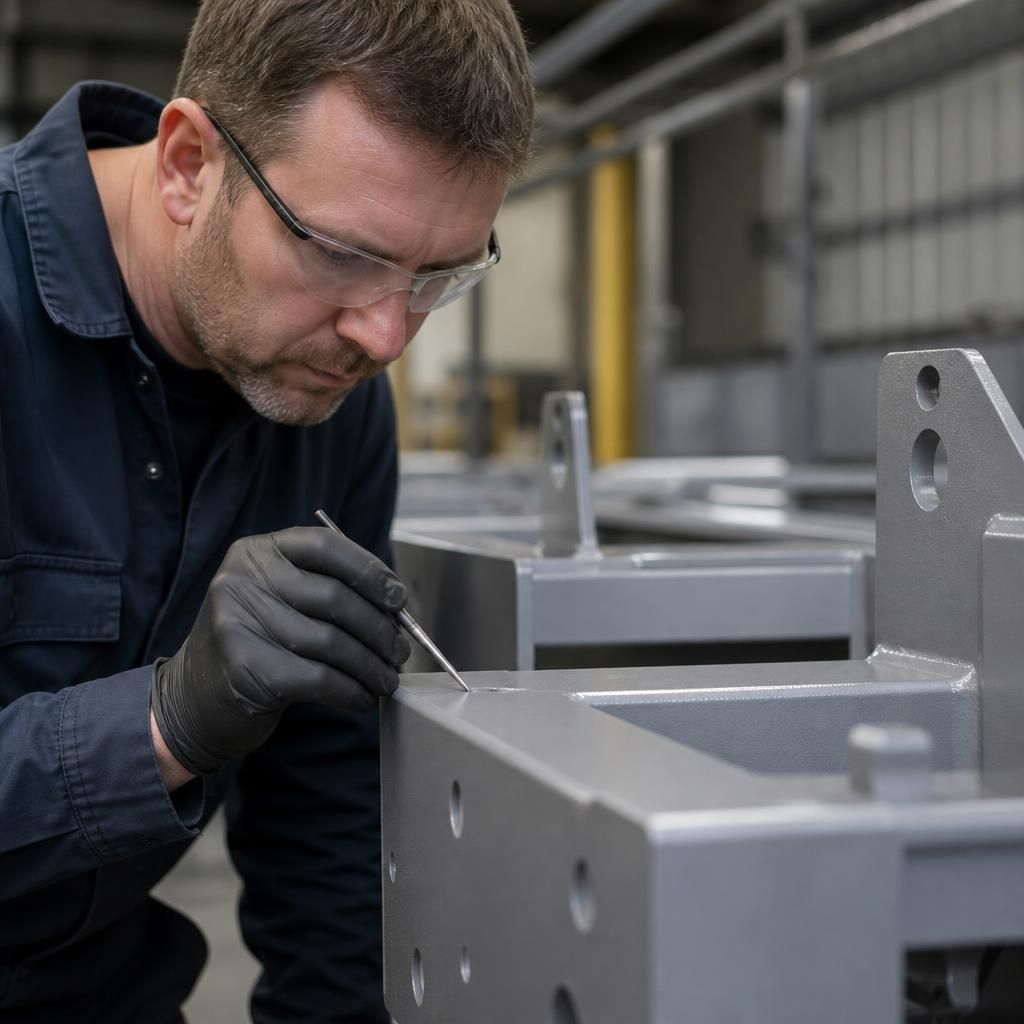
The protective role of zinc changes as the coating is exposed to moisture. In a dry, intact film, the epoxy binder provides the main defence by separating the steel from air and contaminants. If moisture reaches a small defect, zinc can then provide local electrochemical protection, but only while a suitable electrical connection and electrolyte are present. This means the primer is most effective when the coating remains continuous and damage is limited rather than widespread.
This behaviour also explains why isolated defects should be dealt with before corrosion develops beneath the surrounding film. A scratch that exposes steel may initially be contained by the zinc-rich primer, whereas a poorly bonded or extensively damaged area can allow moisture to travel under the coating. Inspection should therefore distinguish minor surface damage from lifting, blistering or underfilm corrosion, which requires removal of unsound coating and proper reinstatement.
Discuss zinc epoxy primer for your metal components
Discuss your metal components and exposure conditions with the powder-coating specialist to determine whether a zinc epoxy primer system is appropriate. The team can advise on suitable preparation, coating requirements and finishing options for your project.