

What specific maintenance strategies should be implemented to ensure the longevity and effectiveness of anti-corrosion coatings on steel structures?
Implement a planned maintenance programme that includes regular inspections, gentle cleaning, prompt repair of scratches or damaged areas, and checks of joints, edges and fixings where corrosion can begin. Record findings and recoat affected steel using a compatible system after suitable surface preparation, while reviewing exposure conditions and coating performance to adjust inspection intervals.
Effective maintenance of anti-corrosion coatings on steel structures means preserving the coating system as a continuous barrier, controlling the conditions that cause moisture and contamination to remain against the steel, and managing damage at interfaces and high-stress areas. The most reliable approach combines sound detailing, coating-specific care, controlled repairs and periodic technical assessment rather than relying on repainting after corrosion has become established.
Control water retention in the structure
Steelwork should be assessed for features that allow water, salts or debris to collect. Blocked drain paths, unsealed overlaps, horizontal ledges, open-ended sections and poorly detailed connections can keep the coating permanently damp. Maintenance should therefore include clearing designed drainage routes and correcting recurring water traps where practicable. Any alteration to the steelwork, such as drilling, welding or fitting new brackets, should be followed by an appropriate treatment of exposed steel and heat-affected areas.
Particular attention is needed at crevices and dissimilar-metal interfaces. Trapped moisture can drive corrosion beneath an apparently intact film, while contact between different metals may create galvanic corrosion. Sealants, isolating materials or compatible coating details may be required, but they must be selected so that they do not trap water or interfere with future coating work.
Protect the coating from operational damage
Many coating failures result from impact, abrasion and contact with equipment rather than from gradual atmospheric attack. The maintenance plan should identify areas exposed to forklifts, lifting gear, tools, stored materials, traffic, vibration or repeated movement. Physical protection, revised handling methods and suitable guards can reduce damage more effectively than repeatedly repairing the same location.
Where steelwork moves or flexes, the coating system must remain suitable for that service. Cracking around bolted connections, supports, brackets and moving joints may indicate that the coating is being subjected to stresses beyond its intended use. These areas should be assessed for the underlying mechanical cause before a repair is specified.
Use cleaning methods that suit the coating system
Cleaning should remove harmful deposits without softening, cutting or lifting the coating. The method should take account of the coating chemistry, surface condition and type of contamination. Abrasive tools, aggressive solvents and excessive pressure can create defects even when the steel initially appears sound. Chemical residues, de-icing salts, process dust and oils should not be allowed to remain on the surface, particularly in sheltered or poorly drained locations.
Any detergent or treatment used should be checked for compatibility and fully removed as required by the coating specification. Cleaning equipment should also be kept free from particles that could scratch the surface or introduce contaminants.
Assess coating condition below the visible surface
A visual assessment may not reveal loss of adhesion, underfilm corrosion or a reduction in film thickness. Where the service conditions justify it, a competent coating inspector can use techniques such as dry-film-thickness measurement, adhesion testing, holiday detection or more detailed examination of suspect areas. Testing should be selected according to the coating type and structure, since unsuitable methods can damage a sound finish or produce misleading results.
When blistering, flaking, rust staining or delamination is found, determine whether the defect is local or indicates a wider failure mechanism. For example, widespread loss of adhesion may point to contamination, unsuitable application conditions or incompatibility between coating layers. Treating only the visible symptom can leave corrosion active beneath adjacent film.
Maintain the complete coating system
Anti-corrosion protection commonly relies on several functions: surface preparation provides a sound key, a primer supports adhesion and corrosion resistance, intermediate coats build barrier protection, and a finishing coat protects the system from weathering or chemical exposure. Maintenance work should preserve this system rather than applying an isolated topcoat without considering the layers beneath it.
- Identify the existing coating type and condition before selecting repair materials.
- Confirm that the proposed repair or overcoat is chemically and mechanically compatible with the retained coating.
- Remove unsound material and treat exposed steel to the specified preparation standard.
- Rebuild the required film thickness and layer sequence at repaired areas.
- Allow each material to cure under conditions permitted by its technical specification.
- Pay particular attention to transitions between old and new coating, where water can enter if the edge is poorly formed.
Where the original coating is unknown, specialist testing may be appropriate before an overcoat is chosen. A small trial area can help establish adhesion, appearance and application suitability without committing the whole structure to an unsuitable system.
Manage application conditions during remedial work
Repair coatings should not be applied to steel that is wet, contaminated or at risk of condensation. Temperature, humidity, steel temperature, ventilation and the time available for curing all influence adhesion and film formation. The coating supplier’s technical instructions should define the acceptable limits for the particular product.
Work should also be planned to prevent dust, overspray, rain or process contamination from reaching uncured surfaces. Edges, welds, corners and bolt heads often receive less effective coverage than broad flat areas, so application methods should allow these features to be properly coated without creating runs or excessive build-up.
Coordinate maintenance with structural and operational changes
Changes in drainage, insulation, heating, process chemicals, storage arrangements or nearby emissions can alter the environment around steelwork. New equipment may create shaded zones, vibration or contact points that were not present when the coating was selected. Any significant modification should trigger a review of the affected coating details and the need for local protection.
Maintenance should also distinguish cosmetic deterioration from a loss of corrosion protection. Fading or chalking may primarily affect appearance, whereas blistering, undercutting corrosion, exposed steel and loss of adhesion require technical intervention. This distinction helps ensure that remedial work addresses the actual failure mode and does not introduce an incompatible layer.
For complex or heavily exposed structures, involve a qualified coating inspector or corrosion specialist when failure is extensive, the existing system is unidentified, or structural steel has lost section. The maintenance strategy should then be updated to reflect the confirmed cause of deterioration, the remaining condition of the coating system and the consequences of further failure.
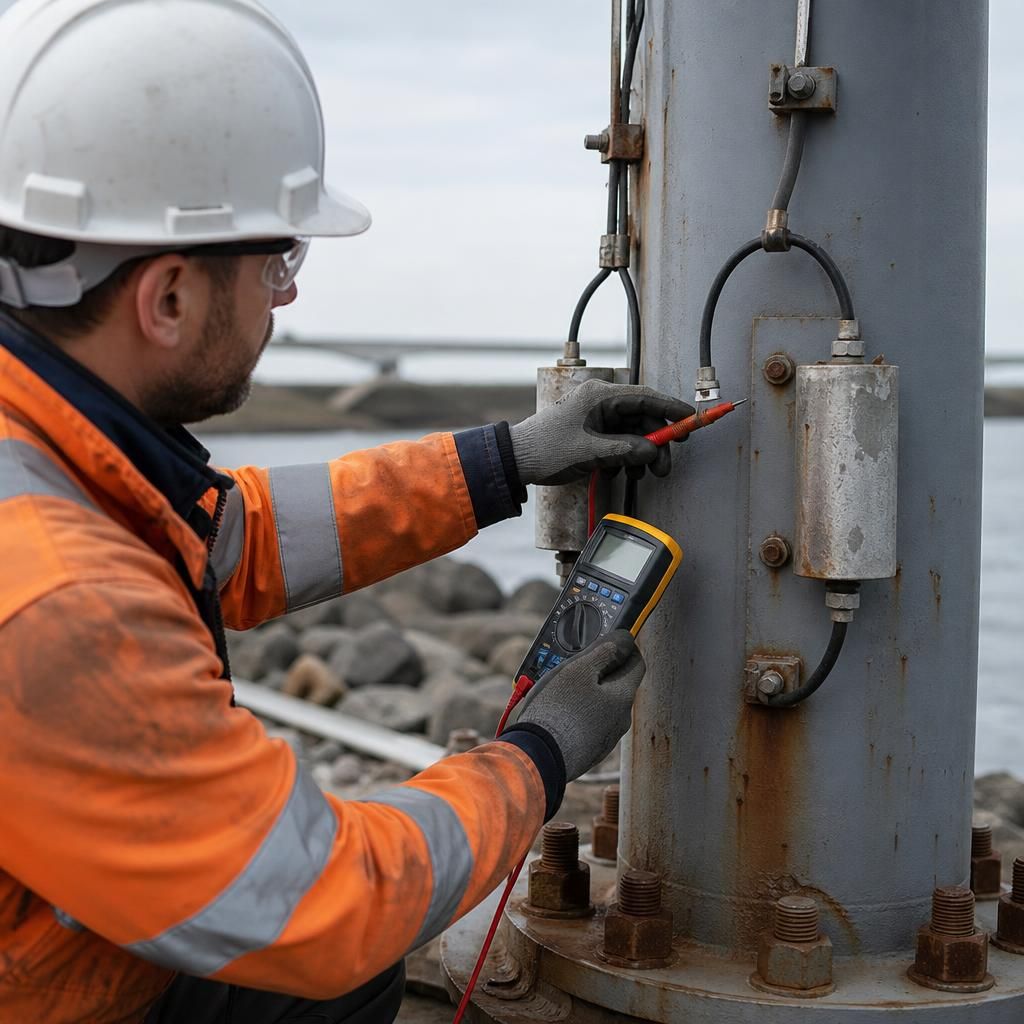
Where a steel structure uses cathodic protection alongside its coating, the electrical protection system should form part of the maintenance plan. Check anode condition, electrical continuity, monitoring equipment and operating readings in accordance with the system design. Incorrect protection levels can reduce coating adhesion or cause localised deterioration, while inadequate protection may leave exposed steel vulnerable to corrosion.
Any coating defects identified during these checks should be assessed alongside the cathodic protection data rather than repaired in isolation. A corrosion specialist can determine whether the cause is mechanical damage, coating breakdown, electrical imbalance or a combination of factors, then specify compatible remedial work and any adjustment to the protection system.
Discuss Your Anti-Corrosion Coating Maintenance Requirements
Discuss your steel structure and existing anti-corrosion coating with the powder-coating.co.uk team, including its exposure conditions and any maintenance findings. This helps establish whether local repair, recoating or a wider coating assessment is the appropriate next step.