

What are the key considerations when selecting an anti-corrosion coating for outdoor structures and equipment?
Select an anti-corrosion coating for outdoor structures and equipment by assessing the metal substrate, exposure to moisture, salt, chemicals and UV, required durability, surface preparation and the coating system’s suitability for the application method. Also consider component size and design, environmental conditions during application, inspection requirements and the maintenance access needed to preserve protection over time.
Selecting an anti-corrosion coating for an outdoor structure is a specification exercise rather than a choice based on colour or nominal coating thickness alone. The suitable system must provide the required level of barrier protection, tolerate the structure’s operating conditions, accommodate its design and movement, and remain inspectable and maintainable throughout its intended service life.
Define the performance requirement. The coating specification should state what level of protection is required and how performance will be assessed. A decorative finish on sheltered equipment has different requirements from a structural component exposed to persistent wetting, de-icing salts or industrial contamination. Consider the expected service life, the consequences of coating failure, acceptable appearance changes and whether the item can be removed for future recoating. These factors help determine whether a single coating layer is appropriate or whether a multi-layer system is justified.
Choose the coating architecture. Anti-corrosion protection may rely on a barrier coating, a primer and topcoat combination, or a system that adds sacrificial protection to the steel. Multi-coat systems can separate functions: the primer improves adhesion and corrosion resistance, while the topcoat provides weathering, colour and additional environmental protection. The layers must be chemically compatible and applied within the specified recoat conditions. A system that performs well in laboratory testing can still fail if one layer is unsuitable for the next or if the specified curing conditions are not achieved.
Account for design details. Water traps, unsealed joints, overlapping plates, sharp internal corners and inaccessible recesses commonly become early corrosion points. Outdoor fabrications should be designed to drain, dry and allow inspection wherever practicable. Welds should be continuous where required by the design, weld spatter should be removed, and sharp edges should be suitably treated or radiused so the coating can form a consistent film. Bolted connections, sliding interfaces and close tolerances also need review because coating build can affect assembly or movement.
Hollow sections require particular attention. If they are not sealed, they should have suitable drainage and venting to prevent trapped water and pressure changes during processing or service. If they are sealed, the design should account for moisture already inside the section and for the consequences of any future damage. These details are often more influential than the nominal specification because they determine whether water can remain against the metal.
Consider galvanic interactions. Where the structure combines steel with aluminium, stainless steel or other dissimilar metals, moisture can create a galvanic cell. The specification should address separation, joint design and coating continuity at interfaces. Fasteners, brackets and replacement parts should be compatible with the surrounding material and coating system. Protecting only the main steel surface may not prevent corrosion at an exposed connection or damaged interface.
Set practical limits for appearance and damage. Outdoor coatings naturally experience colour change, chalking, gloss reduction and local marking over time, particularly under sustained sunlight. These changes may be acceptable for industrial equipment but unsuitable where appearance is a key requirement. The specification should distinguish between cosmetic deterioration and loss of corrosion protection. It should also identify how scratches, impact damage, cut edges and site modifications are to be repaired, since exposed steel can corrode beneath an otherwise sound finish.
Check compatibility with the application process. The coating system must suit the dimensions, mass and geometry of the component and the available handling equipment. Parts intended for powder coating need suitable hanging or racking points, safe electrical contact where required by the process, and access for consistent coverage. Masking may be necessary for threads, machined faces, bearing seats, earthing points and other areas where coating would affect fit or function. Large or complex fabrications may need a planned sequence to avoid inaccessible areas and handling damage.
Specify inspection and records. A robust specification should identify the checks required before, during and after coating. These may include:
- verification that the prepared surface meets the required cleanliness and profile;
- inspection of welds, edges, joints, drainage holes and masked areas;
- confirmation that the correct coating materials and application sequence have been used;
- measurement of cured film thickness at representative locations;
- visual checks for pinholes, runs, contamination, missed areas, poor adhesion or mechanical damage; and
- recording of batch information, inspection results and any approved repair work.
Inspection should reflect the component’s risk and use. A heavily loaded structural item or safety-related assembly may require more formal documentation than a low-consequence enclosure. Acceptance criteria should be agreed before work begins so that defects are judged consistently rather than according to appearance preferences after completion.
Plan for transport and installation. A coating can be damaged after application by lifting chains, forks, abrasive packing, site welding or contact with untreated steelwork. Lifting points and packing methods should therefore be considered in the coating specification. Areas that will be welded or machined on site may need to remain uncoated, with a defined process for protecting and repairing them after installation. Touch-up materials should be compatible with the original system and should not create a weak or visibly unsuitable patch.
Evaluate maintenance requirements. Even a well-specified coating benefits from routine inspection and removal of deposits such as mud, salts and industrial dust. The maintenance plan should state which areas need closer observation, how frequently the finish is checked, and what condition triggers repair. Pay particular attention to edges, joints, fixings, drainage points, impact zones and locations where water or debris accumulates. Early local repair is generally more controlled than allowing corrosion to spread beneath a damaged coating.
For businesses commissioning outdoor metalwork, the most useful approach is to provide the coating specialist with the substrate information, component drawings, operating environment, required appearance, assembly tolerances and intended maintenance arrangements. A Midlands-based powder coating service can then assess whether the proposed system and component design are suitable for processing, including larger batches or specialist protective requirements, with collection and delivery options available across the Midlands and surrounding areas.
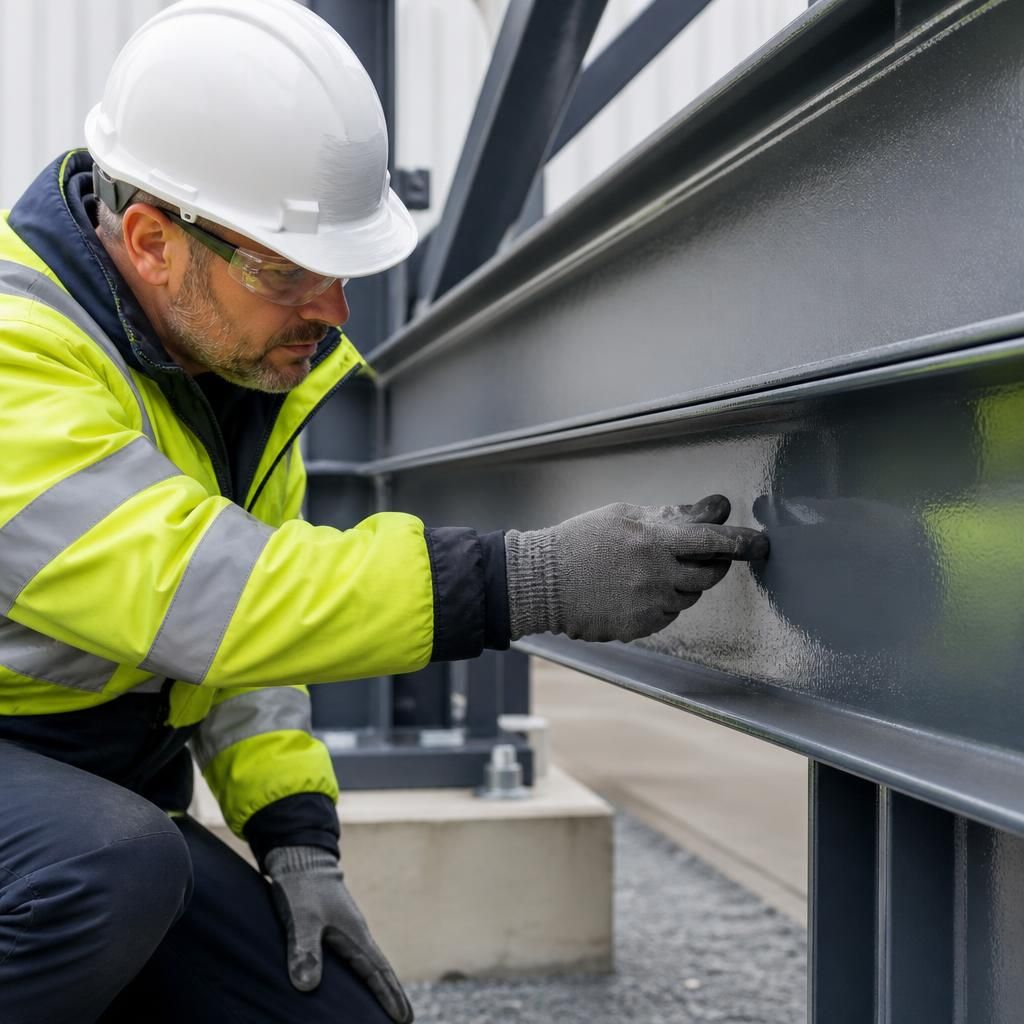
Anti-corrosion performance should be assessed alongside the mechanical stresses placed on the coating. A finish that provides an effective barrier against moisture may still be unsuitable if the structure is regularly struck, scraped, flexed or exposed to abrasive dust. Select a system according to the complete duty of the component, not corrosion exposure alone.
Consider how the item will be handled, installed and used. Access panels, gates, agricultural equipment, storage frames and transport-related structures may experience repeated contact or impact at edges and high-use points. Coating requirements should therefore address adhesion, resistance to abrasion and the ability to tolerate minor movement without cracking or detaching. Thermal expansion and contraction may also matter where outdoor equipment experiences substantial temperature changes.
Before specifying the coating, identify likely damage locations and explain them to the coating specialist. This may support additional edge treatment, a different coating build or a repair procedure for areas subject to frequent wear. Separating corrosion resistance from mechanical durability helps avoid selecting a finish that performs well in an environmental test but deteriorates prematurely in service.
Discuss Your Outdoor Structure’s Anti-Corrosion Coating Requirements
Discuss your outdoor structure’s anti-corrosion coating requirements with the powder-coating team before commissioning work, so the proposed specification can be reviewed against the component’s intended use and processing requirements.