

What are the best anti-corrosion coatings for different types of steel and their specific applications?
The best anti-corrosion coating depends on the steel type, surface condition and exposure: carbon steel commonly benefits from a zinc-rich primer with a compatible powder topcoat, while galvanised steel requires suitable preparation and a coating system designed for zinc surfaces. Stainless steel, weathering steel and steel used in high-moisture, chemical or high-temperature applications need product selection based on their specific environment and operating demands.
The best anti-corrosion coating for steel is determined by the steel’s composition, surface condition, service environment and required finish. A coating suitable for indoor fabricated components may be unsuitable for buried, coastal, chemically exposed or high-temperature steel. The most reliable choice is therefore a complete protection system, combining appropriate preparation, primer or pre-treatment, topcoat and application controls.
Carbon and mild steel are widely used for frames, brackets, machinery parts, storage equipment and general fabricated components. They readily oxidise when exposed to water and oxygen, particularly where the surface is damaged or contamination remains beneath the coating. For more demanding exposure, a zinc-rich primer can provide sacrificial protection beneath a compatible powder topcoat. Epoxy-based layers are useful where adhesion and barrier protection are priorities, while durable exterior powder topcoats provide resistance to weathering and everyday abrasion. The selected system should match the expected exposure rather than relying on a decorative layer alone.
Structural and low-alloy steels require attention to welds, cut edges, drilled holes and other areas where corrosion can begin. These steels are often used in plant, supports, access equipment and construction components, where failure at a joint or edge can be more significant than general surface rust. Coating specifications should define edge preparation, weld cleaning, film coverage and the treatment of crevices. A multi-layer system is generally more appropriate than a single coat where the steel will face persistent moisture, salts or industrial contaminants.
Galvanised and zinc-coated steel already has a metallic zinc layer, so the coating must adhere to zinc without causing excessive bubbling, peeling or loss of the underlying protection. Preparation commonly involves removing grease, white corrosion products and surface residues, followed by a method that keys the surface without unnecessarily stripping the zinc. Outgassing from the zinc layer can also affect the appearance of a powder finish. Suitable pre-treatment, controlled curing and, where required, an appropriate bonding layer are important when coating galvanised components used for fencing, structural work, enclosures or outdoor equipment.
Stainless steel resists corrosion through its passive chromium-rich surface, but it is not immune to staining, tea staining, pitting or contamination. The appropriate approach depends on the grade, the surrounding atmosphere and whether the surface has been exposed to carbon-steel particles during fabrication. Cleaning and surface preparation must avoid embedding contaminants. A coating may be selected for colour, wear resistance, chemical resistance or additional separation from the environment, but it should not be used to conceal unsuitable grade selection or poor fabrication practice. Areas exposed to chlorides and cleaning chemicals need particularly careful assessment.
Weathering steel is designed to develop a stable protective patina in suitable cycles of wetting and drying. It may not need a conventional coating when the environment allows the patina to form evenly and drainage is adequate. Coating can nevertheless be appropriate where the intended appearance must be retained, staining of nearby surfaces must be controlled, or the steel is exposed to conditions that prevent a stable patina. In those cases, the coating specification must account for the steel’s changing surface and the possibility of corrosion continuing beneath a poorly prepared film.
High-strength and heat-treated steels are selected for load-bearing, wear or weight-sensitive applications. Their mechanical properties do not automatically provide corrosion resistance, so protection must be selected independently. Preparation should avoid processes that could damage the component, alter critical dimensions or introduce unacceptable surface defects. For parts subject to repeated loading, the coating system should also be checked for edge coverage, cracking and adhesion around machined or stressed areas.
Steel used in different applications calls for different priorities:
- Indoor machinery and fabricated components: barrier protection, adhesion, appearance and resistance to handling or light abrasion may be the main considerations.
- Outdoor structures and equipment: resistance to rain, condensation, ultraviolet exposure, temperature changes and impact becomes more important. Drainage and joint design should support the coating system.
- Automotive and transport components: the finish may need to withstand stone impact, road salts, abrasion, oils and repeated cleaning. Complex shapes require attention to recesses and Faraday cage areas during powder application.
- Construction and infrastructure steel: durability at welds, edges, fixings and assembled joints is critical. The coating specification should reflect the exposure category and the consequences of maintenance access being restricted.
- Chemical or process equipment: the coating must be compatible with the specific chemicals, concentration, temperature and contact duration. General claims of chemical resistance are not enough without considering the actual service conditions.
- High-temperature components: standard decorative powder coatings may not retain their original colour, gloss or mechanical performance at elevated temperatures. A coating intended for the operating temperature should be assessed, including the effects of thermal cycling and hot spots.
Surface preparation is as important as coating selection. Steel should be free from oil, grease, mill scale, loose rust, salts and fabrication residues before coating. Depending on the component and specification, preparation may include degreasing, abrasive cleaning, mechanical treatment or chemical pre-treatment. Rusted steel needs particular care: applying a new finish over unstable corrosion can leave active corrosion beneath the film and lead to early failure. Sharp edges should be softened where practical, while weld spatter, slag and trapped contamination should be removed.
Powder coating is most effective when the component design supports complete coverage. Drain holes, accessible faces, suitable hanging points and reduced crevices help prevent moisture retention and improve application consistency. Internal corners, boxed sections and recessed areas may receive less coating if the process is not planned for the component’s geometry. Large or batch-manufactured parts should be reviewed for handling, curing capacity and dimensional tolerances before the coating system is finalised.
Selection should also consider the required appearance, repair method, expected service life, inspection access and future maintenance. A specification should identify the steel type, preparation standard, primer or pre-treatment, topcoat chemistry, colour and gloss requirements, target film build, curing conditions and inspection criteria. For critical work, test panels or sample components can help confirm adhesion, appearance and compatibility before full production.
For businesses coating steel components in the Midlands and surrounding areas, a specialist powder-coating review can help match the preparation and coating system to the component’s material and end use. Collection and delivery options can also be considered for batch work and larger fabricated items, provided the component requirements are defined clearly at the outset.
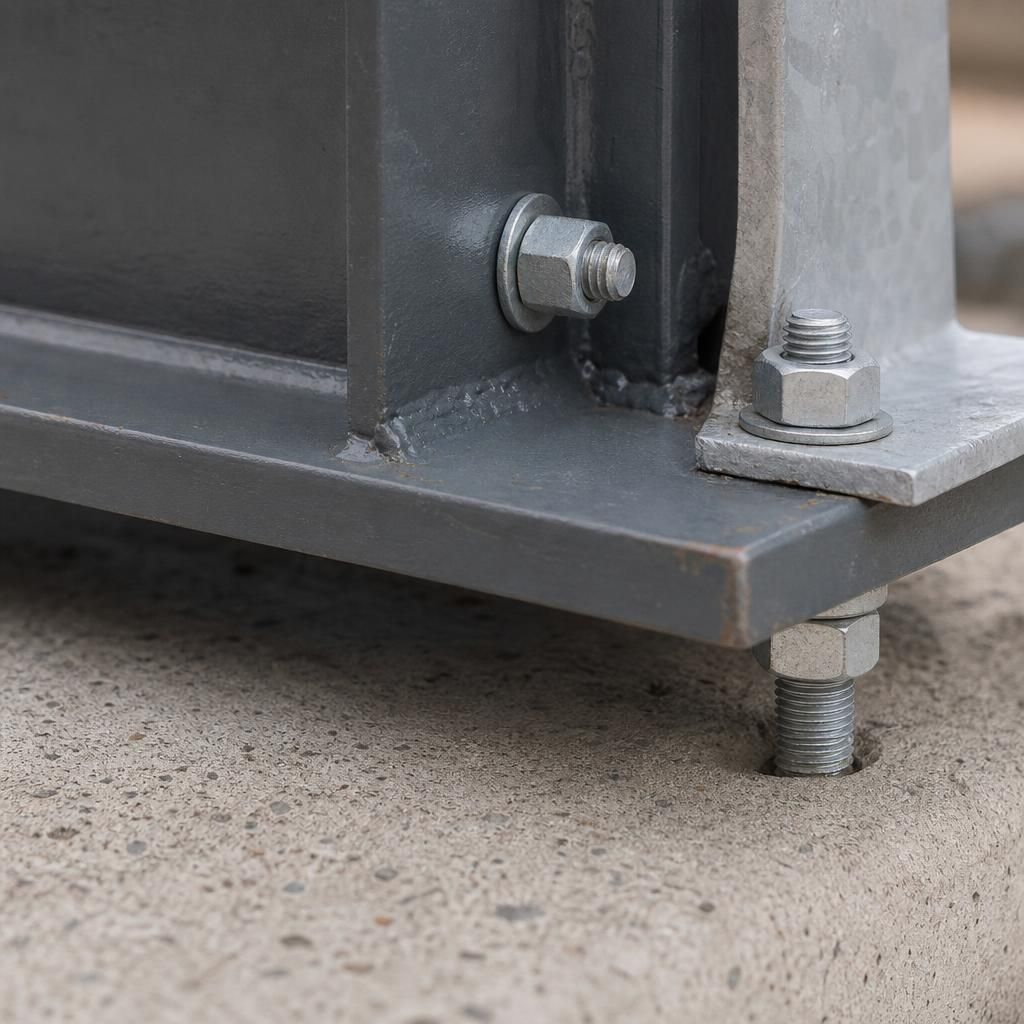
When steel components are assembled with other metals, anti-corrosion performance depends on the joint as well as the steel surface. Exposed contact between dissimilar metals can create galvanic corrosion in the presence of moisture, particularly around fixings, overlaps and unsealed joints. A coating selected for the main steel section may not protect these interfaces if the film is damaged during assembly.
For mixed-metal structures, the specification should identify the adjoining materials and include suitable isolation measures where necessary. These may include compatible sealants, non-conductive washers or sleeves, sealed overlaps and careful treatment of drilled holes and cut edges. This is especially relevant to outdoor frames, enclosures, transport equipment and construction assemblies, where water can remain trapped between coated steel and another metal.
Discuss the right anti-corrosion coating for your steel components
Discuss your steel components, operating environment and required finish with our powder-coating team to identify a suitable anti-corrosion coating system. Provide drawings, specifications or sample parts where available so preparation and application requirements can be assessed accurately.