

What are the cost implications of choosing high-quality powder coatings for steel railings?
High-quality powder coating for steel railings can involve a higher initial cost than basic finishes, but the additional spend typically reflects thorough preparation, coating specification and the durability required for the railing’s environment. The overall cost should therefore be assessed against expected maintenance, recoating and replacement requirements, with railing size, condition, design complexity, batch quantities and collection or delivery needs also influencing the quotation.
The cost implications of choosing high-quality powder coating for steel railings extend beyond the coating charge itself. The decision affects specification, preparation, application control, installation planning and the likely cost of maintaining the railings throughout their service life. A higher-quality system may require greater initial expenditure, but it can provide more predictable performance where the railings face weather, handling, abrasion or industrial contamination.
What is included in the initial cost? A quotation may cover several separate stages rather than simply the application of coloured powder. These can include:
- Assessment of the steelwork and any existing coating or corrosion
- Removal of contaminants, rust, mill scale or failed finishes
- Mechanical or chemical preparation appropriate to the substrate
- Masking of threads, hinges, fixing faces and other areas that must remain clear
- Application of primer and topcoat where the environment or specification requires a multi-layer system
- Controlled curing and inspection of the finished coating
- Packaging, handling and any collection or delivery arrangement
Not every railing project needs each stage to the same extent. For example, newly fabricated steel with a suitable surface may need a different preparation regime from older railings with flaking paint, embedded contamination or localised corrosion. Comparing quotations is therefore more useful when the scope of preparation and the coating system is stated clearly.
Specification can change the price. A standard architectural finish may be suitable for sheltered or moderately exposed railings, whereas railings in demanding conditions may require a more robust powder system, a primer, greater film-build control or additional attention to vulnerable edges and joints. The selected colour, gloss level and texture can also affect material usage and production arrangements, particularly where a project involves several finishes or a small quantity of a less frequently used specification. The least expensive specification is not necessarily appropriate if early deterioration would lead to disruption and additional remedial work.
Design and access affect processing costs. Intricate railings, welded assemblies, sharp internal corners and items with enclosed sections take more time to inspect, mask, hang and coat consistently than simple, open sections. Large or awkward components may need specialist handling and careful racking to avoid contact marks. Existing railings can also incur additional preparation costs if they must be dismantled, transported or stripped before coating. Supplying clean, accessible components and providing accurate dimensions and quantities can help a coater assess the work more efficiently, although it should not replace a proper inspection of the steelwork.
High-quality coating can reduce whole-life expenditure. A durable, correctly specified finish can reduce the frequency of touch-up work and delay the need for full recoating. It may also help protect the steel from moisture and corrosive contaminants, reducing the risk that deterioration will affect fixings, joints or sections of the railing. The financial value is greatest where access is difficult, the railings form part of a public or commercial site, or removal would interrupt other work. Any assessment should include the cost of access equipment, labour, isolation of the area, transport and reinstallation, not just the price of replacement coating materials.
There are also indirect costs to consider. A coating failure may require inspection, removal of loose material, preparation of affected steel and a further application. If corrosion has spread beneath a failed finish, repair or partial replacement may be necessary. Selecting an unsuitable system to reduce the initial quotation can therefore transfer cost into future maintenance and project disruption. This does not mean that the most expensive coating is always the correct choice; it means that the system should match the railing’s exposure, use and expected service conditions.
For a meaningful comparison, ask whether each quotation identifies the substrate preparation, coating layers, intended finish, inspection arrangements, handling requirements and logistics. It is also sensible to confirm how damaged areas, rejected components or additional preparation will be treated before work begins. Powder coating specialists serving manufacturers, fabricators, construction firms and other commercial clients can assess these variables and advise whether a standard, protective or more specialist system is proportionate to the application.
In practical terms, high-quality powder coating is best evaluated as a whole-life cost rather than as the lowest application price. A suitable system, properly prepared steel and controlled application can make the initial investment more defensible by limiting avoidable maintenance and extending the useful condition of the railing. The final decision should balance the required appearance, exposure, handling demands, quantity and future access against the consequences of premature coating failure.
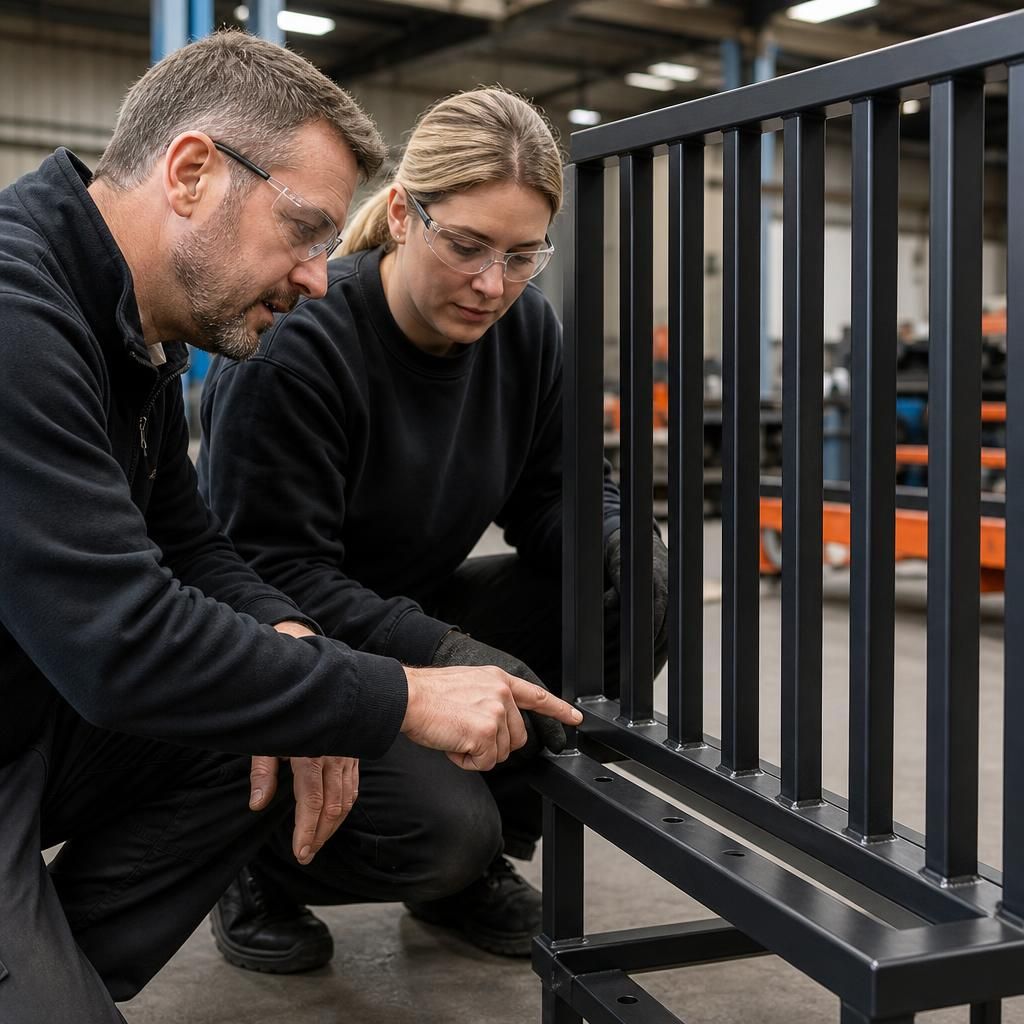
The design of steel railings can affect the cost of achieving a high-quality powder-coated finish. Components designed with accessible surfaces, suitable drainage and venting for enclosed sections, and clean, continuous welds are generally easier to prepare, hang and coat consistently. By contrast, sealed hollow sections, difficult-to-reach recesses or weld spatter may require additional fabrication work or preparation before coating.
Discussing coating requirements at the design stage can therefore help prevent avoidable cost later. The fabricator and coater can identify areas that need masking, drainage or vent holes, suitable hanging points, and protection for critical fixing faces. This does not mean altering every railing design, but it allows any necessary changes to be considered before manufacture, when they are less disruptive than modifying completed steelwork.
Discuss Your Steel Railing Powder Coating Requirements
Discuss your steel railing requirements with powder-coating.co.uk to review the proposed coating specification and the factors that will affect the quotation. Providing details of the railing’s condition, dimensions, finish and intended environment will help establish a more relevant cost assessment.