

What are the benefits of using powder coating on steel railings for corrosion protection?
Powder coating protects steel railings from corrosion by forming a continuous, cured barrier that limits contact between the steel and moisture, oxygen and contaminants. It also provides a hard-wearing, even finish that helps preserve the railing’s appearance and extend its service life compared with uncoated steel.
Powder coating protects steel railings from corrosion most effectively when it is specified and applied as a complete coating system. The system normally combines suitable steel preparation, a compatible pretreatment and a correctly cured powder film, so the coating adheres securely and reduces the conditions that allow rust to develop at the metal surface.
One important benefit is improved adhesion compared with a coating applied over poorly prepared steel. Grease, mill scale, weld residues, existing corrosion and other contaminants can create weak points beneath any finish. Abrasive cleaning or another appropriate preparation method removes or exposes these defects, while pretreatment can improve the bond between the steel and the powder coating. This helps reduce underfilm corrosion, where moisture moves beneath a poorly adhered coating and causes the finish to lift or blister.
- Protection at vulnerable areas: railing joints, welds, corners, drilled holes and fixing points require particular attention because they can retain moisture or have irregular surfaces. Correct preparation and application help the coating system protect these areas more reliably, although the railing design and fabrication quality remain important.
- Resistance to physical damage: railings may be knocked, handled during installation or exposed to repeated contact. A properly cured powder film provides resistance to abrasion and general wear, reducing the chance that everyday use will expose bare steel.
- Resistance suited to the environment: different powder chemistries and pretreatment systems are available for conditions such as external exposure, industrial atmospheres, road salt or frequent cleaning. Selecting the specification according to the railing’s location is essential; a finish suitable for a sheltered indoor application may not provide the same protection outdoors or in a contaminated atmosphere.
- Consistent coverage: powder coating is applied under controlled conditions and then cured to form a continuous film. This allows the applicator to manage coating thickness and finish consistency more precisely than an uncontrolled site-applied process, provided the component is correctly positioned and the powder is fully cured.
- Easier inspection and upkeep: an intact, uniform finish makes it simpler to identify scratches, impact damage, corrosion staining or areas where water is collecting. Early attention to local damage can prevent a small breach from developing into a larger corrosion problem.
Powder coating is not a substitute for good railing design. Water traps, unsealed hollow sections, inaccessible crevices and poor drainage can continue to create corrosion risks beneath or behind the finish. Fabricated steel should therefore be assessed before coating, with welds cleaned, sharp contamination removed and drainage or venting considered where relevant. Fixings and areas damaged during installation may also need compatible touch-up protection.
The coating specification should reflect the expected exposure rather than being chosen for colour alone. Factors include whether the railing is indoors or outdoors, proximity to coastal or de-icing salt, industrial pollutants, ultraviolet exposure, likely abrasion and the cleaning products used. Where corrosion risk is particularly high, the coater may recommend a more robust multi-stage system rather than a basic single-coat specification.
For steel railings, the main corrosion-protection benefit is therefore the combination of sound preparation, suitable pretreatment, correctly selected powder and controlled curing. If any of these stages is unsuitable, the coating may fail prematurely even when the finished surface initially looks satisfactory. A specialist coating assessment can establish the preparation and powder system appropriate to the railing’s steel grade, design and service environment. Powder-coatings.co.uk provides industrial coating services for businesses across the Midlands and surrounding areas, with collection and delivery options for suitable components.
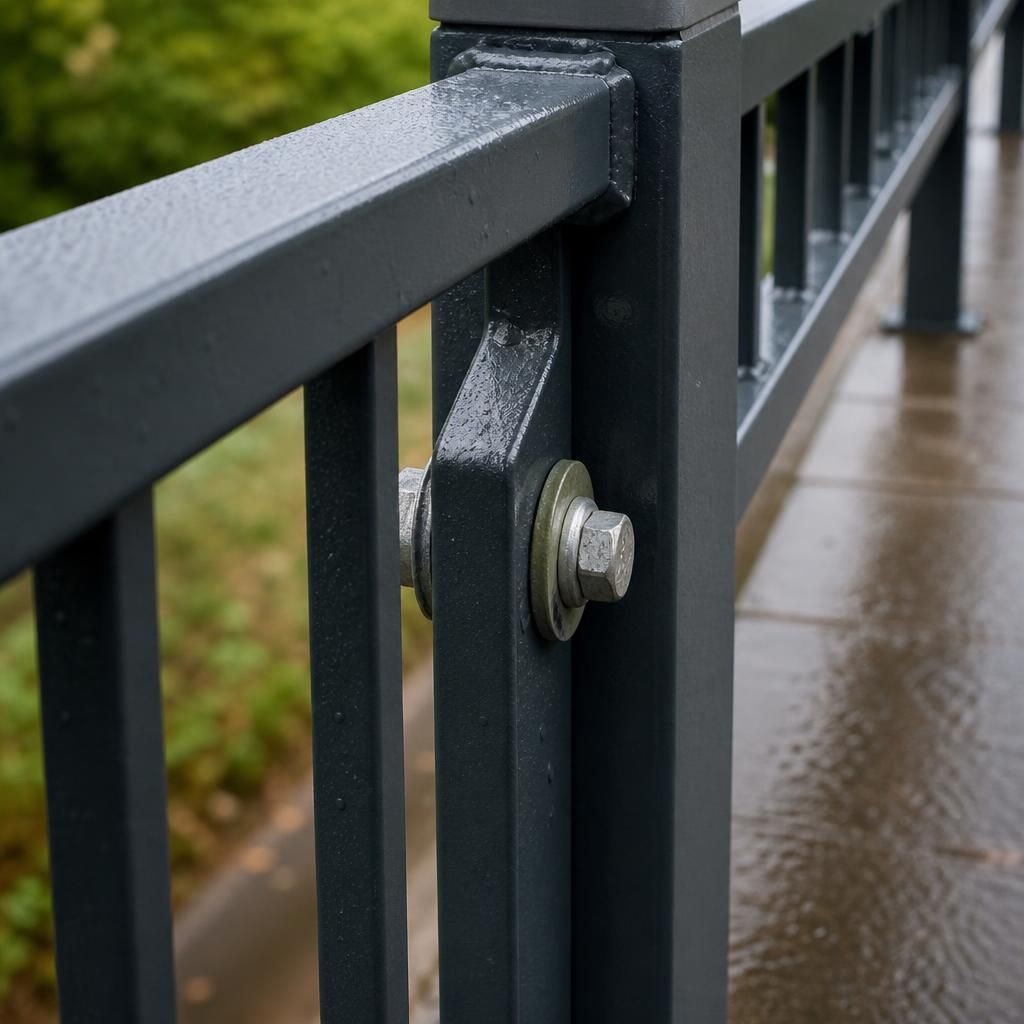
Powder coating helps protect steel railings from surface corrosion, but it does not remove the risk of galvanic corrosion at connections. This can occur when dissimilar metals, such as steel and aluminium or stainless steel, are in electrical contact while moisture is present. The coating specification should therefore be considered alongside the choice of fixings, washers and isolation materials.
Where different metals meet, suitable separation and compatible hardware can reduce corrosion at joints and fixing points. This is particularly important for railings exposed to rain, condensation, road salt or industrial contamination, because moisture can collect around connections even when the main coated surface remains intact.