

How long does the powder coating on steel railings last?
Powder coating on steel railings can remain serviceable for many years, but its lifespan depends on the quality of surface preparation, coating system and exposure conditions. Corrosive environments, impact, abrasion and neglected damage can shorten its life, while suitable coating selection and routine maintenance help preserve the finish.
The useful service life of a powder-coated steel railing ends when the coating can no longer provide a sound, continuous barrier or the finish has deteriorated beyond practical repair. In many installations, the first visible defect is not a general loss of coating but local damage at edges, joints, fixings, drilled areas and places where water or debris remains in contact with the steel.
Coating performance depends on the complete system. Powder quality alone does not determine longevity. The result is influenced by degreasing, removal of mill scale and rust, abrasive preparation, the selected pretreatment, application control and curing. If contamination remains on the steel, or the powder is not properly bonded and cured, premature lifting, blistering or flaking can occur even when the visible colour initially looks satisfactory.
The environment around the railing is equally important. External railings may be exposed to rainfall, condensation, sunlight, airborne pollutants and winter treatment salts. Coastal or heavily industrial locations can place greater demands on the coating than sheltered inland settings. Locations with poor drainage are also at risk because trapped moisture can work through small defects and begin corrosion beneath the film.
Service life is also affected by how the railing is used. Repeated contact, impact from equipment, abrasive cleaning, vandalism and friction at gates or moving sections can expose the substrate. Powder coating is a tough finish, but it is not immune to sharp impacts or aggressive handling. Once steel is exposed, corrosion can spread beneath the surrounding coating, making a small chip progressively more difficult to contain.
Signs that a railing needs attention include:
- rust staining around chips, fasteners, welds or cut edges;
- blistering, bubbling, lifting or flaking;
- cracking around joints or areas that flex;
- powdering or chalking caused by prolonged weathering;
- loss of adhesion when the coating is lightly disturbed; and
- persistent discolouration or deposits that do not clear with gentle cleaning.
Fading is not always evidence that the coating has stopped protecting the steel. Some finishes lose colour or gloss before the underlying film has failed. Conversely, a railing can retain an acceptable appearance while hidden corrosion develops at joints, the underside of horizontal sections or behind brackets. Inspection should therefore consider adhesion, exposed metal and moisture traps, not appearance alone.
Regular cleaning helps remove salts, dirt and industrial deposits that can retain moisture against the surface. Use a mild cleaning solution and a soft cloth or brush, then rinse thoroughly and allow the railing to dry. Avoid abrasive pads, harsh solvents and cleaning methods that may cut into the film. Damage should be recorded and dealt with before rust spreads under adjacent coating.
When deterioration is localised, preparation and a compatible repair coating may be appropriate, although a repair will not always reproduce the original finish or provide the same protection as a properly recoated component. Widespread corrosion, extensive flaking or repeated failure normally calls for removal of the defective coating, suitable steel preparation and a new coating system. The preparation method should be selected after examining the substrate, existing film and exposure conditions rather than simply applying a new layer over the old surface.
For railings in demanding locations, a more robust specification may include a multi-stage protective system rather than a single decorative powder coat. The correct choice depends on the steel condition, required appearance, exposure and likely type of wear. A coating specialist can assess failed areas, identify whether the problem began with preparation, damage or environmental attack, and advise whether repair or complete recoating is the more appropriate route for the installation.
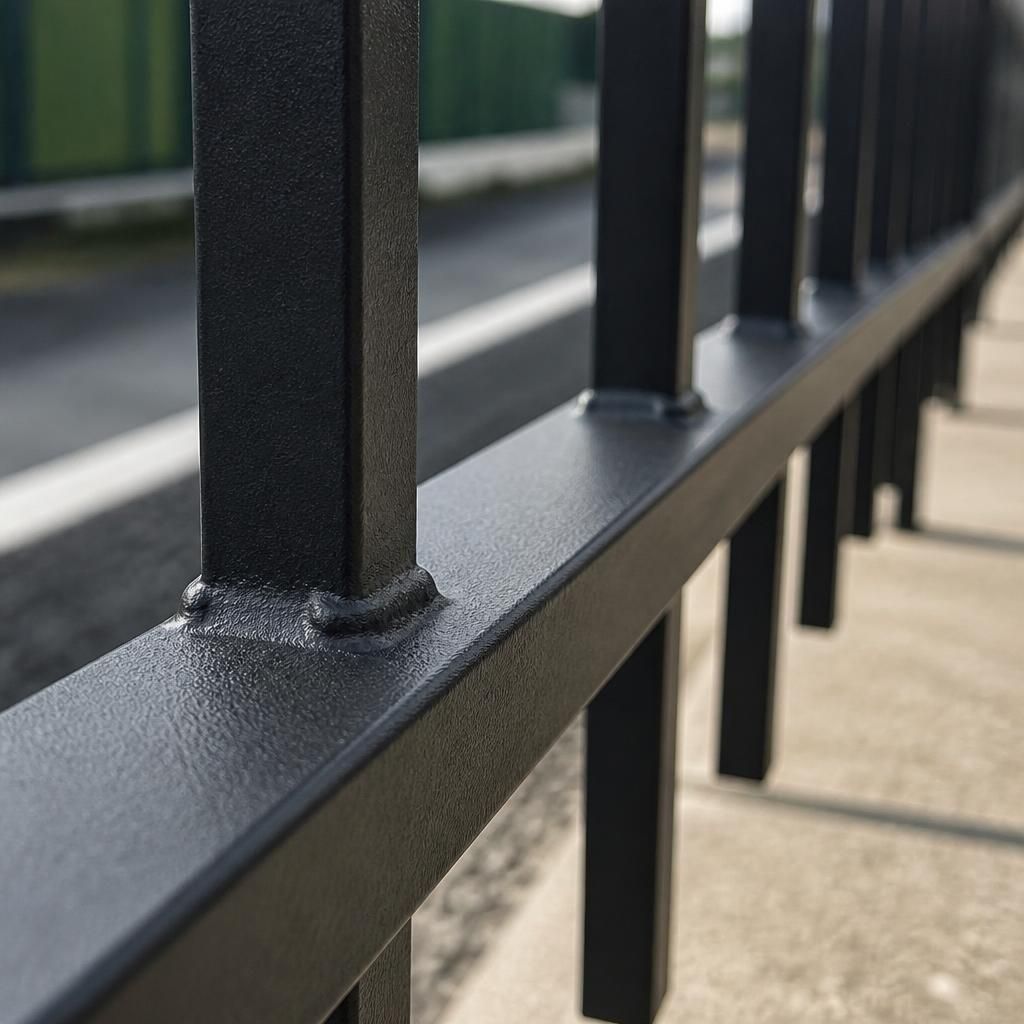
The detailing of a steel railing can affect coating life as much as the powder itself. Sharp edges, burrs and rough welds are difficult to cover evenly, leaving thinner areas that are more vulnerable to impact and corrosion. Smoothing welds, removing sharp projections and designing joints to shed water helps the coating form a more continuous protective layer.
Hollow sections and fabricated assemblies also need suitable drainage and access for preparation and application. Enclosed areas that retain moisture, or surfaces that cannot be cleaned and coated properly, can become early points of failure. Reviewing the railing’s design and condition before coating is therefore important when aiming for a durable finish.
Ask about powder coating lifespan for your steel railings
For practical advice on extending the service life of your steel railings, discuss the railing’s condition, exposure and previous coating with a powder-coating specialist. They can help determine whether local repair, preparation and recoating, or complete refurbishment is the most suitable next step.