

What surface preparation is necessary before powder coating galvanised metals?
Before powder coating, galvanised metal should be thoroughly cleaned and degreased, with oils, dirt, corrosion products and loose zinc deposits removed. The surface is then lightly profiled, typically by suitable abrasive treatment, and allowed to dry fully so the powder coating can bond consistently.
Galvanised steel needs preparation that removes surface contaminants and any incompatible treatment without stripping or excessively damaging the zinc layer. In practice, this means assessing the condition of the galvanising, dealing with fabrication residues and corrosion products, removing passivation where necessary, and selecting a pre-treatment that is compatible with both zinc and the intended powder coating.
Assessment should come before preparation. The coater should establish whether the component is newly galvanised, weathered, stored outdoors, or previously coated. The zinc surface may contain a clear passivation film, white corrosion deposits, storage stains or residues from handling. These conditions affect adhesion differently, so the preparation method should be based on the actual surface rather than applying one process to every item.
- Passivation and conversion coatings: Some galvanised products have a chromate or non-chromate passivation treatment intended to protect the zinc during storage. This can interfere with powder adhesion. It may need to be removed or chemically conditioned before coating, using a process confirmed as suitable for the galvanised surface.
- Fabrication residues: Weld spatter, weld staining, marker ink, cutting fluids, silicone, adhesive residue and handling contamination must be addressed. These materials can cause craters, pinholes, fisheyes or localised loss of adhesion if they remain beneath the powder.
- Edges, holes and joints: Sharp edges should be checked because they can receive a thinner powder layer than broad faces. Welds, crevices, folded sections and drain holes also need particular attention, as trapped moisture or chemicals can lead to defects during curing or later service.
- Zinc condition: The zinc coating should remain sound and continuous. Preparation must not remove substantial galvanising or expose large areas of steel. If the zinc is damaged, heavily eroded or poorly bonded to the substrate, the underlying problem should be assessed before powder coating proceeds.
Where chemical pre-treatment is used, it should be designed for zinc rather than automatically applying a process intended for bare steel. Zinc-compatible systems may include a suitable conversion treatment followed by controlled rinsing. The correct chemistry depends on the powder type, service environment, galvanising condition and the coater’s process specification. Inadequate rinsing can leave residues that impair adhesion, while poor drainage can allow treatment chemicals to remain in seams or hollow sections.
Galvanised components also require careful handling after preparation. Clean gloves or suitable handling controls help prevent fingerprints and renewed contamination. Parts should be kept away from dust, rain, condensation and contact with dirty racks or work surfaces. They must be completely dry before powder application; moisture retained in joints, threaded holes or enclosed sections can produce bubbling, pinholing or corrosion beneath the finish.
Outgassing should be considered for porous or complex galvanised parts. During curing, trapped air, moisture or process residues can expand and escape through the powder film. This is more likely with rough zinc surfaces, cast or fabricated sections, overlapping joints and components with cavities. Practical controls may include suitable pre-heating, allowing the part to release trapped gases before coating, using a powder formulation intended to tolerate outgassing, or applying an appropriate sealing approach. These measures should be agreed with the coater because they can affect the final appearance and film build.
Preparation is not complete until the result has been inspected. Checks should cover visible contamination, remaining passivation, damaged zinc, sharp projections, inaccessible recesses and evidence of moisture. For a new or unusual component, a trial piece or test area can help confirm that the chosen pre-treatment and powder system achieve the required adhesion and appearance before a full batch is processed.
The required preparation therefore depends on the galvanising condition and the component design. A robust specification should record the required surface condition, treatment sequence, drying requirements, masking points and inspection method. This is particularly important for batch work, outdoor components and parts exposed to abrasion, moisture or chemicals, where weaknesses at the zinc-to-powder interface are more likely to affect service performance.
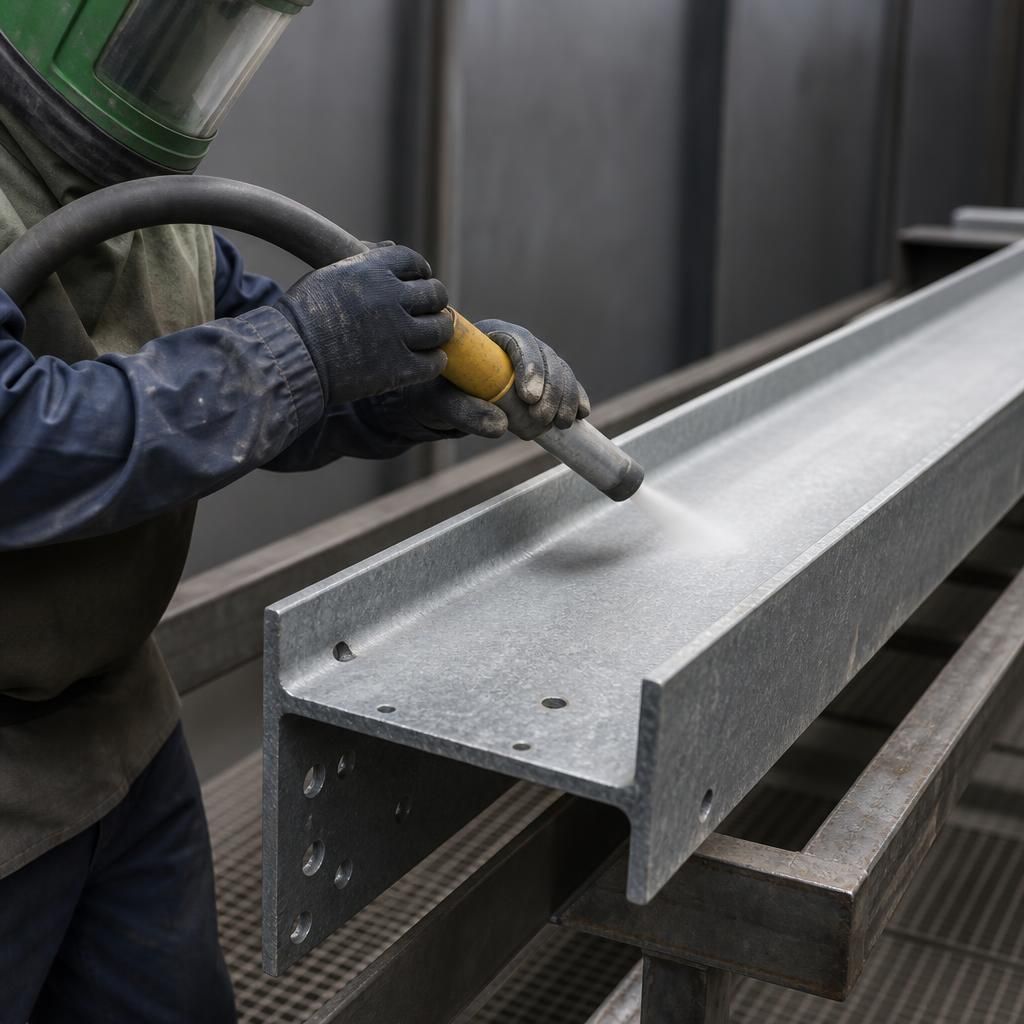
Galvanised steel usually needs a controlled surface profile before powder coating, but the treatment must be gentle enough to preserve the zinc layer. Sweep blasting is commonly used to remove weak surface deposits and create a light key for the powder, rather than aggressively blasting the component as if it were uncoated steel.
The abrasive process should be selected and controlled according to the zinc coating’s condition, component shape and required finish. Excessive pressure or an unsuitable abrasive can thin the galvanising, expose the steel or leave an uneven surface that shows through the powder. The prepared metal should therefore have a consistent, clean profile without deep grooves, loose particles or areas of exposed substrate.
Discuss your galvanised metal surface preparation requirements
Discuss your galvanised component’s condition, design and intended service environment with the powder-coating team before specifying the preparation process. They can help establish a suitable treatment sequence and assess whether a trial piece is appropriate for your project.