

What are the specific benefits of combining galvanisation with powder coating for industrial applications?
Combining galvanisation with powder coating creates a duplex protection system: the zinc coating provides sacrificial corrosion protection, while the powder coating adds a continuous barrier against moisture, chemicals and abrasion. For industrial components, this can improve coating durability, extend maintenance intervals and provide a consistent, coloured finish alongside the underlying protection of galvanised steel.
Combining hot-dip galvanisation with powder coating creates a duplex finish in which two compatible protection systems work together on the same steel component. The specific industrial benefit is not simply an extra layer of paint; it is a combination of zinc-based protection, a formulated polymer finish and a wider choice of functional and visual performance characteristics.
- More robust protection at coating imperfections: Powder coating can contain small defects or may be damaged during handling, installation or service. Where steel becomes exposed, the zinc layer beneath can continue to provide sacrificial protection, reducing the immediate consequences of a localised scratch or impact.
- Reduced attack on the galvanised surface: A correctly applied powder coating helps shield the zinc from direct contact with rainwater, condensation, salts, cleaning agents and industrial contaminants. This can be particularly useful where the component is exposed to regular wetting, pollution or aggressive handling conditions.
- Improved appearance and specification control: Galvanisation provides protection but does not normally deliver the uniform colour or surface appearance required for many finished products. Powder coating allows the visible surface to be specified by colour, gloss level and texture, making components easier to match with equipment, buildings or corporate schemes.
- Better suitability for visible fabricated parts: The combined finish can make galvanised steel more appropriate for items that must meet both a structural or protective requirement and an appearance requirement. This is relevant to external fabrications, machinery components, architectural metalwork, guarding and equipment enclosures.
- Protection of the zinc during service: In some environments, repeated exposure can gradually consume or weather the outer zinc surface. A sound powder coating limits that direct exposure, helping the galvanised layer remain available as a secondary protective system rather than being exposed to the environment continuously.
- Greater flexibility in product design: Galvanised steel can be used where corrosion protection is a priority, while powder coating adds options for colour identification, product differentiation, low-visibility installation and visual consistency across assemblies. This can avoid choosing between a protective metal treatment and a specified finished appearance.
- Potentially simpler whole-life maintenance planning: The two-stage system gives maintenance teams two distinct protective elements to inspect. The visible powder finish can be checked for chalking, cracking, impact damage or loss of adhesion, while the condition of exposed areas can be assessed to determine whether remedial work is needed. This supports planned inspection rather than relying only on the appearance of bare galvanised steel.
- Useful performance in demanding industrial settings: The combination is suitable for applications where metal parts may face outdoor exposure, moisture, handling, abrasion or contact with contaminants. The appropriate powder formulation still needs to be selected for the actual environment; galvanisation and powder coating do not make every component suitable for every chemical or temperature condition.
The benefit depends heavily on the interface between the two finishes. Newly galvanised steel may retain oils, passivation residues, oxides or other surface conditions that can interfere with powder adhesion. Preparation may therefore include cleaning, removal of unsuitable residues, controlled abrasion or suitable pre-treatment, followed by careful drying and inspection. Vent holes and drainage paths may also be required on hollow fabrications so that trapped chemicals, moisture or gases do not create defects during processing.
Application quality is equally important. The powder must be cured in line with its technical requirements without adversely affecting the galvanised substrate, and the finished component should be checked for coverage, adhesion and visible defects. Edges, welds, corners, threaded areas and handling points deserve particular attention because they can behave differently from broad, accessible faces.
For industrial projects, the combined system is therefore most valuable when the specification considers the complete service environment rather than treating powder coating as a cosmetic addition. The required zinc treatment, surface preparation, powder type, colour, texture, curing conditions and inspection criteria should be agreed before production. Used in that controlled way, galvanisation with powder coating can provide a coordinated solution for components that need both underlying metal protection and a defined finished surface.
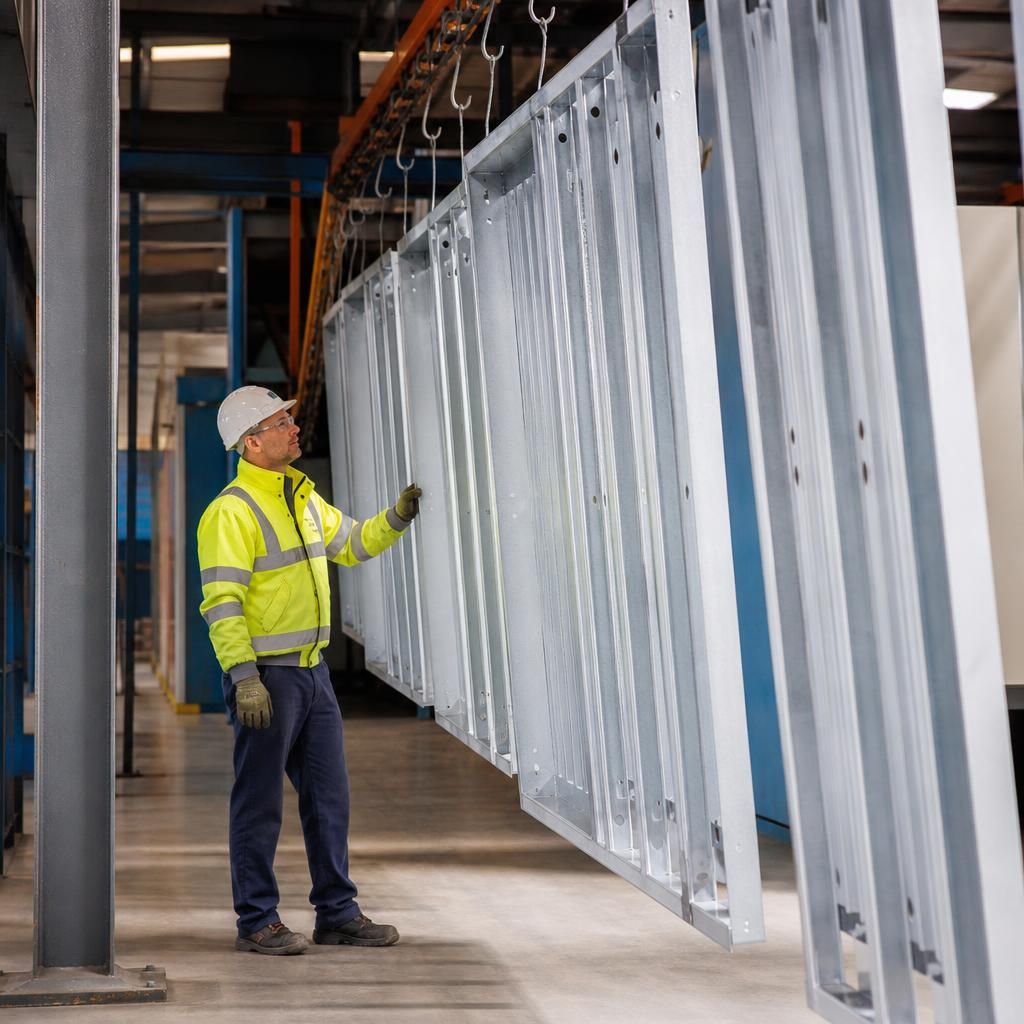
A key benefit of a galvanised-and-powder-coated system is that the two treatments can be specified for different parts of the component’s duty. Galvanisation provides the underlying protection required for the steel substrate, while the powder coating can be selected for the component’s visible finish, handling conditions and operational environment. This allows engineers to assess structural protection and surface performance separately rather than relying on one coating to meet every requirement.
That distinction is useful when components form part of a larger industrial assembly. The powder finish can support identification of panels, guards or equipment sections through controlled colour and texture, while the galvanised layer remains an additional protective safeguard beneath it. The specification should still confirm compatibility between the zinc surface, pre-treatment and powder formulation, particularly where the finished parts will experience repeated handling or exposure to contaminants.