

How does powder coating affect the longevity and integrity of galvanised metal components?
Powder coating adds a tough, continuous barrier over galvanised metal, helping protect the zinc layer and underlying steel from moisture, chemicals, abrasion and weathering. When the surface is correctly prepared and the coating system is suitable, this duplex protection can extend component service life while preserving dimensional stability and structural integrity.
Powder coating can improve the long-term integrity of a galvanised metal component by protecting the zinc coating from premature deterioration and providing a stable, finished surface over the steel. Its effect depends heavily on adhesion between the powder coating and the galvanised layer: a well-prepared, correctly cured system can remain intact for longer, while poor preparation may lead to peeling, blistering or localised corrosion beneath the coating.
The galvanised layer and powder coating perform different roles. Galvanisation provides sacrificial protection to exposed steel, while the powder coating acts as an additional sealed finish. If the outer coating is damaged, the zinc can still offer a degree of protection to the exposed steel. This combined action helps limit the spread of local damage, provided the galvanised surface has sufficient coating thickness and the powder coating has bonded properly.
Integrity is also affected by how the coating interacts with the underlying component. Powder coating does not strengthen a weak or incorrectly designed part, and it cannot restore steel that has already lost significant section through corrosion. Its value is in retaining the condition of sound material, maintaining a consistent surface and reducing the likelihood that small defects will develop into more extensive deterioration.
Several preparation factors determine whether that protection is achieved:
- Surface cleanliness: Oils, handling residues, dust and loosely attached zinc products can prevent proper adhesion.
- Surface profile: The galvanised surface may need suitable mechanical or chemical preparation so the powder has a reliable key without unnecessarily removing protective zinc.
- Outgassing control: Zinc-coated steel can release trapped gases during curing. If this is not considered, pinholes, craters or bubbling may appear in the finish and reduce its protective continuity.
- Moisture management: Components must be dry before coating. Moisture held in seams, recesses or fabrication details can cause defects or corrosion at concealed areas.
- Edge and weld treatment: Sharp edges, weld spatter and rough transitions can create thin spots or stress points. Smoothing and appropriate preparation help produce more even coverage.
Correct curing is equally important. The powder must reach the specified curing conditions throughout the component, not merely on its most exposed surfaces. Under-curing may leave the finish with inadequate hardness, adhesion or chemical resistance. Excessive heat or an unsuitable cure schedule can affect the coating system or the component itself. Large, thick or complex fabrications may heat unevenly, so the coating process needs to account for their mass, geometry and thermal behaviour.
A sound powder coating can also help preserve dimensional integrity by reducing the rate at which corrosion products build up on the steel. This matters for fabricated assemblies, brackets, enclosures, fixings and parts that must continue to align or fit together. However, coating thickness still needs to be considered where components have close tolerances, threaded features, mating faces or moving interfaces. These areas may require masking, controlled application or post-coating checks.
Potential deterioration usually begins at weaknesses in the system rather than across an undamaged, well-bonded surface. Typical warning signs include lifting at edges, blistering, cracking, underfilm corrosion, visible pinholes and staining around fixings or joints. Such defects should be assessed promptly. Simply applying another coat over a failed area may conceal the problem without removing contamination or addressing corrosion underneath.
Design and fabrication details also influence longevity. Water traps, unsealed hollow sections, inaccessible internal faces and incompatible contact points can allow deterioration to develop where inspection and coating coverage are limited. Drainage holes, suitable joint design and access for preparation and inspection help the galvanised and powder-coated system perform consistently across the whole component.
For industrial applications, the most reliable assessment considers the complete coating system rather than powder coating in isolation. The galvanising condition, component design, preparation method, powder formulation, application thickness, curing process and intended service environment all affect the outcome. Inspection should confirm coverage, adhesion and the absence of visible defects, with particular attention to edges, welds, recesses and handling points.
In practical terms, powder coating preserves the integrity of galvanised components when it is treated as a controlled duplex-coating process. Proper preparation and curing help the finish remain attached to the zinc, while suitable detailing and inspection reduce weak points that could allow deterioration to progress beneath the surface.
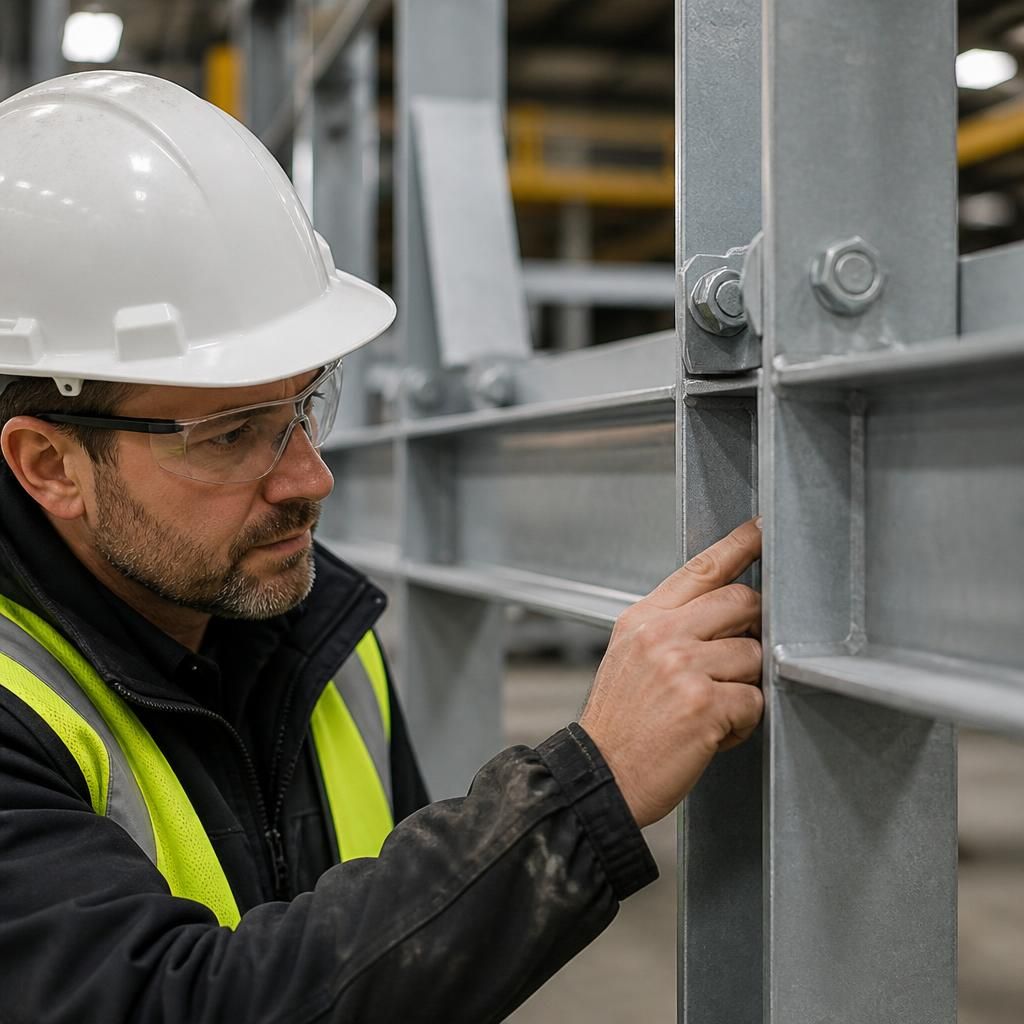
Thermal and mechanical cycling can affect the long-term integrity of a powder-coated galvanised component, even when the original finish is sound. Steel, zinc and the cured powder layer respond differently to changes in temperature and physical movement. Repeated expansion, contraction, vibration or flexing can gradually place stress on the interface between the layers.
This is particularly relevant to components used outdoors or in locations exposed to changing temperatures, impact and operational movement. A coating system should therefore be selected with the component’s flexibility, geometry and service conditions in mind. Areas that bend, move or experience repeated contact may need careful design and controlled coating application so the finish does not become a point of weakness.
Maintaining integrity also depends on protecting the coating during handling, installation and later use. Abrasion from fixings, lifting equipment or adjacent components can expose the galvanised layer. Checking these contact areas after installation helps distinguish superficial marking from damage that may compromise the protective system.