

How can powder coating improve the environmental resistance of galvanised metals used outdoors?
Powder coating improves the outdoor environmental resistance of galvanised metals by adding a continuous barrier against moisture, pollutants, abrasion and weathering. Used as part of a compatible duplex system, the powder layer complements the zinc coating, helping protect the steel substrate and maintain the component’s appearance in demanding external conditions.
Powder coating improves the environmental resistance of galvanised metal by controlling how outdoor exposure reaches the zinc and steel beneath it. The galvanised layer provides metallurgical protection to the steel, while a correctly specified powder coating adds a tough, finished surface that helps the component withstand repeated changes in moisture, temperature, sunlight and atmospheric contamination.
Protection in corrosive atmospheres: Outdoor galvanised components may be exposed to road salt, coastal air, fertiliser residues, industrial pollutants or construction dust. These contaminants can retain moisture on the surface and accelerate zinc consumption. A suitable powder coating reduces direct contact with these deposits and makes the surface easier to clean, helping the galvanised layer retain its protective function for longer.
Resistance to sunlight and weathering: Ultraviolet radiation can gradually alter the colour and surface of an organic coating. For external applications, the powder chemistry, pigment and gloss level should therefore be selected for the expected degree of sunlight exposure. A coating designed for exterior use can provide better colour and finish retention than an unsuitable general-purpose formulation. This is particularly relevant to visible fencing, street furniture, architectural steelwork and equipment housings.
Improved performance during wet-and-dry cycles: Repeated rain, condensation and drying can produce fluctuating conditions at joints, folds and fixings. These areas often retain water for longer than open faces. Powder coating helps reduce the number of exposed sites where moisture can collect, but it cannot correct poor drainage or sealed cavities. Components should be designed so that water can run off rather than remain trapped against the coated galvanised surface.
Greater resistance to handling and service damage: Galvanised surfaces can be marked during fabrication, transport or installation. A properly cured powder film can add resistance to scuffing, light impact and routine handling. The required balance between hardness and flexibility depends on the component’s use. A brittle coating may chip under impact, while an overly soft finish may mark more readily, so the specification should reflect the loads and handling conditions involved.
The environmental improvement depends heavily on the condition of the galvanised surface and the preparation process. Newly galvanised steel may contain oils, passivation residues, loose zinc, storage stains or other contaminants. Older material may have white rust, embedded dirt or local corrosion products. These must be assessed and removed using a method that creates a suitable surface for adhesion without unnecessarily removing the zinc protection.
- Remove oil, grease, salts, dirt and loose deposits before coating.
- Deal with white rust and corrosion products rather than sealing them beneath the powder film.
- Use controlled abrasion or an appropriate chemical preparation where required.
- Allow cleaning and pretreatment residues to dry fully.
- Consider outgassing from the zinc layer, which can create pinholes or blistering during curing.
- Check that the selected pretreatment and powder system are compatible with galvanised steel.
Edges, welds, holes, cut ends and fixing points deserve particular attention because they may have less consistent zinc coverage or are more likely to be damaged during assembly. Powder coating can improve these vulnerable areas, but application quality and component design remain important. Sharp edges can produce a thinner powder film, while threaded parts and close-fitting joints may need masking or a separate finishing approach to preserve their function.
Temperature changes also affect the coating system. Steel, zinc and the powder film respond to heat at different rates, so the coating must have sufficient adhesion and flexibility for the component’s operating conditions. External plant, vehicle parts and structural items may experience more severe thermal movement than sheltered indoor components. The powder specification should take account of service temperature, sunlight exposure and possible contact with hot surfaces.
A powder-coated galvanised component is not maintenance-free. Regular inspection should look for chips, scratches, blistering, lifting at edges, staining around fixings and damage caused by impact or chemical contact. Prompt repair limits the size of exposed areas and reduces the chance of moisture entering beneath the coating. Cleaning should use methods and products that do not attack the finish; aggressive solvents or abrasive tools may create damage that ordinary weathering would not cause.
The best results come from treating galvanisation and powder coating as one coordinated system rather than specifying either finish in isolation. The expected atmosphere, exposure, appearance requirements, component design, preparation method and powder formulation all influence the final resistance. For industrial projects, these details should be agreed before fabrication so that drainage, masking, access for preparation and the required finish can be incorporated into the coating specification.
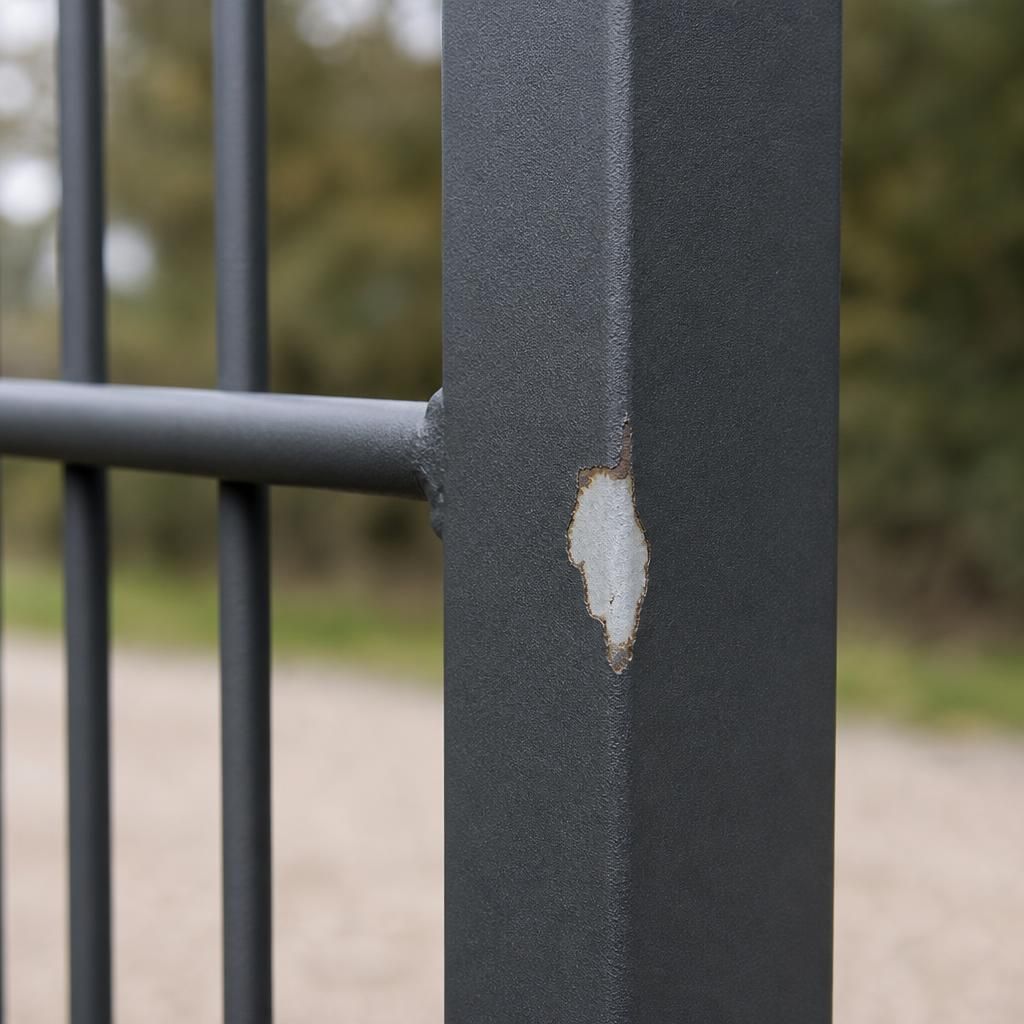
A key advantage of combining powder coating with galvanisation is the way the two layers respond to local damage. If a small chip or scratch exposes the underlying zinc, the galvanised layer can continue to protect the steel sacrificially, while the surrounding powder film limits the area exposed to moisture and contaminants.
This does not make damage harmless or remove the need for repair. The effectiveness of the system depends on the remaining zinc coverage, the size and position of the defect, and the surrounding atmosphere. Inspecting damaged areas and restoring the coating before corrosion spreads helps preserve the combined barrier and sacrificial protection provided by the duplex finish.
Discuss powder coating for galvanised metals used outdoors
Discuss your galvanised components, outdoor exposure and finish requirements with our powder-coating specialists to identify a suitable duplex coating approach. We can advise on preparation, powder selection and practical design considerations before production.