

Are there any specific environmental conditions to consider when powder coating galvanised metals?
Yes. Humidity, temperature, condensation, airborne contamination and the condition of the galvanised surface can affect powder coating quality, so the metal should be clean and dry and kept within suitable controlled conditions during preparation, application and curing.
Environmental conditions affect powder-coated galvanised metals both during processing and throughout their service life. The key considerations are the condition of the zinc surface, the surrounding exposure environment, the component’s design, and whether the selected pretreatment and powder system are suitable for those conditions.
Storage and handling before coating
Galvanised components should be stored in a way that prevents water, dirt and chemical residues from becoming trapped against the surface. Poorly ventilated stacking, contact with wet packaging and prolonged exposure to contaminated air can lead to zinc corrosion products forming before the coating process begins. Components should also be protected from road salt, construction dust, oils and other materials that may be difficult to remove during cleaning.
Where galvanised steel has been exposed before coating, the surface should be assessed rather than treated as new material. White corrosion products, staining, uneven oxidation or areas of damaged zinc can affect pretreatment and coating adhesion. The preparation method may therefore need to be adjusted to produce a consistent, suitably keyed surface without unnecessarily removing the protective zinc layer.
Conditions in the intended service environment
The surroundings in which the finished component will be used determine the level of protection required. Particular attention is needed for:
- Marine and coastal locations: airborne salt can increase the corrosive burden on exposed edges, joints and any damaged areas.
- Areas treated with de-icing materials: salt carried onto steelwork can remain in crevices and around fixings, especially on external structures.
- Industrial atmospheres: acidic or alkaline pollutants, process vapours and airborne chemicals may affect the powder film or the zinc beneath it.
- Wet or permanently damp locations: standing water, immersion and repeated wetting require a coating specification that is appropriate for the actual exposure rather than a general-purpose finish.
- External locations with strong sunlight: ultraviolet exposure can gradually alter colour and gloss, with the extent depending on the powder chemistry, colour and required appearance.
These conditions do not automatically prevent powder coating, but they should be identified before the coating system is selected. A finish intended for an internal fabrication may not be appropriate for coastal structural steel, chemical plant equipment or components exposed to regular wash-down.
Component design can amplify environmental effects
Design details often have as much influence on durability as the general climate. Crevices, overlapping plates, unsealed hollow sections and poorly drained recesses can retain water and contaminants. Sharp edges can also receive less coating coverage than broad, accessible faces. Where practical, designs should allow drainage, cleaning and consistent access for pretreatment and powder application.
Welds, cut edges, drilled holes and areas where the galvanised layer has been disturbed deserve particular inspection. Fixings and contact between different metals should also be considered, because retained moisture can contribute to localised corrosion. The coating specification should account for these vulnerable details rather than relying solely on the presence of zinc beneath the powder.
Temperature changes and movement
Components used outdoors may experience repeated heating and cooling. Steel, zinc and the cured powder film can respond differently to these changes, particularly on large sections, thin sheet, complex fabrications or assemblies with dissimilar materials. A suitable system should provide adequate adhesion and flexibility for the expected conditions. The design should also avoid concentrating movement or stress at sharp corners, joints and fasteners.
During curing, the mass and geometry of the galvanised component can affect how heat reaches all areas. Heavy sections, enclosed fabrications and assemblies with significant variation in thickness may require process checks to confirm that the powder has achieved the required cure throughout the part. This is a production consideration rather than simply an ambient weather issue, and it should be verified as part of the coating process.
Pretreatment must suit the zinc surface
Galvanised steel is not prepared in exactly the same way as untreated mild steel. The surface may contain zinc oxides, residues from galvanising, passivation treatments or contamination from storage and handling. Cleaning and pretreatment products must be compatible with the zinc layer and with the powder system. If residues remain, or if the surface is attacked too aggressively, adhesion and appearance may be compromised.
For demanding applications, the preparation route should be agreed against the expected exposure category and verified on representative material. Trial pieces can help establish whether the chosen cleaning, surface conditioning and powder application process produces consistent adhesion, coverage and appearance on the actual galvanised finish.
In practical terms, the most important environmental question is not simply whether the component will be used indoors or outdoors. It is how the combination of moisture, salts, chemicals, sunlight, temperature cycling, component geometry and surface condition will affect the complete coating system. Providing these details when specifying the work allows the pretreatment and powder finish to be selected for the real operating environment rather than for appearance alone.
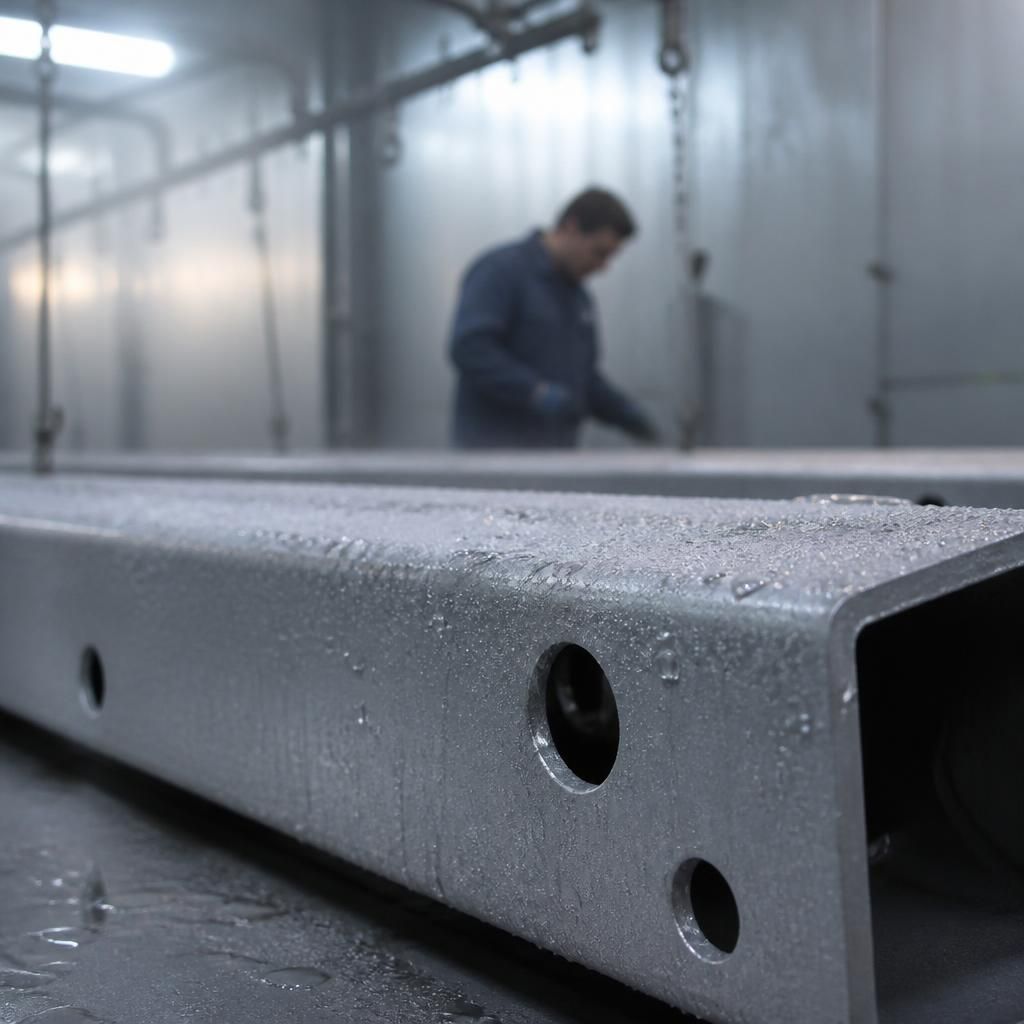
Condensation is a particular risk when powder coating galvanised metal. A component can appear dry while its surface temperature is low enough for moisture to form, especially when cold steel is brought into a warmer, humid preparation area. That thin film of water can interfere with cleaning, pretreatment and powder adhesion.
Environmental checks should therefore consider the temperature of the metal itself, not just the surrounding air. Galvanised components should be allowed to reach suitable, stable conditions before preparation and coating, with protection from sudden temperature changes and damp air. Keeping the surface dry through pretreatment and application helps prevent defects caused by trapped moisture beneath the powder film.