

What considerations should be taken into account when selecting powder coatings for rusted steel?
Selecting a powder coating for rusted steel requires consideration of the steel’s condition, the level of surface preparation possible, the component’s service environment and the required corrosion resistance. The coating system, colour and finish should also be compatible with the part’s dimensions, intended use and curing requirements.
Selecting a powder coating for rusted steel is a specification exercise: the chosen coating must provide the required adhesion, corrosion protection, appearance and dimensional performance after the steel has been prepared and cured. The most suitable option depends not only on the powder itself, but also on how the component is designed, handled, assembled and maintained.
Consider the required coating performance
Start by defining what the finished component must withstand. A part exposed to rain and sunlight requires different performance from one used indoors, in a humid plant room or near chemicals, road salt or abrasive materials. Consider exposure to:
- Moisture, condensation and intermittent wetting
- Ultraviolet light and changes in temperature
- Cleaning chemicals, oils, fuels or process fluids
- Impact, abrasion, vibration and repeated handling
- Salt contamination or other corrosive deposits
The coating specification should match the most demanding credible exposure, rather than being selected solely on colour or initial appearance.
Choose a coating structure, not just a topcoat
For steel with a history of corrosion, a multi-layer system may be more appropriate than a single decorative coat. A primer can provide an additional barrier and improve protection at vulnerable areas, while a compatible topcoat provides the required weathering and appearance characteristics. The primer and topcoat must be designed to work together; incompatibility can lead to poor intercoat adhesion, blistering or an unsatisfactory finish.
Epoxy-based powders can provide strong adhesion and chemical resistance, but they are generally not the first choice as an exposed exterior finish because prolonged ultraviolet exposure can affect their appearance. A weather-resistant topcoat may therefore be needed where the component is installed outdoors. The suitability of any primer or layered system should be confirmed against the steel condition, preparation method and intended exposure.
Assess component design and rust traps
Rusted steel components often contain seams, overlaps, hollow sections, folded edges, threaded holes or areas where water can collect. These features affect both coating access and long-term corrosion risk. Powder may not adequately cover enclosed cavities, narrow gaps or shielded faces, and trapped moisture or residue can compromise the finish from beneath.
Before specifying the coating, identify drainage points, unsealed joints and areas that need masking. Welds, sharp edges and cut-outs may also require particular attention because coating coverage can be less consistent around them. Where practical, the component design should allow water to drain and should avoid crevices that retain contaminants.
Allow for coating thickness and tolerances
Powder coating adds measurable thickness to the steel. This can affect close-fitting assemblies, bearing seats, sliding faces, threaded holes, hinges and mating surfaces. Masking may be required where coating would interfere with fit or electrical contact. The specification should state which areas must remain uncoated and how much build-up is acceptable.
Edges, recesses and complex profiles can also produce variation in film build. A finish that is suitable for a simple flat panel may need a different application approach for a fabricated frame or detailed component. Trial processing can help confirm that the specified powder and target finish are practical before a full batch is coated.
Check outgassing and substrate condition
Steel that has been heavily corroded, contaminated or exposed to moisture may release gases during curing. This can cause pinholes, blisters or small surface defects. Cast or porous sections, enclosed fabrications and components containing residues require particular assessment. Venting, cleaning, drying and process trials may be necessary to reduce this risk.
Old paint, oil, grease, mill scale and corrosion products can also affect adhesion if they remain in the coating interface. The selected system should therefore be compatible with the achievable level of cleanliness and the condition of the metal after preparation. If the substrate is too thin, deeply pitted or structurally weakened, coating alone will not restore its mechanical integrity.
Specify appearance separately from protection
Colour, gloss and texture are important, but they should not be allowed to replace a performance specification. A textured finish can help disguise minor surface irregularities, whereas a smooth, high-gloss finish may make pits, weld marks and preparation variations more visible. Metallic effects and multi-stage finishes can also require tighter process control to maintain consistency between components.
Where parts will be assembled together or coated in separate batches, agree how colour matching, gloss variation and acceptable visual marks will be assessed. Viewing distance and the function of the component are relevant when deciding whether a purely cosmetic variation is significant.
Define the application and curing requirements
Powder coating is cured by heat, so the specification must account for the steel’s mass, shape and ability to reach the required metal temperature. Heavy sections may heat differently from thin brackets, and complex assemblies may not cure uniformly without suitable process control. The coating supplier or applicator should be given accurate information about material thickness, construction and any heat-sensitive attached parts.
Under-curing can reduce performance, while excessive heat exposure may affect the finish or the component itself. Curing requirements should therefore be assessed against the actual part rather than treated as a simple oven temperature setting.
Include inspection and acceptance criteria
A useful specification states how the finished coating will be checked. Depending on the component, this may include visual inspection, film-thickness measurement, adhesion assessment and checks for missed areas, pinholes, runs or contamination. Critical parts may also require documented preparation and curing records.
Acceptance criteria should distinguish between functional defects and minor appearance variation. They should also identify locations where coating coverage is especially important, such as welds, edges, brackets and exposed fixing points. Clear criteria reduce uncertainty when components are inspected after coating.
Consider handling, installation and future maintenance
The finish can be damaged after curing by lifting equipment, stacking, transport, drilling or welding. Decide in advance which areas need protection during handling and whether any site modifications will expose bare steel. Cut edges, drilled holes and damaged coating should be treated with a suitable repair method rather than left unprotected.
For components that will be washed or inspected periodically, select a finish that can be cleaned without aggressive abrasion or chemicals that attack the coating. A maintenance plan should also identify early signs of damage, corrosion creep or loss of adhesion so that local repairs can be considered before deterioration spreads.
For a reliable specification, provide the coating applicator with the component material, dimensions, previous service conditions, required finish, critical masking areas, expected exposure and any applicable inspection requirements. This information allows the powder coating system to be selected around the actual risks presented by the rusted steel, rather than around colour alone.
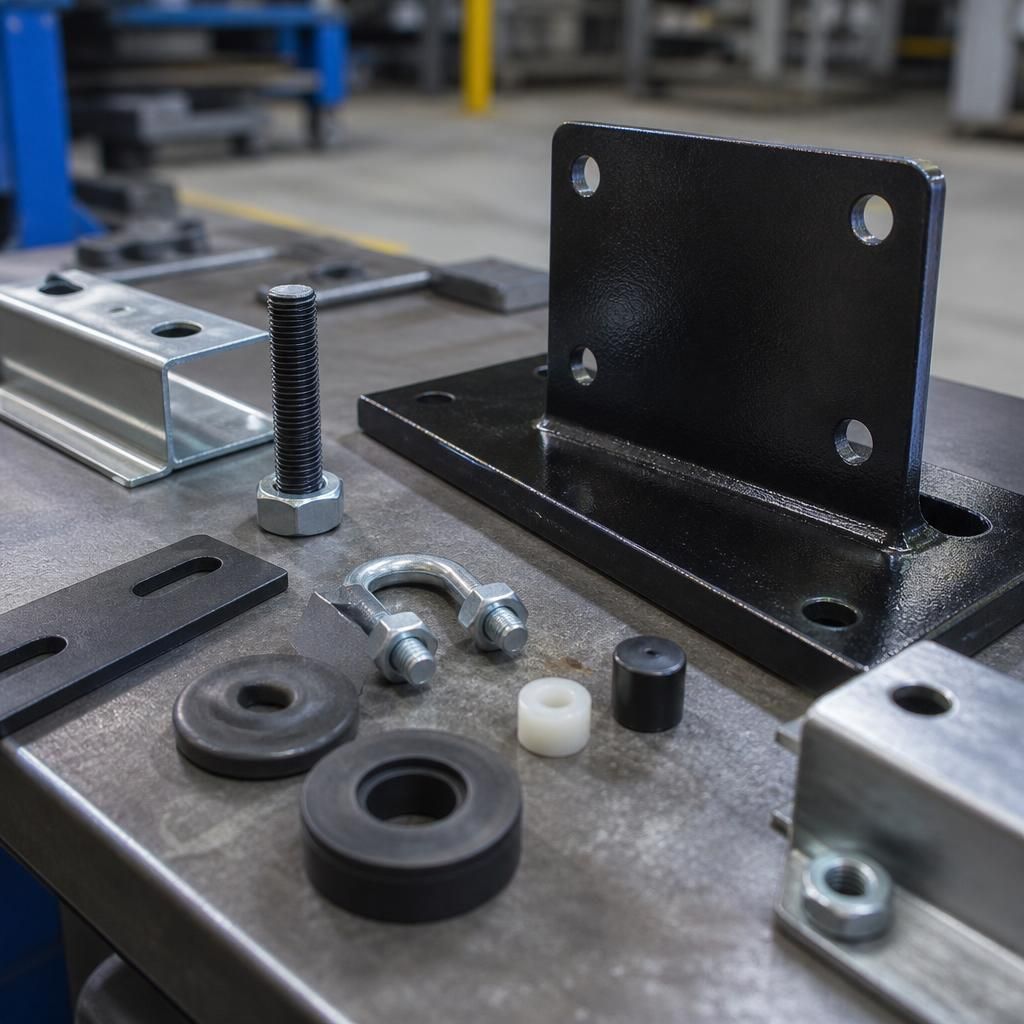
Consider compatibility with adjoining materials and assemblies. Rusted steel components are often used with fasteners, seals, plastics, insulation or other metals, and the selected powder coating must not interfere with those interfaces. Check whether parts can tolerate the curing process, whether coating will affect earthing or electrical contact, and whether masking is needed around seats, threads and bonding surfaces.
Where coated steel meets dissimilar metals, the design should limit moisture retention at the joint and protect any exposed edges created during assembly. These details can influence the coating specification as much as the steel surface itself, particularly when the component will be assembled after coating.