

What are the benefits of choosing powder coating over traditional painting for rusted steel?
Powder coating generally provides rusted steel with a tougher, more uniform and longer-lasting finish than traditional liquid paint, offering stronger resistance to impact, abrasion, moisture and corrosion. Once the steel has been properly cleaned and prepared, the bonded coating is less prone to peeling and weather-related deterioration than many conventional paint systems.
For properly prepared rusted steel, powder coating can offer practical advantages over traditional liquid painting because it forms a heat-cured, mechanically bonded film rather than relying on solvent evaporation and air drying. The main benefits are more controlled application, fewer solvent-related emissions, consistent coverage and a finish that can be specified as part of a complete corrosion-protection system.
Powder coating does not make surface preparation unnecessary. Rust, mill scale, grease, moisture and loose existing coatings must be removed before coating. Abrasive blasting or another suitable preparation method is normally used to expose a sound substrate and create a profile for adhesion. If corrosion has reduced the steel section or left deep pitting, coating alone will not restore the lost metal. The condition of the component should therefore be assessed before comparing finishes.
- More controlled film application: Powder is applied as dry particles, usually using an electrostatic charge that helps attract the material to the earthed steel. This allows the coater to control the coating system and specified film thickness more consistently than site-applied liquid paint, where brush marks, runs, sags and uneven application can be more difficult to avoid.
- A clean, solvent-free application process: Powder coatings contain no liquid solvent in the same way as conventional solventborne paints. This removes the need for solvent evaporation during application and can reduce solvent-related handling and ventilation requirements. The curing stage still needs suitable industrial controls, and the coating formulation must be selected for the intended service environment.
- Repeatable results across batches: Once the preparation, powder specification, application settings and curing conditions have been established, the same process can be repeated across multiple steel components. This is particularly useful for manufactured parts, fabricated assemblies and production batches where colour, texture and coating build need to remain consistent.
- Choice of functional and decorative finishes: Powder systems are available in different colours, gloss levels and textures, as well as formulations intended for particular performance requirements. A rusted steel component may need a primer and topcoat arrangement rather than a single decorative layer, especially where it will face persistent humidity, chemicals, outdoor exposure or contamination.
- Efficient use of applied material: Uncured powder that has not become contaminated may be collected in some application systems, reducing material waste compared with paint overspray that cannot readily be recovered. The actual recovery potential depends on the equipment, colour change arrangements and coating specification, so it should not be assumed for every job.
- A finish formed in one controlled curing cycle: After application, the powder is heated until it flows and chemically cures. This creates a continuous coating film without the prolonged air-drying stages associated with many liquid paint systems. The steel must, however, be suitable for the curing temperature, and assembled parts must be able to pass through the coating process without distortion or damage.
Traditional paint can still be the more practical option in some situations. Liquid paint is generally easier to apply to very large fixed structures, heat-sensitive materials or components that cannot fit into an oven. It is also more convenient for isolated site repairs and small touch-ups. Powder coating can be less straightforward to repair invisibly if a finished component is later cut, welded or damaged, because the affected area may need local preparation and a compatible repair coating rather than a simple brush application of the original powder.
Component design also affects the comparison. Holes, threaded sections, mating faces and enclosed areas may need masking or other protection. Crevices that retain moisture should be addressed during fabrication and preparation, since neither powder nor paint can compensate for a design that continually traps water against steel. Weld spatter, sharp edges and contaminants can also create weak points in either coating system.
For rusted steel, the fairest comparison is therefore between complete coating systems rather than between powder and paint in isolation. The assessment should include the depth and extent of corrosion, preparation method, primer requirement, exposure conditions, component size, curing temperature, colour and texture, and the likely need for future repairs. Powder coating is often advantageous where the steel can be thoroughly prepared, processed in a controlled facility and coated with a system selected for its operating environment; traditional painting may remain preferable where on-site application, heat limitations or straightforward local repair are the overriding requirements.
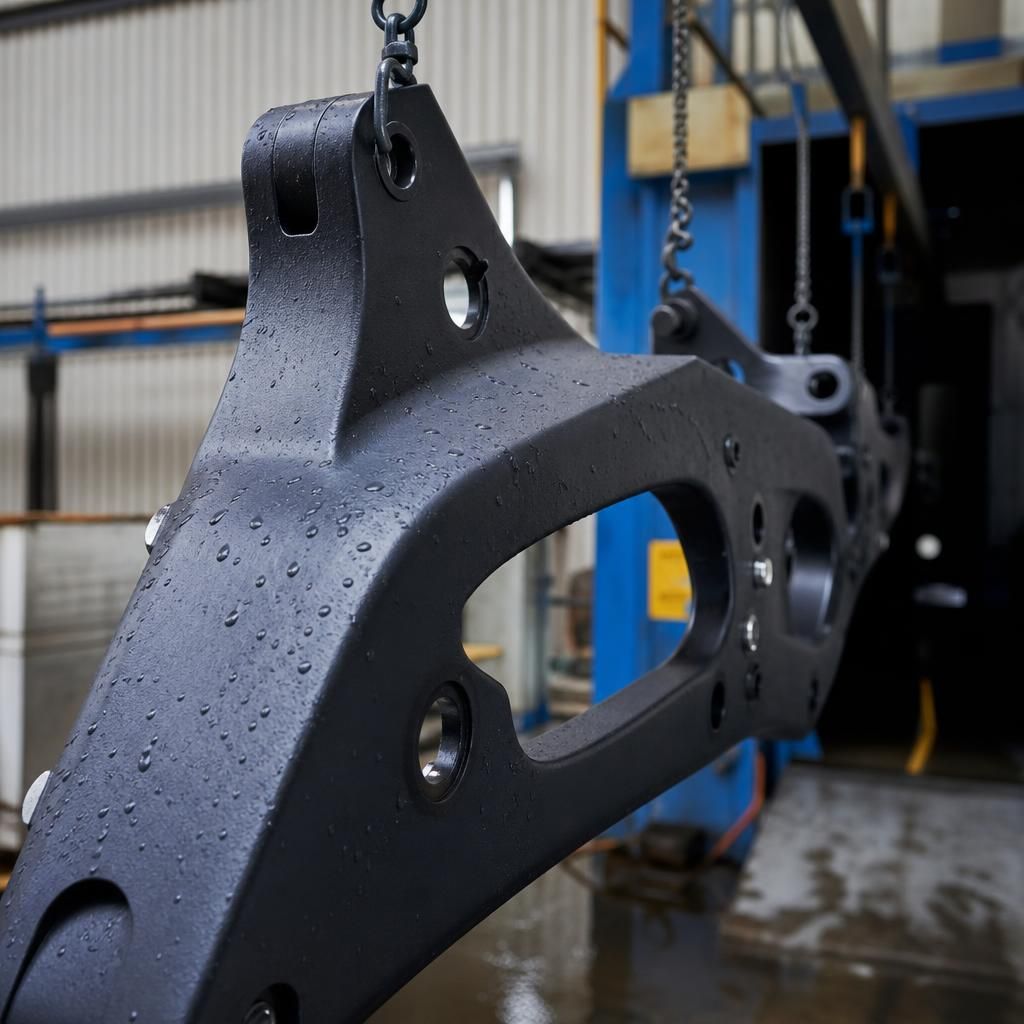
A powder-coated finish can also make rusted steel easier to keep clean during service. Once cured, the coating forms a smooth, closed surface that is less likely to retain dust, oils and general contamination than a deteriorating or chalking paint film. This can help preserve the component’s appearance and makes routine cleaning more straightforward, provided the cleaning method is suitable for the coating formulation and exposure conditions.
Discuss powder coating options for your rusted steel components
Discuss your rusted steel components with the powder-coating team to assess the existing corrosion, preparation requirements and most suitable coating system. Providing details of the component’s size, condition and intended environment will help establish whether powder coating is appropriate.