

How do I determine the most effective anti-corrosion coating for different types of steel used in my operations?
Determine the most effective anti-corrosion coating by assessing the steel type, surface condition, exposure environment, operating temperature, mechanical demands and required service life. Match these factors with an appropriate coating system—such as a protective primer and powder topcoat where suitable—and confirm that preparation and application requirements can be met for the component.
The most effective anti-corrosion coating is determined by the steel’s metallurgy, existing surface condition and intended service environment, rather than by the steel name alone. In practice, the reliable approach is to specify a complete coating system: preparation method, primer, topcoat, edge and weld treatment, curing requirements and inspection criteria must all be compatible with the component.
Start by identifying the substrate accurately. Steel types that appear similar can behave differently during preparation and coating:
- Mild or carbon steel: This is commonly protected with thorough abrasive preparation followed by a compatible primer and powder topcoat. A zinc-containing or epoxy-based primer may be appropriate where additional barrier or sacrificial protection is required, provided it is suitable for the specified powder system.
- High-strength and alloy steels: The coating itself does not replace the need to preserve the steel’s mechanical properties. Preparation must be controlled to avoid introducing damage, excessive roughness or contamination. Fabrication history, heat treatment and any sensitivity to hydrogen or thermal exposure should be considered before selecting the process.
- Cast iron: Castings can contain pores, machining residues and absorbed oils. These may cause bubbling, pinholes or outgassing during curing. Extended degreasing, preheating or other preparation controls may be necessary, and the design should allow trapped air and contaminants to escape.
- Weathering steel: Its protective patina depends on the surrounding conditions. If it is to be coated, loose oxide, mill scale, salts and other contamination must be removed, and the coating specification should account for the steel’s previous exposure. Coating over an unstable patina can lead to premature failure.
- Galvanised steel: A powder coating can be used as part of a duplex system, but the zinc surface needs suitable cleaning and preparation. Sweep blasting or another controlled keying method is often used, while excessive abrasion should be avoided. Zinc salts, passivation residues and outgassing must also be addressed.
- Stainless steel: Its naturally passive surface can make adhesion more difficult than on carbon steel. A suitable abrasive key and coating system are needed, particularly where the component will be exposed to chemicals, moisture or abrasion.
Surface preparation often has more influence on service life than the decorative powder selected. Remove oil, grease, dirt, mill scale, rust, welding residues and soluble salts before coating. Blasting should produce a clean, consistent surface profile appropriate to the primer and topcoat. Areas such as welds, cut edges, recesses and drilled holes need particular attention because contamination and coating shadows commonly begin corrosion in these locations.
Existing rust should not simply be sealed beneath a new finish unless the coating specification specifically permits that approach. Determine whether the corrosion is superficial or whether it has reduced the section thickness. Deep pitting, laminations and damaged welds may require repair before coating; a new finish cannot restore lost metal or correct a structural defect.
Match the coating system to the exposure category. Indoor components in a dry, controlled environment generally require less protection than steel exposed to rain, condensation, road salts, marine influence, industrial chemicals or continuous immersion. Outdoor structures need attention to water retention, ultraviolet exposure and temperature cycling. Components exposed to abrasive handling may need a tougher coating or a specialist finish, while chemically aggressive service may require a system selected for the specific chemical rather than a general-purpose anti-corrosion product.
For many fabricated steel components, a primer and powder topcoat provide a practical combination of adhesion, barrier protection and appearance. The primer helps protect the substrate, while the topcoat limits moisture and contaminants reaching the steel. In more demanding conditions, the specification may use multiple compatible layers or a specialist protective coating. Nylon-based coatings, for example, may be considered where wear, impact or chemical resistance is important, but their suitability for corrosion protection still depends on preparation, film integrity and compatibility with any underlying primer.
Check compatibility before committing to production. The primer, powder, substrate and curing cycle must be assessed as one system. Important checks include:
- whether the primer can withstand the topcoat’s curing temperature;
- whether the complete film will achieve the required adhesion;
- whether the steel or zinc surface may release gases during curing;
- whether the specified thickness can be achieved without runs, pinholes or poor edge coverage;
- whether the finish can tolerate the component’s operating temperature; and
- whether repairs, masking and removal from fixtures can be completed without exposing bare steel.
Powder coating requires the workpiece to tolerate the curing process. Large fabrications, assemblies containing heat-sensitive parts and components with trapped moisture may need design changes or a different coating method. Areas that cannot be electrically connected or reached consistently may also require a separate treatment or a revised hanging and masking arrangement.
Component design should be included in the corrosion specification. Sharp edges receive less coating coverage than broad faces, so edge rounding, suitable weld profiles and adequate drainage improve protection. Crevices, overlapping plates and unsealed hollow sections can retain water and salts beneath an otherwise sound coating. Drain and vent holes may be required in hollow fabrications, while dissimilar metals should be isolated where galvanic corrosion is a risk.
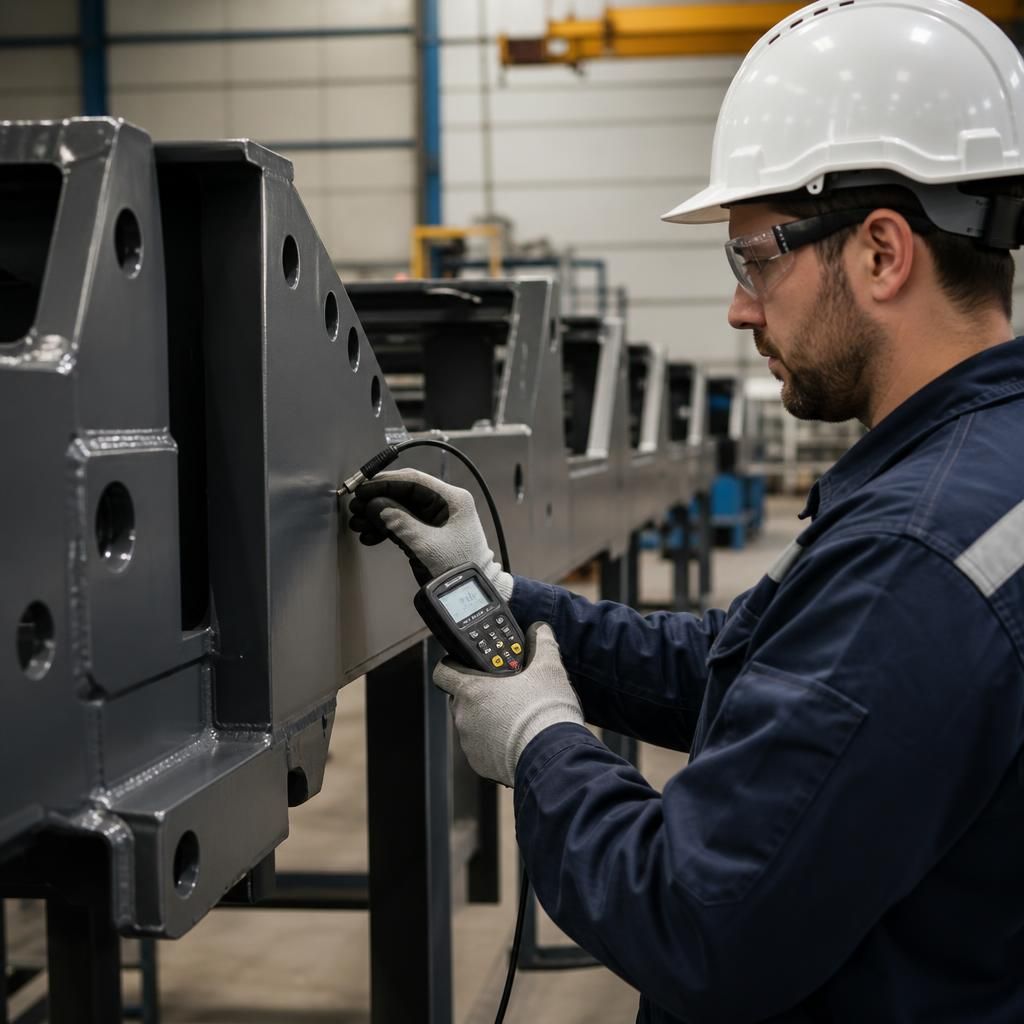
Before full production, confirm the system on representative parts or test panels. Useful controls include visual inspection, coating thickness measurement, adhesion testing and verification of the cure. Where appropriate, a controlled corrosion test can compare candidate systems, but laboratory results should not be treated as a direct prediction of field life. The test environment, steel preparation and coating thickness must reflect the intended application.
Maintenance requirements should be agreed at the specification stage. Inspect exposed steel for scratches, impact damage, blistering, edge corrosion and areas where water collects. Clean deposits such as salts and industrial contamination using methods that do not damage the coating. Small defects should be repaired promptly after removing loose coating and corrosion, using a repair material compatible with the original system. If corrosion repeatedly appears at welds, joints or drainage points, correct the design or fabrication issue rather than relying only on local touch-up.
For a B2B coating project, provide the coater with the steel grade where known, fabrication drawings, previous finishes, service environment, operating temperature, required appearance and any restrictions on preparation or curing. The resulting specification should state the preparation standard, primer and topcoat type, target film thickness, cure conditions, inspection method and repair procedure. This documented, system-based approach gives a more dependable basis for selecting anti-corrosion protection than choosing a coating solely by steel type or colour.
The most effective anti-corrosion coating is the one that matches both the exposure and the consequences of coating failure. Steel that is easy to access, inspect and replace may be specified differently from a component enclosed within an assembly or positioned where future recoating would be disruptive. In the latter case, a more robust coating system and greater control over application may be justified even if the surrounding environment is only moderately corrosive.
When comparing coating options, assess:
- how difficult the component will be to inspect or remove;
- whether corrosion could interrupt production, affect safety or damage adjacent parts;
- how easily local damage can be repaired;
- whether the finish must withstand handling, impact, abrasion or cleaning; and
- whether the selected system remains suitable throughout the expected operating life.
This approach prevents the coating decision being reduced to steel grade or appearance alone. It also helps operations and procurement teams justify a specification that balances preparation, application, maintenance and replacement requirements for the complete component.