

What preparation steps should I take to ensure my steel surfaces are ready for a powder coating application?
Prepare steel for powder coating by removing oil, grease, dirt, rust, mill scale and any existing coating, typically through suitable cleaning and abrasive blasting. Ensure the surface is dry, free from dust and contaminants, and appropriately masked where coating is not required before it is sent for application.
Steel preparation for powder coating should begin with a condition and design assessment, not just surface cleaning. Before the component enters the coating process, confirm that the steel is suitable, fabrication defects have been corrected, the required finish is understood and the chosen pre-treatment matches the steel, service environment and performance requirements.
Inspect the fabricated steel carefully
- Remove weld spatter, sharp burrs, loose scale and other projections that could create thin spots, roughness or visible defects in the finished coating.
- Check welds for pinholes, cracks, incomplete joints and excessive porosity. Porous welds and enclosed cavities can release gas during curing and cause bubbles or pinholes.
- Identify deep scratches, pits and gouges. These may remain visible through the powder coating, so they should be repaired or blended where the appearance and protection specification requires it.
- Review cut edges, punched holes and folded sections. Heavy burrs and sharply defined edges can reduce coating coverage at the edge, while rounded or suitably prepared edges generally provide a more consistent finish.
Resolve fabrication and drainage issues before coating
Powder coating does not correct poor component design. Closed sections, overlapping plates and unsealed joints can trap moisture or pre-treatment residues. Where the design permits, provide suitable drainage and ventilation holes, avoid inaccessible pockets and seal joints that could allow water to remain behind the coating. Any drilling, welding or grinding carried out after coating can expose bare steel, so all fabrication should be complete before preparation begins.
Components should also be presented so that all required faces can be reached consistently. Consider hanging points, contact areas and the orientation of the part through the preparation and curing stages. A coating specialist can advise on practical suspension points, but these should be agreed before manufacture where marks or uncoated contact areas would be unacceptable.
Confirm the steel and pre-treatment requirements
Steel type, previous use and the intended environment affect the preparation specification. New mild steel, previously coated steel, galvanised sections and components containing different metals may require different treatment. If corrosion protection is important, provide information about whether the part will be used indoors, outdoors, in a damp location or in an industrial setting. This helps determine whether a standard pre-treatment is appropriate or whether a more robust system should be considered.
Tell the coater about any contaminants that may be associated with manufacture, including cutting fluids, weld treatments, marker products, silicone-based materials or temporary corrosion inhibitors. Some residues are difficult to remove and can interfere with adhesion or appearance. Do not apply an unapproved oil, wax or protective product simply to store the steel; confirm the correct temporary protection method first.
Control the condition before handover
After preparation, handle the steel with clean gloves or suitable equipment and avoid touching critical faces unnecessarily. Keep prepared components protected from rain, condensation, workshop dust and contact with materials that could transfer contamination. Do not wrap parts in materials that can shed fibres or trap moisture against the steel.
Agree the required finish before production coating starts. Important details include colour, gloss level, texture, areas that must remain uncoated, acceptable contact marks and whether cosmetic consistency is required across a batch. Supply drawings or photographs where orientation, assembly faces or interfaces are significant. This prevents preparation and coating decisions being made without understanding how the component will be installed.
Use a preparation checklist
- Complete all cutting, drilling, welding and grinding.
- Inspect welds, edges, holes, recesses and enclosed sections.
- Repair defects that could affect adhesion, coverage or appearance.
- Confirm the steel type, intended service environment and required protection level.
- Declare oils, fabrication aids, previous coatings and temporary protection products.
- Agree suspension points, critical faces and finish requirements.
- Protect the prepared parts from handling damage and renewed contamination before coating.
For batch work, use representative samples or agree an inspection standard before the full run. A clear preparation specification is particularly useful where several fabricators, component sizes or steel conditions are involved, because it makes the finished coating more consistent and reduces avoidable rework.
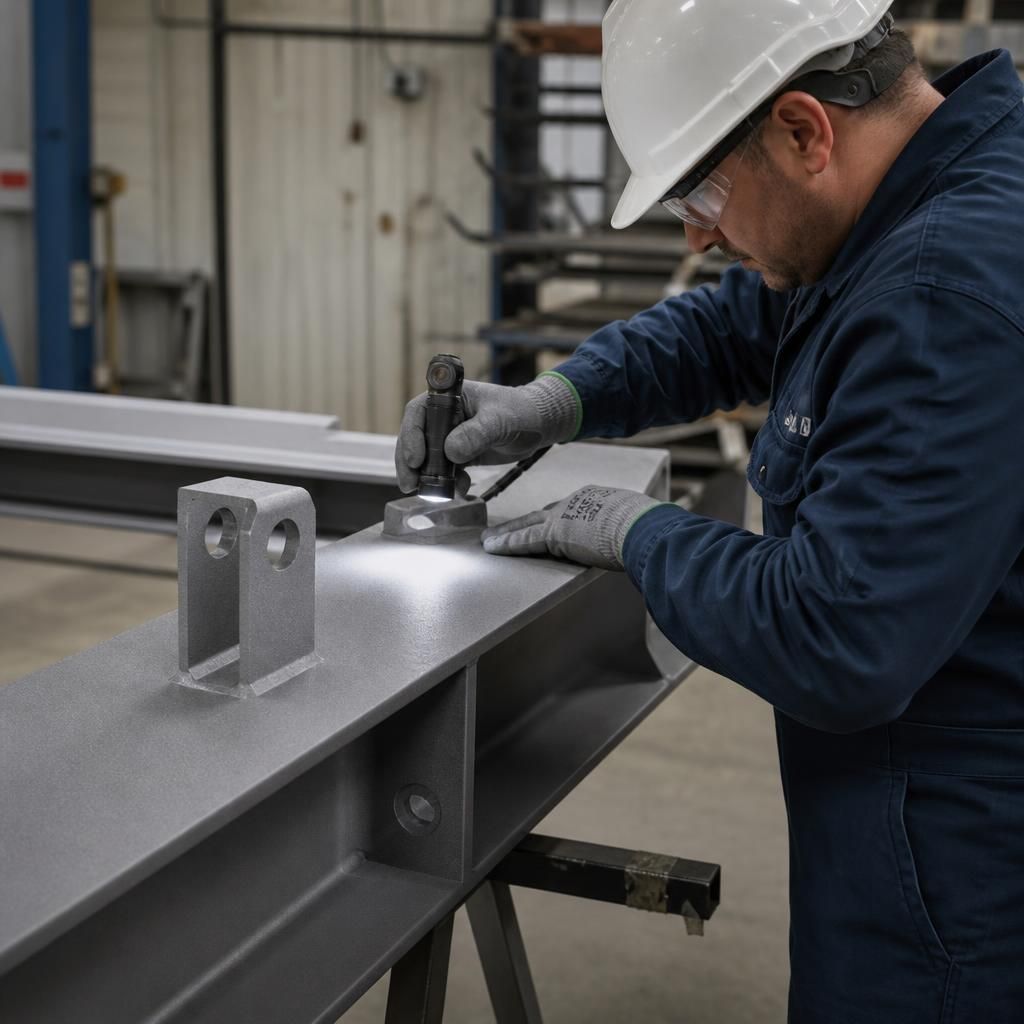
After abrasive blasting, the steel surface should have a consistent texture that gives the powder coating a reliable mechanical key. The profile must be suitable for the coating system: an uneven or excessively rough surface can affect coverage, appearance and protection, while a surface that is too smooth may reduce adhesion.
Inspect the blasted steel for remaining mill scale, rust staining, embedded abrasive, dust and areas that were missed because of recesses or awkward angles. The surface should be assessed before it is handled or exposed to moisture, since fingerprints, condensation and workshop contamination can compromise the result. Where the condition is uncertain, agree the inspection method and acceptance criteria with the coating specialist before the components are processed.