

What factors determine the choice of powder coating for specific steel applications?
The choice of powder coating for a specific steel application depends on the exposure conditions, required corrosion resistance, operating temperature, mechanical demands, component design, preparation requirements and desired finish. Coating type, film thickness, colour, texture and curing parameters should be selected to match the steel component’s environment and intended service life.
The most suitable powder coating for a steel application is determined by the complete performance specification rather than by the steel alone. A sound choice matches the coating system to the component’s substrate condition, required appearance, production method, compliance requirements, inspection regime and expected maintenance approach.
Start with the steel specification. Steel grade, surface condition and fabrication method can affect how consistently a coating bonds and appears. Rolled steel, laser-cut parts, welded assemblies and cast components may present different surface characteristics. Weld spatter, sharp transitions, contamination, porous areas and residues from fabrication can influence the final result, so the coating specification should be considered alongside the condition in which the parts will arrive for processing.
Define the required function. Some components primarily need a consistent decorative finish, while others need a tougher barrier for handling, cleaning or repeated use. The choice may therefore depend on requirements such as:
- resistance to marking, scuffing and impact during installation or service;
- retention of appearance where the component is visible;
- resistance to chemicals, detergents, oils or process contaminants;
- electrical or insulating properties where these form part of the component specification; and
- compatibility with adjoining materials, seals, fixings or secondary treatments.
These requirements should be ranked. A coating selected for maximum surface hardness may not be the right choice where flexibility, appearance retention or chemical resistance is the more important performance measure.
Consider the applicable specification and test evidence. Many industrial buyers have an internal coating specification or require evidence that a finish has been assessed against particular test methods. The relevant requirements may cover adhesion, hardness, impact performance, resistance to cleaning agents, appearance or consistency between batches. Where the component is destined for construction, manufacturing or automotive use, the coating decision should be checked against the customer’s drawings, purchase order and quality documentation rather than relying on a general-purpose description.
It is also important to distinguish between a coating being technically suitable and it being accepted by the end customer. A written specification should identify the required test method, acceptance criteria and inspection points. Without this information, two parties may use the same description while expecting different levels of performance.
Match the coating to the application process. Powder is applied as a dry material and must be suitable for the equipment, handling method and production arrangement used for the parts. Factors such as component size, batch variation, racking, masking and areas that must remain uncoated can affect process consistency. The coating supplier or applicator may need to assess representative parts, especially where assemblies include recesses, overlaps or mixed material sections.
Production quantity also matters. A finish that is practical for repeat batches may require a different control approach from a one-off or low-volume component. Colour changes, batch identification, part segregation and repeatability should be agreed where several deliveries must match an earlier production run.
Account for tolerances and assembly. Powder coating adds a measurable layer to mating surfaces, holes, threads, sliding faces and close-fitting components. The specification should identify areas requiring masking or dimensional control. This is particularly relevant for fabricated assemblies, brackets, enclosures and parts that must be assembled after coating. A coating can be suitable in principle but unsuitable if it interferes with fit, earthing points, fasteners or moving interfaces.
Review appearance requirements separately from performance. The desired visual result should state more than a general colour description. It may need to define gloss level, surface uniformity, acceptable variation, texture and the visibility of joins or welds. Appearance expectations are especially important when parts are viewed together or installed beside previously coated components. Samples or an approved reference panel can help establish what is acceptable before a production batch is processed.
Build inspection into the selection decision. A practical specification should explain how the finished coating will be checked. Typical controls may include visual inspection, measurement of coating thickness, adhesion assessment and verification that masked or protected areas remain usable. The appropriate checks depend on the component and the customer’s requirements. Inspection records, batch references and retained samples can also help investigate any difference between deliveries.
Consider repair and future maintenance. Steel components can be damaged during transport, installation or later use. Before selecting a system, establish whether minor damage can be repaired acceptably on site, whether a recoating process is available, and whether the repair material will produce a compatible appearance and bond. This is not a substitute for selecting the correct original coating, but it can be important for parts that are difficult to remove once installed.
A useful selection process is to provide the coater with:
- the steel grade and fabrication details;
- the component drawings, including areas to be masked or kept free of coating;
- the required functional and visual performance;
- any customer, sector or project specification;
- the expected batch pattern and delivery arrangement; and
- the inspection and documentation requirements.
The final decision should be recorded as a clear coating specification, not just a product name or colour reference. That document gives the applicator, fabricator and end customer a common basis for approving the finish and checking that it is appropriate for the intended steel application.
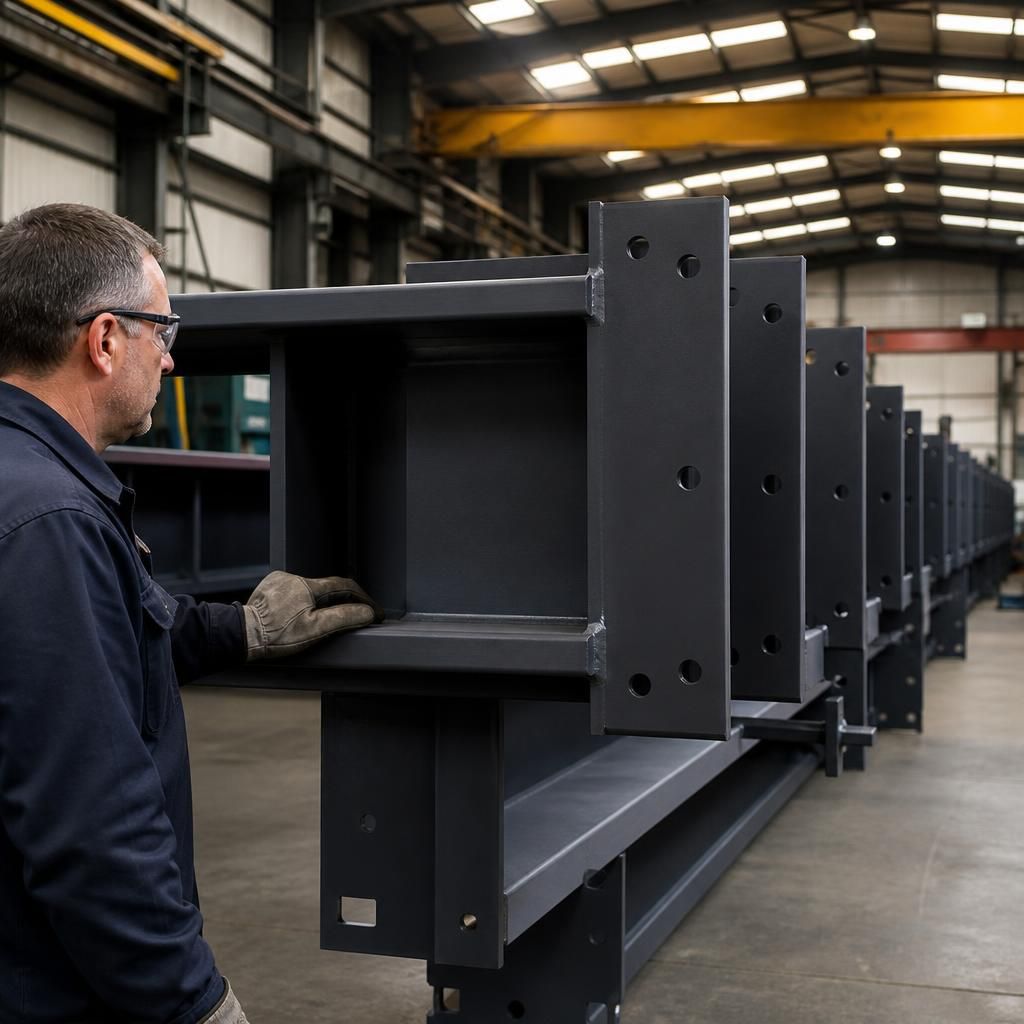
Operating temperature is a key factor in selecting a powder coating for steel because the coating must remain stable throughout the component’s service conditions. The relevant temperature is not only the surrounding air temperature; it may also include heat transferred from machinery, ovens, engines, lighting or stored materials.
Specify the expected continuous temperature, any short-term temperature peaks and whether the component will undergo repeated heating and cooling. These conditions can affect colour retention, flexibility, adhesion and resistance to degradation. The coating’s technical data should therefore be checked against the actual temperature range, including thermal cycling where applicable.
Temperature requirements should also be considered alongside the curing process. A coating system must be capable of curing correctly on the steel without exceeding the limits of components, assembled parts or heat-sensitive inserts. Where operating temperatures are unusual or variable, representative testing and written confirmation from the powder manufacturer or applicator can help verify that the selected system is appropriate.