

What are the critical specifications to consider when choosing a corrosion-resistant powder coating for steel?
Key specifications include the steel’s preparation standard, the powder chemistry, required coating thickness, adhesion, cure conditions and the level of corrosion resistance needed for the service environment. Specify these against factors such as moisture, chemicals, salt exposure, temperature, impact and UV exposure, then confirm that the proposed coating system has been tested and applied to the required specification.
A corrosion-resistant powder coating specification is a measurable description of the complete protective system, not simply a colour or powder type. For steel, it should define the expected performance class, substrate condition, component design, coating system, inspection criteria and documentation needed to demonstrate that the finished work is suitable for its service conditions.
1. Define the required performance classification
Specify the level of corrosion protection required rather than relying on terms such as “heavy duty” or “weather resistant”. The requirement may relate to indoor humidity, outdoor exposure, industrial pollution, coastal salt, immersion, buried service or contact with particular chemicals. A recognised corrosion classification or project specification gives the applicator a clear target and makes competing coating proposals easier to compare.
The specification should also distinguish between general atmospheric exposure and localised risks. A steel frame may face rain and UV exposure overall, while joints, undersides, drainage points and enclosed sections may retain moisture. These areas can determine the practical durability of the whole component even when the exposed faces appear well protected.
2. Identify the steel substrate and its condition
Steel grade, surface condition and previous treatment can affect the coating system selected. Record whether the parts are new, previously painted, galvanised, blasted, contaminated or affected by mill scale, rust, welding residues or fabrication oils. Old coatings and unknown contaminants may require additional investigation before a new system is specified.
Fabrication details are equally important. Weld spatter, sharp projections, laminations and tightly closed crevices can interrupt the coating film or create points where corrosion begins. A practical specification should require suitable weld finishing, removal of sharp edges and accessible surfaces for treatment. Drainage and ventilation holes may also be necessary on hollow sections so that pretreatment and curing can be completed safely and consistently.
3. Specify the complete coating system
Corrosion protection often depends on more than one layer or product function. The specification should state whether the steel requires a primer, a topcoat or a duplex arrangement, and should identify the compatibility requirements between those layers. A system selected for adhesion to bare steel may not be suitable over galvanised steel or an existing coating.
Where a primer and topcoat are used, define the required sequence, recoat conditions and areas that need additional treatment. Pay particular attention to cut edges, drilled holes, weld zones and areas that may be damaged during assembly. The coating schedule should make clear whether these details are to be treated before delivery, during installation or as part of a separate repair procedure.
4. Account for component geometry
Coating performance is influenced by the shape of the part. Recesses, returns, narrow gaps, internal corners and complex fabrications can receive less consistent coverage than broad, accessible faces. Faraday cage effects may also make it difficult for powder to reach recessed areas during electrostatic application.
For this reason, the specification should identify critical faces and inaccessible areas in advance. It should state whether internal surfaces require coating, whether masking is needed for threads or bearing faces, and which dimensions must remain within tolerance after coating. This prevents a visually acceptable finish from interfering with fit, assembly or function.
5. Set inspection and acceptance requirements
A robust specification describes how conformity will be assessed. Typical checks may include visual appearance, coating continuity, dry film thickness, adhesion and tests relevant to the stated exposure category. The document should define where measurements are taken, how many parts or areas are checked, and how isolated defects are treated.
Acceptance criteria should separate cosmetic issues from defects that affect protection. Runs, pinholes, craters, blisters, embedded contamination, exposed steel and poor edge coverage may have different levels of significance depending on the component’s role. Agreeing the criteria before production avoids disputes based on subjective expectations about gloss, texture or minor appearance variation.
6. Consider dimensional and functional requirements
Powder coating adds a measurable film to the steel, so tolerances must be considered for threads, sliding fits, hinges, shafts, mating faces and accurately located holes. Masking requirements should be shown on drawings rather than left to interpretation. If the part will be assembled with fasteners, specify whether coating is permitted beneath washers, inside holes or on contact faces.
Colour and gloss should also be recorded using an agreed reference, particularly where coated components will be installed beside existing equipment. These are appearance specifications rather than corrosion specifications, but they can affect whether a finished batch is accepted.
7. Define handling, packaging and repair controls
Even a correctly applied coating can be compromised by poor handling after curing. The specification should cover lifting points, contact materials, stacking, separators and protection from abrasion during transport and installation. Components should not be packed in a way that traps moisture against the film or damages edges.
Include a documented repair method for transport damage, drilled areas and site modifications. The repair product and preparation method must be compatible with the original system, and repaired locations should be recorded where traceability is important. Touch-up work should not be treated as an informal cosmetic step when bare steel has been exposed.
8. Require traceable technical records
For safety-critical, structural or contract-controlled work, request records that identify the coating products, batch details, application conditions, inspection results and any non-conformances or repairs. Retaining these records helps establish what was applied and supports future maintenance decisions.
When comparing quotations, provide the same specification to each applicator and ask them to identify any exclusions or proposed alternatives. A suitable corrosion-resistant powder coating is therefore selected by matching a documented system to the steel component, its geometry, operating conditions and acceptance requirements—not by choosing a finish from a colour chart alone.
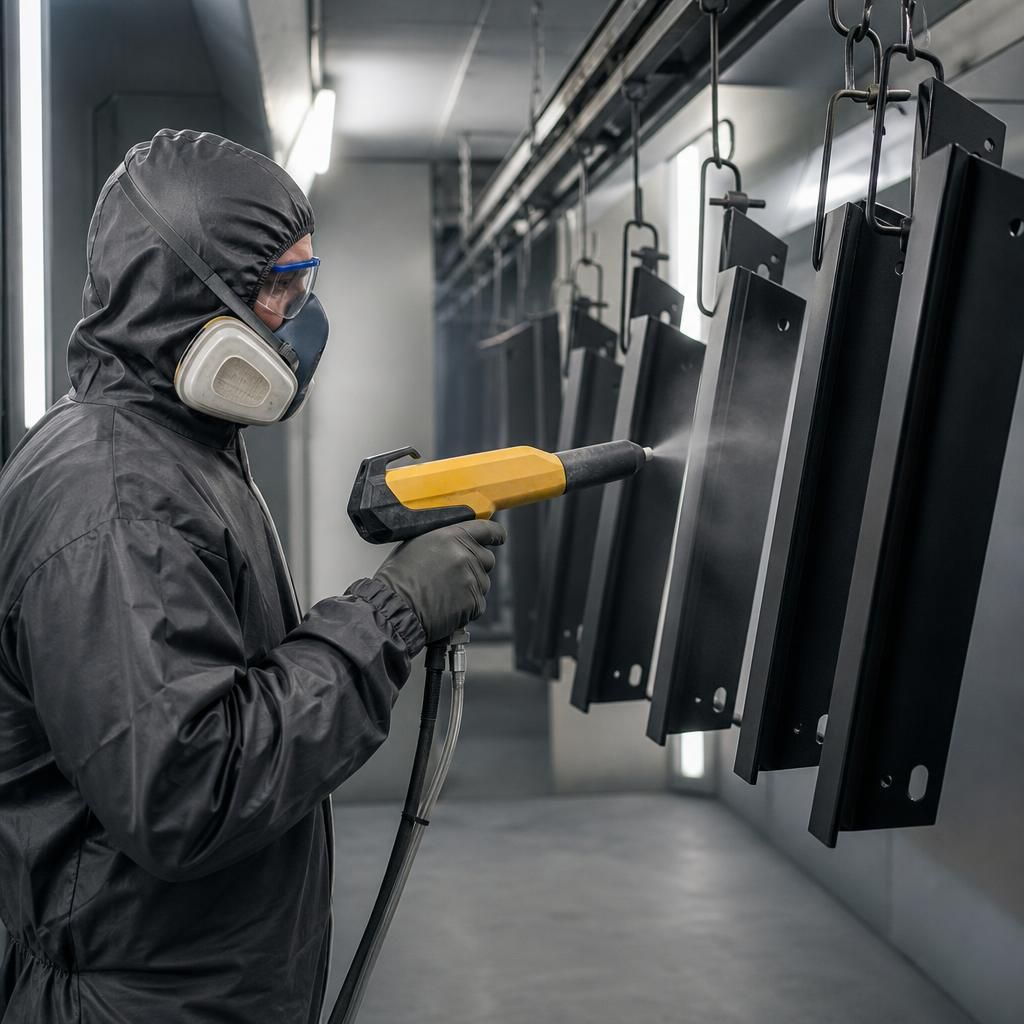
The powder chemistry should match the steel component’s exposure, because different resin types balance corrosion resistance, chemical resistance and weathering differently. Epoxy-based powders can suit sheltered or chemically demanding applications, but may lose colour or gloss under prolonged sunlight. Polyester-based powders are generally considered for external steelwork where UV and weathering resistance are important, while hybrid formulations are more commonly used for interior applications.
Specify the resin type alongside the service environment rather than selecting by colour or finish alone. The coating supplier should confirm that the proposed formulation is intended for the expected combination of moisture, chemicals, temperature and sunlight, and that it is compatible with any primer or additional protective layer in the system.
Discuss your corrosion-resistant steel coating specification
Discuss your steel component’s drawings, exposure conditions and performance requirements with a powder-coating specialist before finalising the specification. This helps identify any coating-system, preparation or inspection details that need to be addressed.