

What surface preparation steps are crucial before applying anti-corrosion powder coating?
Crucial preparation includes removing oil, grease, dirt, rust and mill scale, followed by suitable abrasive cleaning or chemical treatment to create a sound, lightly keyed surface. The metal must then be thoroughly rinsed where required, fully dried and checked for contamination before the anti-corrosion powder coating is applied.
Effective preparation for anti-corrosion powder coating involves more than removing visible contamination. The component must be structurally ready, chemically compatible with the chosen pre-treatment and free from features that could undermine coating coverage. Preparation should therefore begin with an inspection of the metal and the completed fabrication, before the final surface treatment is selected.
1. Complete fabrication and inspect the component
All cutting, drilling, welding, grinding and forming should be finished before coating. Any later fabrication can damage the protective film and expose untreated metal. Inspect the part for weld spatter, slag, burrs, loose scale, laminations, dents and damaged areas. These defects can remain visible through the powder coating or create points where moisture collects.
Welds deserve particular attention. Porous welds, pinholes and incompletely sealed joints can retain moisture or process chemicals, which may later cause blistering or corrosion beneath the finish. Where a component includes hollow sections, overlapping plates or enclosed cavities, the design should allow suitable drainage and ventilation during preparation and curing. Sealed voids can also release trapped gases when heated, producing pinholes or surface eruptions in the coating.
2. Improve edges, corners and transitions
Sharp external edges are difficult to coat consistently because powder tends to pull away from the edge during curing. This can leave a thinner protective film at precisely the location most exposed to impact and handling. Edges should be suitably radiused or softened where the component design permits. Remove burrs and blend abrupt weld transitions without reducing the required strength of the part.
Pay attention to lap joints, folded returns and recessed areas as well. Narrow gaps may retain moisture, while deep recesses can receive less consistent powder coverage. If the design cannot be altered, the coating specification should identify these areas so that the preparation and application method can account for them.
3. Match the pre-treatment to the metal
The correct chemical pre-treatment depends on the substrate. Steel, galvanised steel, aluminium and other alloys do not respond identically to the same process. A treatment suitable for one metal may provide poor adhesion or cause staining on another. Mixed-metal assemblies may therefore need a specific process plan, and incompatible materials may need to be separated or masked before treatment.
For components exposed to demanding conditions, a conversion coating or other compatible pre-treatment can improve the bond between the substrate and powder film. The exact system should be selected according to the metal, expected exposure and powder specification rather than treating every component identically.
4. Control outgassing from porous or previously treated parts
Castings, porous welds, galvanised components and metal that has previously absorbed oils or chemicals can release gases during oven curing. This may cause bubbles, pinholes or craters. Suitable pre-heating, degassing or an agreed powder system may be needed, depending on the component and coating requirements. Test pieces can be useful where the substrate is porous, the geometry is complex or the previous service history is uncertain.
5. Define areas that must remain uncoated
Masking should be planned before treatment and application. Threads, bearing seats, electrical contact points, machined faces, drain holes and mating surfaces may need to remain free of powder. Masking materials must tolerate the preparation stages and curing temperature without transferring residue or allowing unwanted coating to reach protected areas.
Suspension points also need consideration. Contact between the part and its hanging fixture must be reliable enough for handling and, where relevant, to provide a consistent electrical path during application. The selected contact location should be placed on a non-functional area or one that can be touched up or concealed in the finished assembly.
6. Prevent recontamination before coating
After preparation, components should be handled in a way that avoids fingerprints, workshop dust, moisture and contact with unclean surfaces. Parts should not be placed directly on dirty floors or shared benches, and handling equipment should not introduce fresh contamination. If a prepared component is stored or transported before coating, it should be protected from condensation and airborne contaminants without trapping moisture against the metal.
7. Verify the prepared condition
Inspection should confirm that the surface is consistent, the required areas are accessible, masking is secure and no defects have been introduced during preparation. For repeat production, the inspection criteria should be recorded so that different batches are treated to the same standard. Where corrosion resistance is critical, the coating specification may also define checks for film thickness, adhesion and finish after curing; these checks complement preparation control but cannot compensate for an unsuitable substrate.
In practice, the most important preparation decisions are made before the component reaches the coating stage: finish the fabrication, correct edge and weld defects, accommodate drainage and ventilation, select treatment for the actual metal, manage porous areas and protect functional surfaces. This prevents common failures such as poor adhesion, edge coverage problems, pinholing and corrosion starting beneath an otherwise sound-looking powder finish.
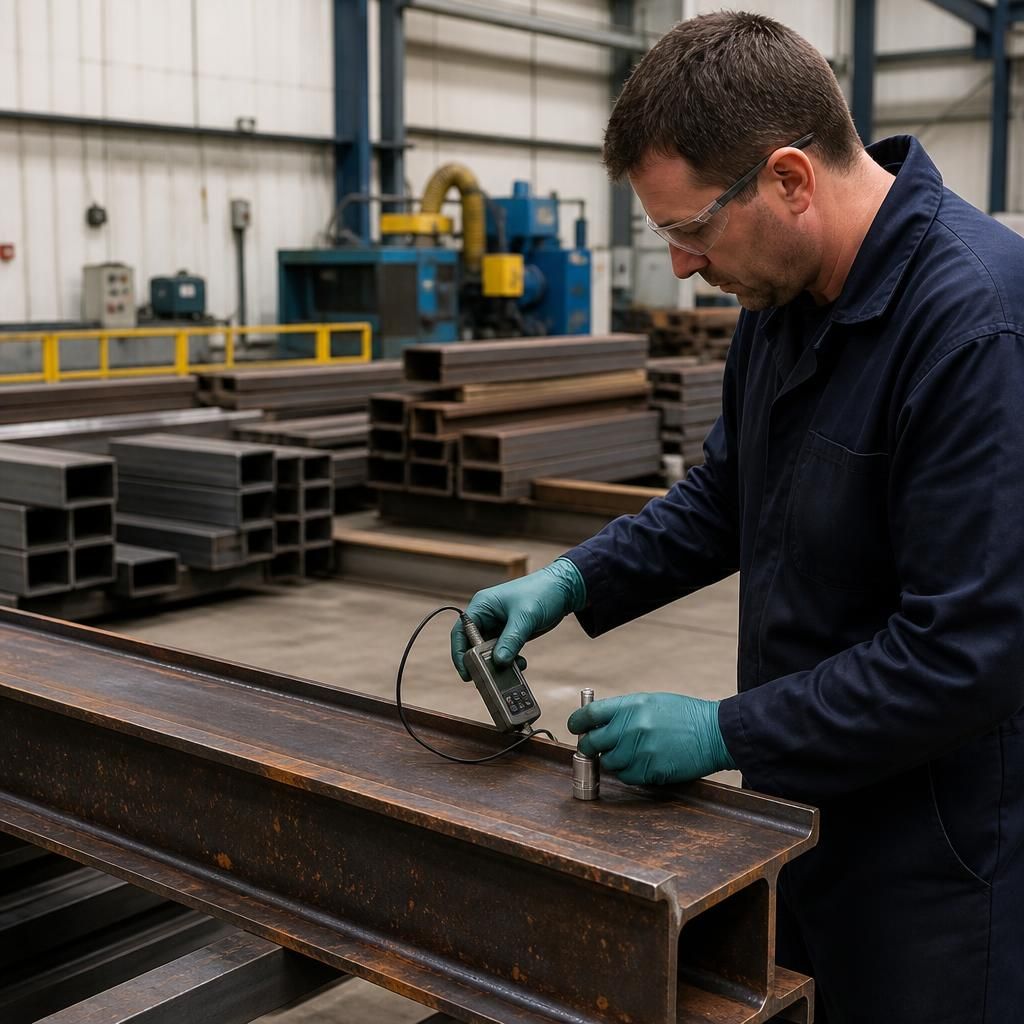
Moisture and soluble salts require specific checks because a surface can appear clean while still undermining anti-corrosion powder coating. Before application, the prepared metal should be checked for salt contamination, particularly where components have been exposed to outdoor storage, marine atmospheres, de-icing materials or chemical residues. Any detected salts must be removed using a compatible cleaning process, followed by thorough rinsing and drying.
Surface temperature also matters. If the metal is at or below its dew point, condensation can form even when no water is visible. Coating should therefore be carried out only after the component and surrounding conditions have been assessed to confirm that the surface is dry and suitable for application. These checks help prevent hidden moisture or contamination from weakening adhesion and allowing corrosion to develop beneath the coating.
Discuss your anti-corrosion powder coating preparation requirements
Discuss your anti-corrosion powder coating preparation requirements with the team, including the component material, geometry, intended environment and any areas that must remain uncoated. This helps establish a preparation and coating specification suited to the finished part.