

What specific environmental conditions necessitate the use of anti-corrosion powder coating over other protective methods?
Anti-corrosion powder coating is most necessary where metal faces persistent moisture, salt spray or humid coastal air, industrial chemicals, pollutants, or abrasive dirt that can accelerate rust and coating breakdown. It is often preferred over less robust protective methods when components require a tough, continuous finish capable of resisting both corrosive exposure and regular handling or wear.
Anti-corrosion powder coating becomes more appropriate than many alternative protective methods when a metal component will experience repeated environmental stress and needs a continuous, strongly bonded barrier. The decision depends on the full exposure profile: temperature changes, ultraviolet weathering, retained contamination, chemical contact, access for maintenance and the consequences of coating failure.
Temperature variation is an important consideration. Components installed outdoors or near heat-producing equipment may expand and contract repeatedly. This movement can place stress on a protective layer, particularly where the coating has poor adhesion or the substrate was inadequately prepared. A correctly selected powder system can provide a durable film, but its suitability should be checked against the component’s operating temperature and expected thermal cycling.
Ultraviolet exposure can also make powder coating necessary. Sunlight may degrade some organic coatings, causing chalking, fading and loss of surface protection. Once the film becomes brittle or breaks down, the underlying metal is more exposed. Where appearance and corrosion resistance must be retained outdoors, the powder chemistry and finish should be selected for the relevant weathering conditions rather than relying on an interior-grade coating.
Powder coating is particularly useful when components have complicated profiles, recessed areas or assembled surfaces that are difficult to inspect and repaint. Retained dust, process residue or water in these locations can create localised attack. Good design, drainage and preparation remain essential: a coating cannot compensate for unsealed joints, sharp contamination or areas that the application process cannot reach.
It is also worth considering the effect of maintenance practices. Metalwork subjected to frequent washing, pressure cleaning or contact with cleaning agents may need a protective finish that tolerates the specified cleaning regime. The relevant question is not simply whether a substance is corrosive, but how concentrated it is, how often contact occurs, how long it remains on the surface and whether the coating can be rinsed or inspected afterwards.
Anti-corrosion powder coating can be favoured where the coating must perform as both a barrier and a practical factory finish. Compared with conventional liquid paint, powder systems can produce a consistent, bonded film without relying on solvent evaporation during application. Compared with a thin plated or conversion-treated surface, powder coating may provide a more substantial protective layer, although these methods can sometimes form part of a wider corrosion-control system rather than being direct alternatives.
The most demanding applications often involve several conditions at once, such as outdoor exposure combined with thermal cycling, difficult-to-clean geometry and limited access for future repair. In these situations, coating selection should consider:
- the base metal and its existing surface condition;
- the expected temperature range and exposure to sunlight;
- the presence of joints, crevices, edges and drainage points;
- the type and frequency of cleaning or chemical contact;
- the likelihood of abrasion, impact or handling damage; and
- whether inspection and recoating will be difficult after installation.
Powder coating is not automatically the correct solution for permanent immersion, buried service or severe process exposure. Such applications may require a specified multi-layer system, a different coating technology or additional sealing and cathodic protection. The coating should therefore be matched to the actual environment, not selected solely because the component is made from steel or another corrosion-prone metal.
For industrial parts, fabrication and construction components, the strongest case for anti-corrosion powder coating is a combination of demanding exposure and a need for a robust, maintainable finish. Defining the environmental conditions before treatment helps determine the preparation standard, powder formulation and finish required for the component’s intended service.
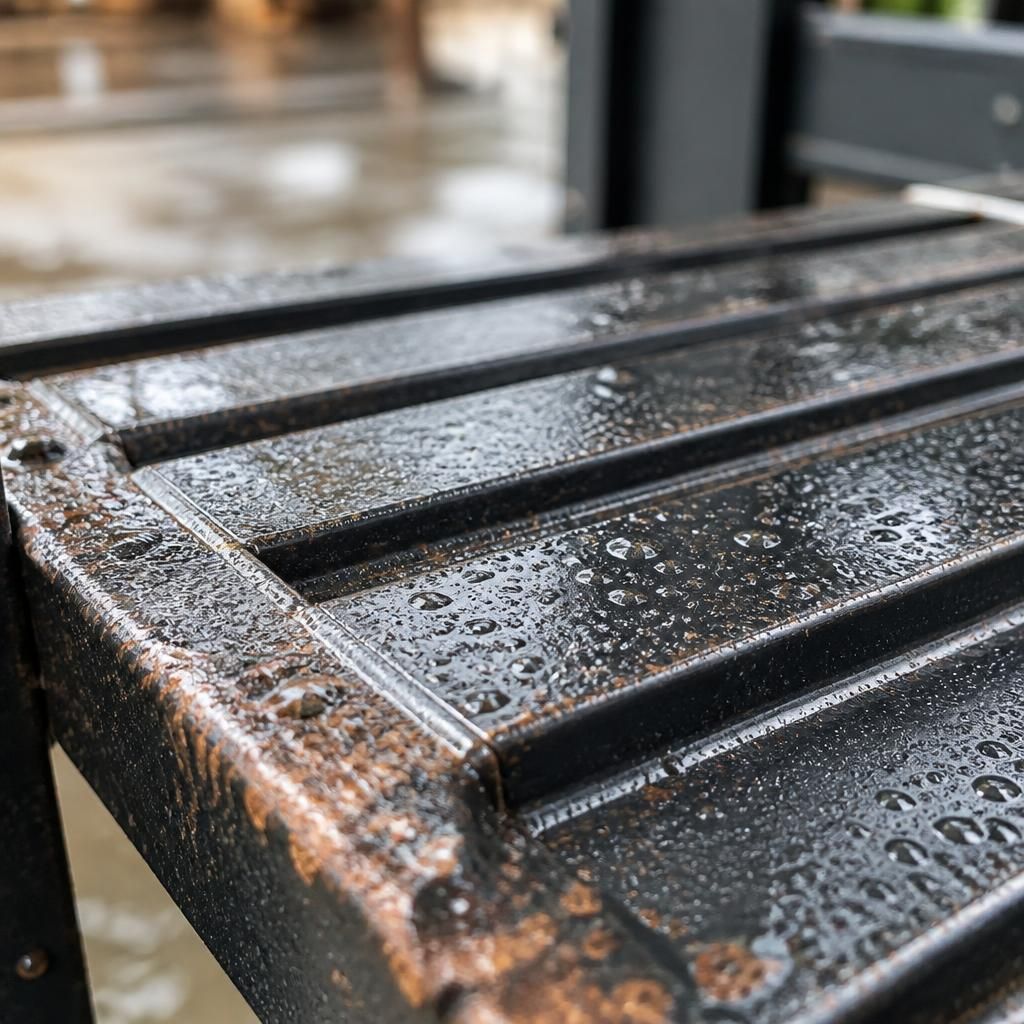
Repeated wetting and drying can be more damaging than occasional contact with water alone. As moisture evaporates, dissolved salts and contaminants may remain on the metal surface in a more concentrated form, allowing corrosion to continue between exposure events. This makes anti-corrosion powder coating particularly relevant for components exposed to spray, wash-down water or recurring condensation rather than only constant immersion.
The risk is higher where water collects at edges, joints or recesses and cannot drain or dry evenly. In these locations, the protective system must provide a well-adhered barrier across the accessible surface, while the component design and preparation should prevent moisture traps from undermining the coating.