

What preparation is necessary before applying anti-corrosion coatings to steel?
Steel must be clean, dry and free from oil, grease, dirt, rust, mill scale and other contaminants before an anti-corrosion coating is applied. Preparation typically includes degreasing, suitable abrasive blast cleaning to create a consistent surface profile, removal of dust and a final inspection for defects or moisture.
Effective preparation for anti-corrosion coating starts with assessing the steel, correcting defects and defining the coating system before the application process begins. The aim is to provide a sound, suitably profiled substrate, remove features that could trap moisture or weaken the film, and ensure that the selected coating is compatible with the component and its service environment.
1. Assess the steel and the intended service
Preparation should be based on the steel’s condition and how the finished component will be used. Review the steel grade, thickness, previous surface treatments, exposure to moisture or chemicals, operating temperature and expected mechanical wear. A component intended for an internal dry environment may need a different preparation and coating specification from one exposed to road salt, industrial pollution, immersion or outdoor weather.
Existing mill scale, galvanising, weld treatments or old coatings should be identified before work begins. The coating specification should state whether these layers are to be retained, conditioned or completely removed. Coating compatibility is particularly important where a primer and topcoat are being used, since an unsuitable combination can lead to poor intercoat adhesion or premature failure.
2. Correct fabrication defects
Steelwork should be inspected for conditions that could interfere with coating coverage. Weld spatter, sharp projections, laminations, slivers and burrs can create thin areas in the coating or become points where corrosion begins. These defects should be removed or repaired using methods appropriate to the component.
Welds should be continuous and sufficiently smooth for the specified finish. Crater cracks, pinholes and excessive undercut can allow moisture to reach the steel beneath the coating. Where practical, sharp external edges should be rounded or otherwise treated so the coating can cover them consistently rather than pulling away from the edge during application.
Crevices, overlapping plates and close-fitting joints require particular attention. They can retain moisture and treatment residues that are difficult to remove and inspect. Fabricating components with sealed joints, suitable drainage and access for preparation generally produces a more durable result than attempting to compensate for poor design with a thicker coating.
3. Plan masking and component preparation
Areas that must remain free of coating should be defined before treatment. These may include threads, bearing seats, electrical contact points, machined faces, identification surfaces and close-tolerance holes. Appropriate plugs, caps or other masking methods can protect these areas, provided they do not prevent access to adjacent surfaces or create uncoated pockets.
Drainage and vent holes are important on hollow sections and enclosed fabrications. They allow treatment materials to leave the component and help prevent trapped moisture during later service. Components should also be presented so that all required surfaces can be reached and so that handling marks are not introduced after preparation.
4. Control the surface profile
Abrasive preparation creates a surface profile that gives the coating a mechanical key. The profile must be consistent with the coating manufacturer’s requirements and the specified system. Too little profile may reduce adhesion, while an excessively coarse profile can leave peaks that receive insufficient coating and may remain vulnerable to corrosion.
The abrasive itself should be suitable for the steel and the intended finish. It must not introduce harmful contamination or leave embedded particles that could compromise the coating. Profile assessment should be carried out using an appropriate comparator or measurement method, with results recorded as part of the job documentation where the specification requires it.
5. Check for salts and other less visible contamination
Visible surface condition alone does not confirm that steel is ready for coating. Soluble salts, particularly on components exposed to marine, road or industrial environments, may remain after ordinary preparation. If they are trapped beneath a coating, they can attract moisture and contribute to blistering or under-film corrosion.
Where the risk justifies it, the specification should define soluble-salt testing and acceptable limits before coating. Similar consideration may be needed for residues from marking inks, cutting fluids, temporary corrosion inhibitors and handling. The required checks depend on the component’s history and service conditions rather than on appearance alone.
6. Manage the interval before coating
Prepared steel can deteriorate again if it is exposed to condensation or a corrosive atmosphere before coating. The application plan should therefore minimise the time between final preparation and coating, while allowing any required inspection or approval to take place. If the surface develops flash rust or other visible change, it should be reassessed and treated in accordance with the agreed specification rather than coated over automatically.
Temperature and humidity control also matter. The steel temperature should remain safely above the dew point so that condensation does not form during preparation or application. Conditions should be checked at the component, not assumed from general room or outdoor conditions. Coating products may also have specific environmental limits, which must be followed for the particular system.
7. Inspect before releasing the component for coating
A final pre-coating inspection should confirm that the required preparation standard has been achieved and that no new damage or contamination has occurred during handling. It should cover the surface condition, welds, edges, masked areas, cavities, holes, profile and environmental conditions.
For industrial work, recording the preparation method, inspection findings and any repairs provides useful traceability. It also helps resolve questions about coating performance later, particularly when components pass through several fabrication and treatment stages. The coating specification should define the acceptance criteria, inspection equipment and responsibilities so that the steel is not released for application on subjective visual judgement alone.
For batch-coated steel components, consistent fabrication, masking, handling and inspection are as important as the treatment method itself. A clear preparation specification agreed before production helps prevent variable finishes and ensures that the coating system is selected and applied to the actual condition and use of the steel.
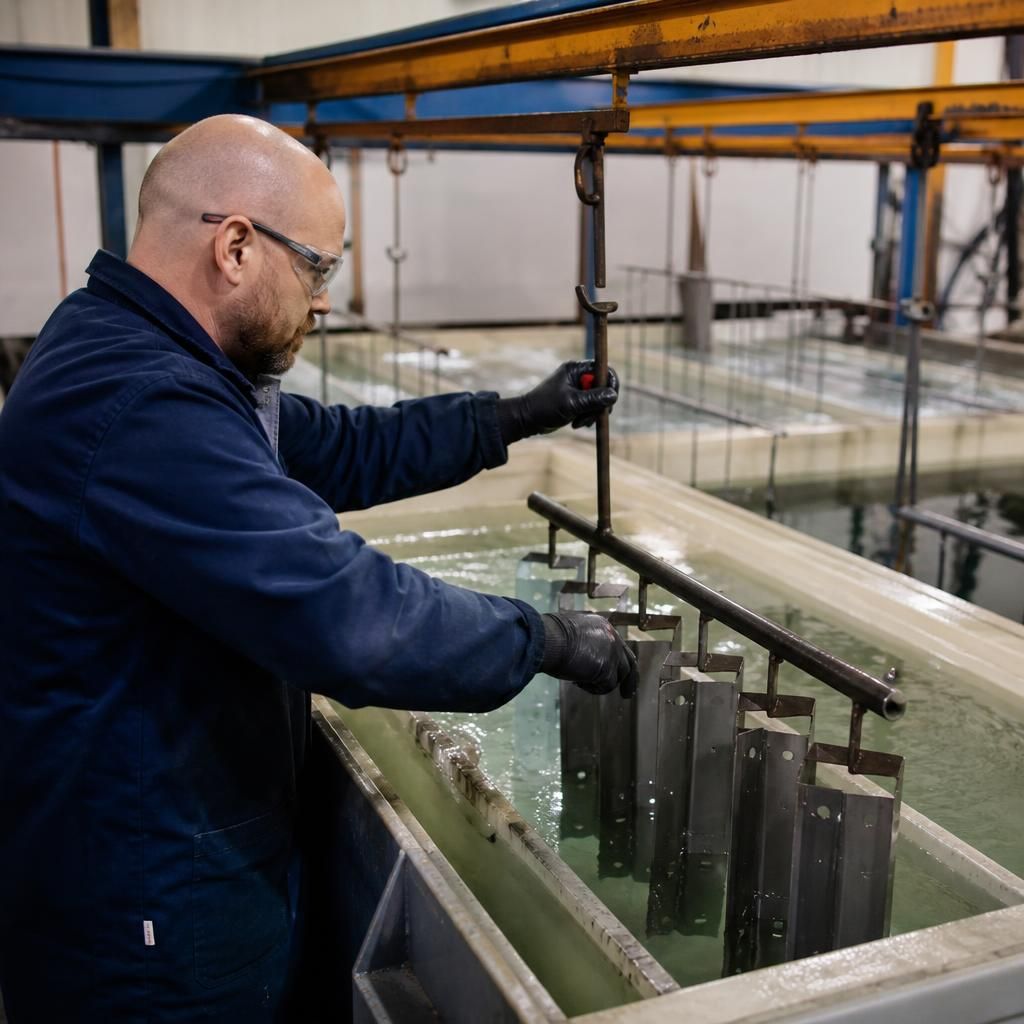
Chemical pre-treatment can be an additional stage after mechanical preparation. On suitable steel components, a conversion treatment such as phosphating can improve the surface’s ability to accept an anti-corrosion coating and provide supplementary protection beneath the coating film. The process must be selected for the steel, coating system and service environment. After treatment, residues and rinse water must be removed thoroughly, and the component must be completely dry before coating. Chemical pre-treatment is not a substitute for repairing fabrication defects or removing heavy rust, scale and contamination; it complements the specified preparation method.