

What factors should be considered when selecting the appropriate anti-corrosion coating for specific industrial applications?
Selecting an anti-corrosion coating requires assessing the metal substrate, exposure to moisture, chemicals, salt, temperature and abrasion, along with the component’s shape, service life, appearance and operating conditions. The coating system should then be matched to the required level of protection, surface preparation, application method, curing requirements, maintenance needs and total cost.
The appropriate anti-corrosion coating is selected by matching the coating system to the way a component is made, handled and used, rather than choosing a product solely by its advertised resistance. The decision should cover the likely corrosion mechanism, the required performance class, compatibility between coating layers, specification controls, inspection methods and the practicality of repairing or recoating the component later.
1. Identify the type of protection required
Anti-corrosion coatings protect metal in different ways. A barrier coating separates the surface from water and air. A chemically resistant coating limits attack from specific substances. A sacrificial or zinc-containing layer can provide additional protection where the coating is damaged, subject to correct system design and compatibility with the substrate and topcoat. In demanding applications, a primer and topcoat are often more suitable than a single layer because each can perform a different role.
Powder coating can be used as part of this approach. Epoxy-based powders generally provide strong barrier and chemical resistance but may be less suitable where prolonged ultraviolet exposure is important. Polyester-based systems are commonly selected where colour and outdoor weathering stability are required. Hybrid systems can be appropriate for controlled indoor conditions. Nylon coatings may be considered where a component needs a combination of protective performance, low friction or resistance to mechanical contact. The correct choice depends on the complete duty rather than on the coating name alone.
2. Consider the actual corrosion mechanism
Rusting is not the only failure mode. Crevices, lap joints, threaded interfaces and water-trapping recesses can create localised corrosion even when the exposed faces appear well coated. Dissimilar-metal contact can also cause galvanic corrosion if moisture bridges two different metals. Where these risks exist, the design may need sealing, drainage, isolation washers or a coating system that reaches vulnerable edges and interfaces effectively.
Chloride exposure, chemical splash, immersion, condensation and contamination do not affect every coating in the same way. A system suitable for general atmospheric exposure may be unsuitable for permanent immersion or repeated contact with cleaning chemicals. The specification should therefore identify the substances involved, their concentration, contact frequency and whether the coating must tolerate cleaning or decontamination procedures.
3. Match the system to the manufacturing process
The selected coating must be compatible with the way the part is produced and finished. Weld spatter, sharp edges, laser-cut areas, casting residues, oil, marking fluids and previous coatings can all affect the result. Some fabricated assemblies also contain enclosed sections or narrow joints where pretreatment and powder penetration are limited. These features should be considered before the coating is specified, because a theoretically suitable material cannot compensate for areas that cannot be prepared or coated properly.
Dimensional requirements are also important. Powder adds a measurable film to each coated face, which can affect close-fitting assemblies, bearing seats, threads, slots and mating surfaces. These areas may need masking, a machining allowance or a coating exclusion zone. Masking requirements should be agreed in the drawing or purchase specification rather than left to interpretation during production.
4. Check compatibility between primer, powder and substrate
A multi-layer system is only effective when its layers work together. The primer must adhere to the prepared metal, the topcoat must bond to the primer and the curing conditions must suit the complete assembly. Incompatible layers can cause poor adhesion, blistering, wrinkling, loss of flexibility or premature failure.
Any existing coating should be positively identified before recoating. Applying a new powder over an unknown or weak layer can conceal the original problem and make future repair more difficult. Components with sealants, adhesives, rubber inserts or heat-sensitive parts may also require a different process or selective masking to prevent damage during curing.
5. Define measurable acceptance criteria
A useful coating specification should state more than the colour or product family. It can include the required dry film thickness range, adhesion level, permitted visual defects, edge coverage, gloss tolerance, curing conditions and areas that must remain uncoated. For critical components, the specification may also define tests for impact resistance, flexibility, abrasion, chemical resistance or corrosion performance.
Salt-spray testing can help compare systems under controlled conditions, but its result should not be treated as a direct prediction of service life. Cyclic corrosion testing, adhesion testing and inspection of representative production parts may provide a more relevant assessment, particularly where the component will experience changing moisture conditions rather than continuous salt exposure. Test methods should reflect the intended duty and should be agreed before production if compliance evidence is required.
6. Consider inspection, traceability and repair
For components supplied in batches, consistent preparation, powder application and curing are as important as the initial material selection. Records of the coating system, batch details, preparation method and curing process can help identify the cause of defects and support future repeat work. Inspection should cover difficult areas such as edges, recesses, holes and joints rather than relying only on the appearance of accessible flat faces.
Repair provisions should be considered for large structures and components likely to be scratched during assembly or transport. A repair method must be compatible with the original coating and should restore protection without creating a sharp boundary that allows moisture underneath. If a part is likely to be modified after coating, the specification should explain how exposed metal is to be treated and sealed.
7. Balance performance against the application’s practical constraints
The most technically resistant coating is not automatically the most appropriate. A high-performance system may require specialist preparation, multiple application stages, tighter process control or more demanding inspection. Conversely, a simpler coating may be adequate where the component has limited exposure and is easy to inspect and replace. Selection should compare the consequences of coating failure, the value and accessibility of the component, the required appearance and the evidence needed for quality approval.
For industrial parts, discussing the component drawing, expected duty and acceptance requirements with a powder-coating specialist can help identify unsuitable assumptions before production begins. A regional coating provider serving manufacturers, fabricators, construction firms and automotive businesses across the Midlands and surrounding areas can also advise on whether a standard powder system, a primer-and-topcoat arrangement or a specialist protective finish is the more appropriate route.
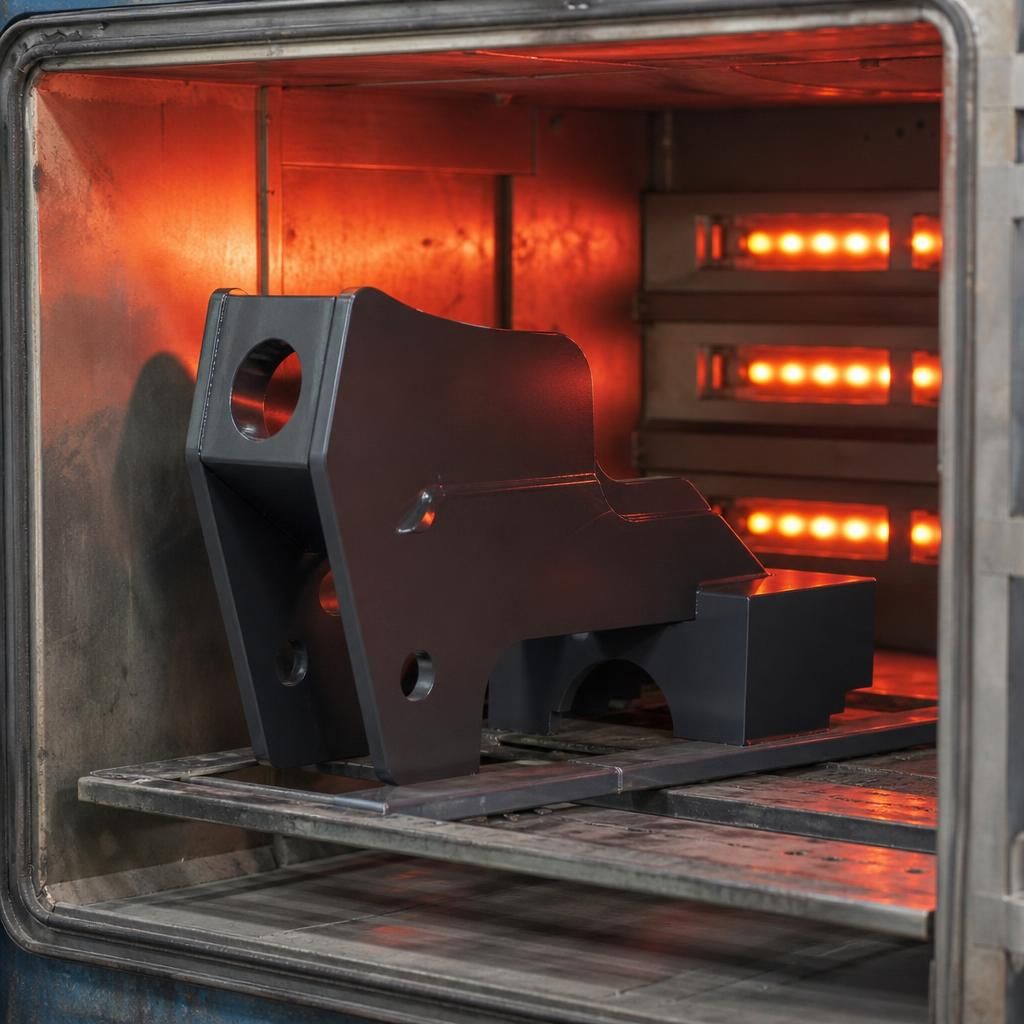
Temperature cycling is an important selection factor because a coating must tolerate the component’s full operating range, not simply its highest recorded temperature. Repeated heating and cooling can create movement between the metal substrate and coating, increasing the risk of cracking, loss of adhesion or moisture reaching the surface.
When comparing systems, consider normal operating temperature, short-term heat exposure, heating and cooling rates, and whether the part moves between indoor and outdoor conditions. The coating must also withstand the relevant process temperature during curing without affecting the component’s dimensions or attached materials. Where thermal cycling is severe, confirm the system’s flexibility and adhesion performance under representative conditions rather than relying only on general corrosion-resistance claims.