

What are the most effective anti-corrosion coatings for mild steel and stainless steel applications?
For mild steel, the most effective system is typically a properly prepared zinc-rich or epoxy primer combined with a durable polyester powder topcoat, providing barrier protection and improved resistance to under-film corrosion. Stainless steel usually needs thorough degreasing and suitable surface preparation before applying a compatible powder coating, with the specification chosen according to exposure, appearance and chemical-resistance requirements.
The most effective anti-corrosion coating is a complete, exposure-specific system rather than a single universal product. Mild steel generally benefits from a primer that inhibits corrosion beneath the film and a weather-resistant finish, while stainless steel requires a coating system that adheres reliably without compromising the substrate’s existing resistance to corrosion.
For mild steel, the main options are:
- Zinc-rich powder primers: These contain metallic zinc and can provide sacrificial protection at small areas of damage, helping to reduce the progress of corrosion beneath the coating. They are often considered where the steel will face outdoor moisture, industrial contamination or difficult maintenance conditions.
- Epoxy primers: Epoxy provides strong barrier protection and good resistance to moisture and many chemicals. It is particularly useful as part of a multi-layer system, although epoxy finishes can lose colour or gloss when exposed directly to prolonged ultraviolet light.
- Polyester powder topcoats: Polyester is commonly selected for exterior components because it offers good weathering and ultraviolet resistance. It is normally used as the durable outer layer over a suitable primer rather than relied upon as the only defence in severe corrosive conditions.
- Epoxy-polyester hybrids: These can provide a balance of hardness, appearance and general corrosion resistance for interior applications or environments without severe ultraviolet exposure. They are less suitable where long-term external colour and gloss retention are important.
- Polyurethane powder finishes: Where available within the specification, polyurethane can provide a smooth decorative surface with good weathering and chemical resistance. Its suitability still depends on the service environment, film thickness and preparation standard.
For exposed mild steel, a multi-coat system is usually more dependable than a single decorative layer. The primer deals primarily with corrosion control, while the topcoat provides resistance to water, sunlight, abrasion and general handling. Particular attention is needed around welds, sharp edges, drilled holes, seams and areas where water can collect, because these locations are common starting points for coating breakdown.
Stainless steel requires a different assessment. Its corrosion resistance comes from a passive chromium-rich surface film, so the coating is not normally needed simply to provide the same basic protection as it would on unprotected mild steel. It may nevertheless be specified for colour coding, wear resistance, chemical exposure, reduced surface contamination or additional protection in chloride-heavy environments.
Suitable coating choices for stainless steel commonly include epoxy-based systems for barrier and chemical resistance, polyester systems for external appearance and weathering, or a primer-and-topcoat arrangement where the exposure is more demanding. The correct choice depends on the stainless grade, the surrounding atmosphere, contact with chemicals or salts, operating temperature, abrasion and the consequences of a coating defect.
Adhesion is a particularly important issue on stainless steel. Its smooth, passive surface can provide less mechanical key than prepared mild steel, and oils, polishing residues or fabrication contamination can interfere with bonding. Degreasing, removal of unsuitable surface residues and an appropriate conversion or mechanical preparation method should therefore be specified according to the coating system. Weld discolouration, embedded iron particles and heat-affected areas also need to be addressed, as local contamination can create corrosion sites beneath an otherwise sound finish.
When comparing systems, assess the whole operating environment rather than choosing solely by the name of the resin. Important factors include:
- Whether the component is indoors, outdoors, sheltered or exposed to driving rain.
- Contact with coastal salt, de-icing salts, condensation, acids, alkalis, solvents or industrial pollutants.
- Expected abrasion, impact, flexing and handling during service.
- Required colour, gloss and resistance to ultraviolet degradation.
- Component geometry, including joints, recesses, edges and areas that may retain moisture.
- Whether damaged areas can be inspected, repaired and recoated after installation.
- The substrate’s grade and condition, including welds, previous coatings and contamination.
In practice, the strongest specification combines a compatible substrate preparation method, a primer chosen for the corrosion risk, a topcoat suited to the exposure and an agreed inspection standard. Film thickness, cure conditions and coverage should be controlled across the complete component; a high-performance powder cannot compensate for poor preparation, under-cured material or uncoated edges.
For industrial components, the coating specification should therefore identify the steel type, corrosivity of the service environment, preparation method, primer and topcoat chemistry, colour and gloss requirements, film-thickness range, curing parameters and acceptance criteria. A powder coating specialist can use these details to determine whether a single coat is adequate or whether a duplex system is more appropriate for the component’s intended service.
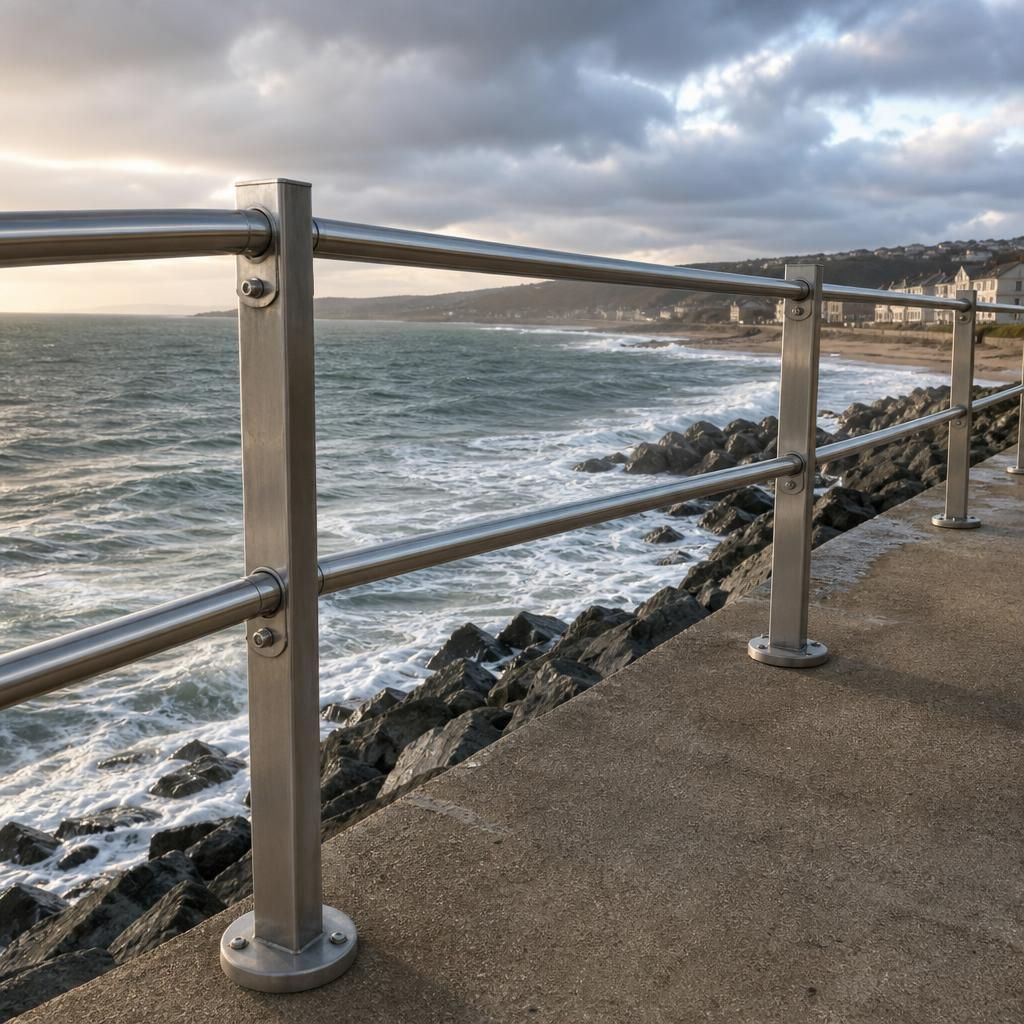
For stainless steel, the metal grade should be suitable for the environment before a coating system is selected. In chloride-heavy conditions, such as coastal or de-icing salt exposure, choosing a more appropriate stainless grade may be more effective than relying on a coating alone. A coating can add barrier protection and improve appearance, but scratches, cut edges and crevices may still become vulnerable if the underlying grade is poorly matched to the service conditions.
This makes the most effective specification a combination of substrate selection and coating performance. Confirm the stainless grade, identify the main corrosion risk and then choose a compatible powder system that can be inspected and repaired if damaged. For mild steel, the coating normally provides the principal corrosion defence; for stainless steel, it is usually an additional layer of protection or a functional finish.
Discuss Your Anti-Corrosion Coating Requirements
Discuss your anti-corrosion coating requirements with our Midlands powder coating specialists, providing details of the steel type, component dimensions, service environment and required finish. We can help identify a suitable coating specification for your industrial parts and advise on collection and delivery options.