

What are the longevity expectations and maintenance requirements for steel components coated with anti-corrosion powders?
Anti-corrosion powder-coated steel can provide durable, long-term protection when the coating system, surface preparation and application are appropriate for the exposure conditions. Maintenance generally involves routine inspection and cleaning, with prompt repair of chips, scratches or damaged areas to prevent corrosion developing beneath the coating.
The longevity of steel components protected with anti-corrosion powder depends on the complete coating system and the conditions in which the component is used, rather than on the powder alone. A correctly specified and applied system can provide long-term protection, but its service life will be reduced by persistent moisture, salt, chemicals, ultraviolet exposure, abrasion, impact or defects in the underlying steel.
There is no universal lifespan that applies to every powder-coated component. A sheltered indoor part exposed to dry air may remain in good condition for substantially longer than an external component exposed to driving rain, marine salts, road spray or industrial pollutants. The most useful assessment considers the component’s corrosion environment, the required appearance, the consequences of coating failure and the extent of maintenance that can be carried out after installation.
- Exposure: humidity, condensation, rainfall, salt contamination, pollutants and chemical contact all influence corrosion risk.
- Mechanical loading: impact, handling, vibration and rubbing can expose the steel even where the surrounding coating remains sound.
- Temperature: repeated heating and cooling can place stress on the coating, particularly where the substrate and coating expand at different rates.
- Component design: sharp edges, unsealed joints, crevices and areas that retain water are more vulnerable than well-drained, accessible surfaces.
- Application quality: preparation, pretreatment, coating thickness, curing and coverage at edges and difficult-to-reach areas all affect durability.
For demanding conditions, the specification may use more than one protective layer, such as a corrosion-resistant primer beneath a powder topcoat. This approach can improve barrier protection and provide additional resistance if the top layer is locally damaged. The correct system should be selected for the steel grade, operating environment and intended use; a coating suitable for a dry internal frame may be inappropriate for external structuralwork or regular chemical exposure.
Surface preparation is particularly important to long-term performance. Oil, grease, mill scale, rust, moisture and other contaminants can prevent proper adhesion or leave active corrosion beneath the coating. Welds, cut edges, threaded areas and joints require careful attention because coating weaknesses at these locations can become starting points for corrosion. Where a component is being refurbished, the condition of the existing coating and any corrosion beneath it should be assessed before a new system is specified.
Maintenance should be planned as a condition-monitoring activity rather than waiting for visible failure. Inspections should look for:
- blistering, flaking, cracking, chalking or unusual colour change;
- scratches, impact marks and exposed steel;
- rust staining, especially around edges, fixings, welds and joints;
- lifting at seams or crevices, which may indicate corrosion beneath the coating;
- standing water, blocked drainage points or deposits that remain in contact with the surface; and
- damage caused by adjacent components, equipment or handling.
Cleaning removes dirt, salts, bird deposits, industrial fallout and other contaminants that can hold moisture against the coating. Use clean water with a mild, compatible detergent and a soft cloth, sponge or non-abrasive brush. Rinse away detergent and allow the surface to dry. Abrasive pads, aggressive scraping, unapproved solvents and excessively forceful pressure washing can dull the finish or create defects, so cleaning methods should be checked against the coating specification. Chemical spills should be removed promptly using the procedure appropriate to the substance involved.
Minor damage should be dealt with before corrosion spreads beneath the surrounding film. The affected area normally needs to be cleaned, degreased and lightly prepared, with loose coating and corrosion removed. A compatible anti-corrosion primer and repair coating can then be applied in accordance with the product manufacturer’s instructions. A touch-up is not suitable for every situation: extensive rusting, widespread loss of adhesion, repeated impact damage or deterioration around joints may require the component to be stripped, re-prepared and recoated.
Repair materials should be compatible with the original powder system and suitable for the exposure conditions. A visually similar product is not necessarily chemically or technically compatible. Colour and gloss matching can also vary with weathering, so the decision should consider both the protective function and the required appearance. For safety-critical or difficult-to-access steelwork, repair decisions should be documented and reviewed by a suitably competent coating specialist.
A practical maintenance plan records the component location, coating specification, exposure conditions, inspection findings, cleaning carried out and repairs made. Inspection frequency should reflect the risk: external, highly exposed or chemically contaminated components need closer attention than protected internal parts. It is also sensible to inspect after unusual events such as impact, flooding, chemical release or changes to the surrounding process.
Replacement or full recoating becomes more appropriate when corrosion is widespread, the coating has lost adhesion over large areas, the steel section has been affected, or local repairs no longer provide reliable protection. Early intervention is usually technically simpler than allowing corrosion to progress beneath apparently intact coating. For Midlands manufacturers, fabricators, construction firms and automotive businesses, a coating specialist can assess the operating environment and match the maintenance approach to the component’s use, handling and exposure.
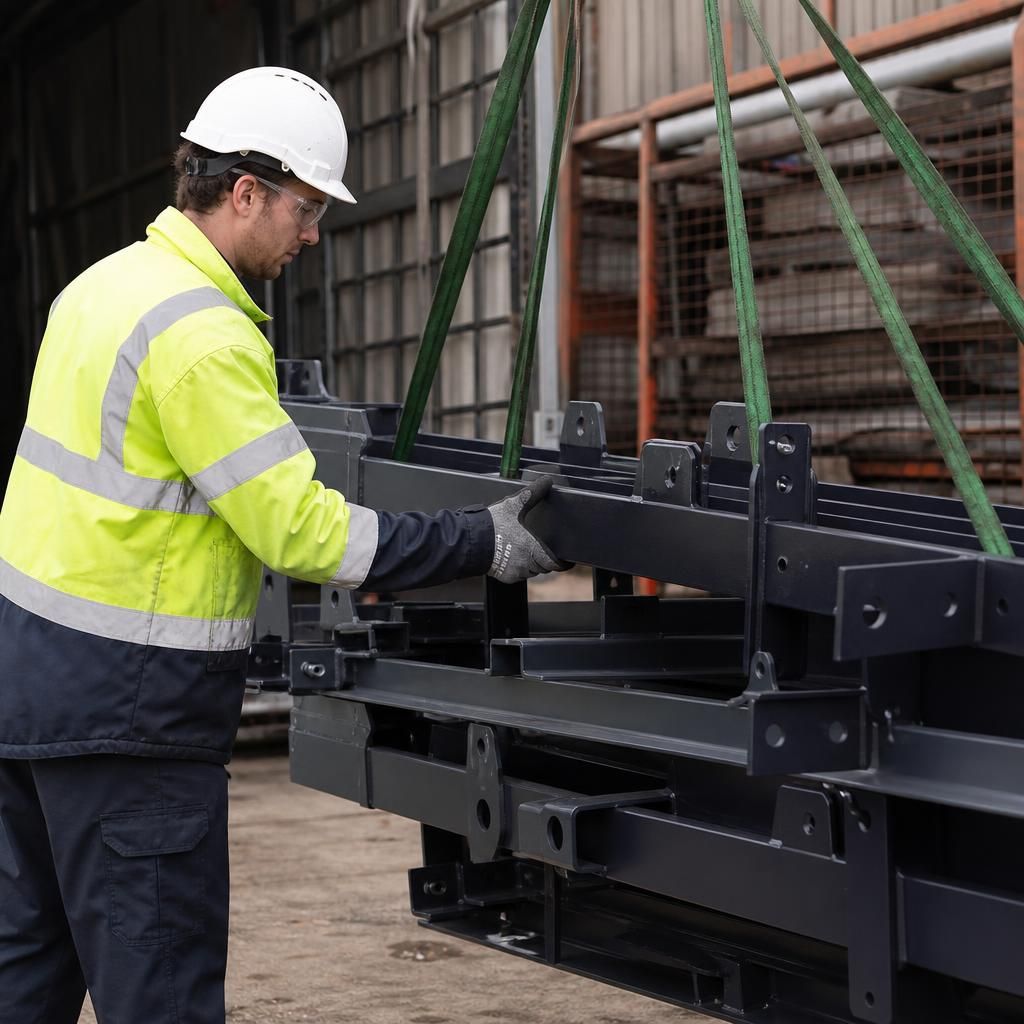
Post-coating handling and installation have a direct effect on the service life of steel components. Powder-coated parts should be lifted with clean, non-abrasive equipment, separated during transport and stored so that moisture cannot become trapped between coated surfaces. Dragging components, stacking them against sharp edges or allowing metal fixings to rub across the finish can create damage before the coating is put into service.
Installation teams should check coated parts after lifting, drilling, cutting or assembly. Any newly exposed steel or damaged coating should be treated using a repair system compatible with the original coating and the service environment. This simple handover check helps prevent installation damage from becoming an early corrosion site.
Discuss your steel component’s anti-corrosion coating requirements
Discuss your steel component’s anti-corrosion coating requirements with a specialist, providing details of the steel type, operating environment and expected maintenance conditions. This helps identify a suitable powder-coating system and clarify any preparation or repair requirements before work begins.