

What role does the powder coating primer process play in achieving a perfect metal finish?
The powder coating primer process applies a preparatory layer between the treated metal and the topcoat, improving adhesion and helping protect the substrate from corrosion. When correctly selected, applied and cured, the primer supports a more uniform, durable and high-quality metal finish.
The powder coating primer process creates a controlled interface between prepared metal and the visible coating system. Its main role is to manage how the coating system interacts with the substrate, particularly where the component will face moisture, contaminants, impact, abrasion or difficult service conditions. A well-chosen primer can also help the topcoat remain consistent across edges, joints and areas where the metal is more vulnerable.
Where primer fits in the coating sequence
Primer is applied only after the component has been inspected and prepared. Preparation may include removing oil, grease, mill scale, rust and previous coatings, followed by abrasive or chemical treatment appropriate to the metal. The surface must then be clean and sufficiently dry. Primer cannot compensate for embedded contamination, loose corrosion or a poorly prepared surface; these defects remain potential points of coating failure beneath the finished system.
- Inspect the component for corrosion, weld spatter, sharp edges, crevices and areas that may require repair or masking.
- Clean and prepare the metal using a process suitable for its material and condition.
- Confirm that the selected primer is compatible with the substrate, the intended topcoat and the component’s service environment.
- Apply the primer evenly at the specified film thickness, paying particular attention to edges, recesses, joins and complex profiles.
- Cure the primer in accordance with the coating system’s technical requirements, or use the specified co-cure process where primer and topcoat are designed to cure together.
- Apply the topcoat within the permitted recoat conditions and inspect the completed finish for coverage, consistency and defects.
Why primer selection matters
Different metals and operating conditions call for different primer characteristics. The selection may depend on the substrate, the level and type of corrosion exposure, expected mechanical wear, the topcoat chemistry, curing temperature and the appearance required. A primer designed for one coating system should not automatically be treated as suitable for another. Compatibility affects intercoat bonding, curing behaviour, surface appearance and long-term performance.
Primer choice is also influenced by component design. Welds, folded sections, sharp corners, drilled holes and narrow recesses can be harder to coat uniformly than broad, accessible faces. These areas may need additional preparation or process control. Reducing sharp edges before coating can help the primer and topcoat form a more continuous film rather than leaving a thin area at the edge.
Application and curing controls
Powder primer must be applied under controlled conditions. Gun settings, earthing, powder delivery, component temperature and film build all affect the deposited layer. Too little material may leave vulnerable areas, while excessive film build can contribute to uneven appearance, sagging, poor curing or problems with the topcoat. The correct target is determined by the coating system and the component, rather than by applying as much powder as possible.
Curing is equally important. The oven schedule must be considered in relation to the metal’s actual temperature, not simply the oven’s displayed air temperature. Component thickness, shape and loading affect how quickly the metal reaches the required curing condition. Insufficient curing can leave the primer with inadequate properties, while unsuitable heat exposure can affect the primer, substrate or later topcoat. Primer manufacturers’ technical data and the specified coating system should therefore determine the process.
Some systems require the primer to be cured before the topcoat is applied. Others are designed for a controlled two-layer process in which the primer is applied, followed by the topcoat, before the combined system is cured. These approaches are not interchangeable. The correct method depends on the products being used, the required finish and the permitted interval between coats.
How the primer affects the finished appearance
Although primer is usually hidden beneath the topcoat, it can influence the visible result. An uneven base layer may contribute to variations in gloss, texture or colour, particularly on large panels and components with complex geometry. Primer can also help provide a more consistent foundation where the substrate has minor differences in porosity or surface character, provided those differences are within acceptable preparation limits.
A primer is not a method of hiding major surface defects. Pitting, deep scratches, weld irregularities and distortion may remain visible after coating. Where appearance is important, these issues should be assessed and corrected before the primer stage. The required level of preparation should reflect whether the component is primarily functional, decorative or exposed to demanding conditions.
Inspection after priming
Inspection should take place before the topcoat where the process allows it. Useful checks include visual coverage, contamination, inclusions, uneven build, pinholes and damage caused during handling. For specified projects, film thickness and cure may also be assessed using suitable test methods. Finding a problem at the primer stage is preferable to covering it with a topcoat, since defects can otherwise become harder to diagnose and rectify.
The powder coating primer process therefore contributes to finish quality through system design and process control, not simply by adding another layer. Correct preparation, compatible materials, controlled application, suitable curing and inspection must work together. For B2B components, these decisions should be agreed against the part’s material, design, environment, handling requirements and intended appearance before production coating begins.
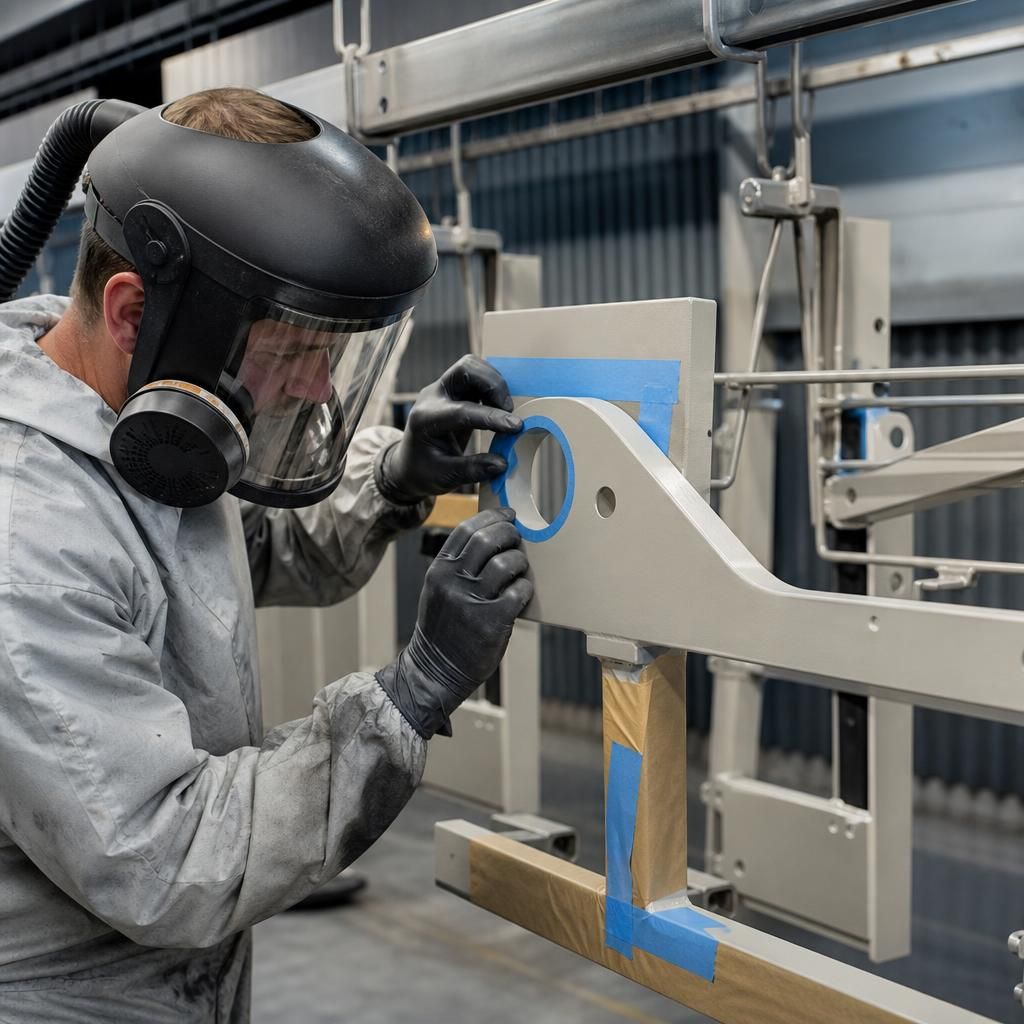
Primer can affect the fit and function of a finished component as well as its corrosion protection. On parts with threaded holes, machined faces, mating surfaces or tight assembly tolerances, the added coating layer may need to be excluded or carefully controlled. These areas should be identified from the engineering drawing or specification before coating begins.
Masking, racking and handling arrangements should then prevent primer from reaching surfaces that must remain bare, while still allowing the required areas to receive continuous protection. This planning helps avoid blocked threads, restricted movement and assembly problems, ensuring that the primer supports the finished product rather than compromising its dimensional accuracy.
Discuss Your Powder Coating Primer Requirements
Discuss your powder coating primer requirements with our team, including the metal substrate, component design, service environment and intended finish. Sharing drawings or coating specifications can help establish a suitable primer system and preparation approach for your parts.