

What pretreatment processes are essential for ensuring a durable and high-quality powder coating finish?
Essential powder coating pretreatment removes oil, grease, rust, mill scale and other contaminants before coating. The process typically combines degreasing and cleaning with abrasive blasting or chemical treatment, followed by thorough rinsing, drying and, where required, an appropriate primer to support adhesion and corrosion resistance.
A durable powder coating depends on a controlled pretreatment system matched to the metal, its condition and the environment in which the finished component will be used. The essential work is not simply removing visible dirt: it must eliminate contaminants, create a suitable surface profile, control corrosion at the substrate and leave the part in a clean, dry and stable condition for coating.
1. Assess the substrate and its condition
Pretreatment should begin with an inspection of the component rather than applying the same process to every part. Mild steel, stainless steel, aluminium, galvanised steel and previously coated metal each present different adhesion and corrosion challenges. The assessment should identify oil, grease, rust, mill scale, weld residues, oxidation, moisture, old coatings and embedded abrasive or process debris.
The condition of the metal also affects the preparation required. Heavy corrosion may need more intensive mechanical preparation, while lightly contaminated new steel may require a different cleaning sequence. Castings and enclosed sections need particular attention because they can retain moisture, release trapped gases during curing or contain residues from manufacturing.
2. Complete fabrication before coating
Welding, drilling, cutting and grinding should normally be finished before pretreatment. Weld spatter, sharp burrs, laminations and rough edges can interfere with coverage and create points where corrosion begins. Weld seams and ground areas may also have a different surface condition from the surrounding metal, so they need to be checked and prepared consistently.
Design details matter as well. Drainage and vent holes can help liquids leave hollow components and reduce the risk of trapped pretreatment chemicals or moisture. Threads, machined faces, electrical contact points and close-tolerance areas may need suitable masking or protection where powder coverage would affect assembly or function.
3. Remove oils and processing residues
Degreasing is a chemical cleaning stage intended to remove cutting fluids, drawing compounds, fingerprints, storage oils and other organic contamination. Abrasive preparation alone is not a reliable substitute for degreasing because oils can spread across the surface, contaminate equipment or become lodged in surface irregularities.
The cleaning method must be compatible with the substrate and the type of contamination. A component that appears clean can still carry a thin film capable of causing fisheyes, craters, poor wetting or localised adhesion failure. Cleaning is therefore judged by the condition of the whole surface, including recesses, welds, corners and internal areas that will receive powder.
4. Use mechanical preparation where the surface requires it
Abrasive blasting can remove rust, mill scale, old coating and firmly attached surface contamination while producing a profile that gives the powder coating a mechanical key. The abrasive, pressure and application method must be selected carefully: insufficient preparation leaves unstable material behind, while excessive treatment can distort thin sections, damage machined surfaces or create an unsuitable profile.
Blasting media must also be clean and appropriate for the metal. Residual abrasive, moisture or oil from the preparation equipment can compromise subsequent stages. On sensitive substrates, a gentler mechanical method may be preferable to aggressive blasting. The correct result is a uniformly prepared surface rather than the deepest possible profile.
5. Apply a suitable chemical conversion treatment
For many metal substrates, a conversion coating improves the interface between the prepared metal and the powder film. It can stabilise the surface, support adhesion and provide additional protection where the coating is damaged or exposed at an edge. The chemistry must be chosen for the substrate; a treatment suitable for steel is not automatically suitable for aluminium or zinc-coated metal.
Process control is important. Concentration, contact time, temperature and rinsing all influence the result. A conversion treatment that is incomplete, excessive or poorly rinsed may leave residues that interfere with adhesion. The treatment should therefore be applied consistently and followed by a clean transition to the drying stage.
6. Rinse thoroughly and dry completely
Rinsing removes spent cleaning agents and treatment residues. Inadequate rinsing can leave salts or chemicals on the surface, which may cause blistering, underfilm corrosion or loss of adhesion. Water quality and drainage from the component are relevant, particularly for folded sections, blind holes and hollow fabrications.
Complete drying is equally important. Powder should not be applied over visible moisture, condensation or retained liquid in joints and cavities. Components should be handled in a way that avoids recontamination after drying, since clean prepared metal can quickly pick up oil from gloves, lifting equipment or unprotected work surfaces.
7. Use primer only where the specification requires it
A primer is not an automatic replacement for proper pretreatment. It is an additional layer selected for a defined purpose, such as improving corrosion protection, supporting adhesion on a difficult substrate or helping protect components exposed to demanding conditions. Its chemistry must be compatible with both the prepared metal and the specified powder topcoat.
Primer coverage, curing requirements and the interval before applying the powder finish need to be controlled. An unsuitable or poorly cured primer can introduce its own defects, including solvent-related porosity, loss of intercoat adhesion or an uneven final appearance.
8. Inspect the prepared surface before powder application
Before coating, the surface should be checked for remaining rust, oil, dust, abrasive residue, water, fingerprints and areas missed during preparation. The inspection should also confirm that masking is correctly positioned and that holes, contact points and functional faces remain suitable for assembly.
Good pretreatment is indicated by a consistent surface condition across the complete component, not merely by a visually clean outer face. If contamination or flash rust appears after preparation, the cause should be addressed before coating rather than concealed beneath the powder.
Why the sequence matters
Each stage supports the next. Cleaning cannot compensate for unstable rust or mill scale; blasting cannot reliably remove oil films; conversion treatment cannot work correctly over residue; and primer cannot correct moisture trapped beneath the coating. The most dependable process combines substrate assessment, fabrication finishing, compatible cleaning and surface preparation, controlled chemical treatment where appropriate, thorough rinsing, complete drying and a final inspection.
For batch or specialist work, the pretreatment specification should be agreed alongside the intended service conditions, appearance requirements, substrate and part geometry. This helps determine whether mechanical preparation, chemical conversion, primer or a combination is appropriate, while avoiding unnecessary treatment that could affect dimensions, threads or other functional surfaces.
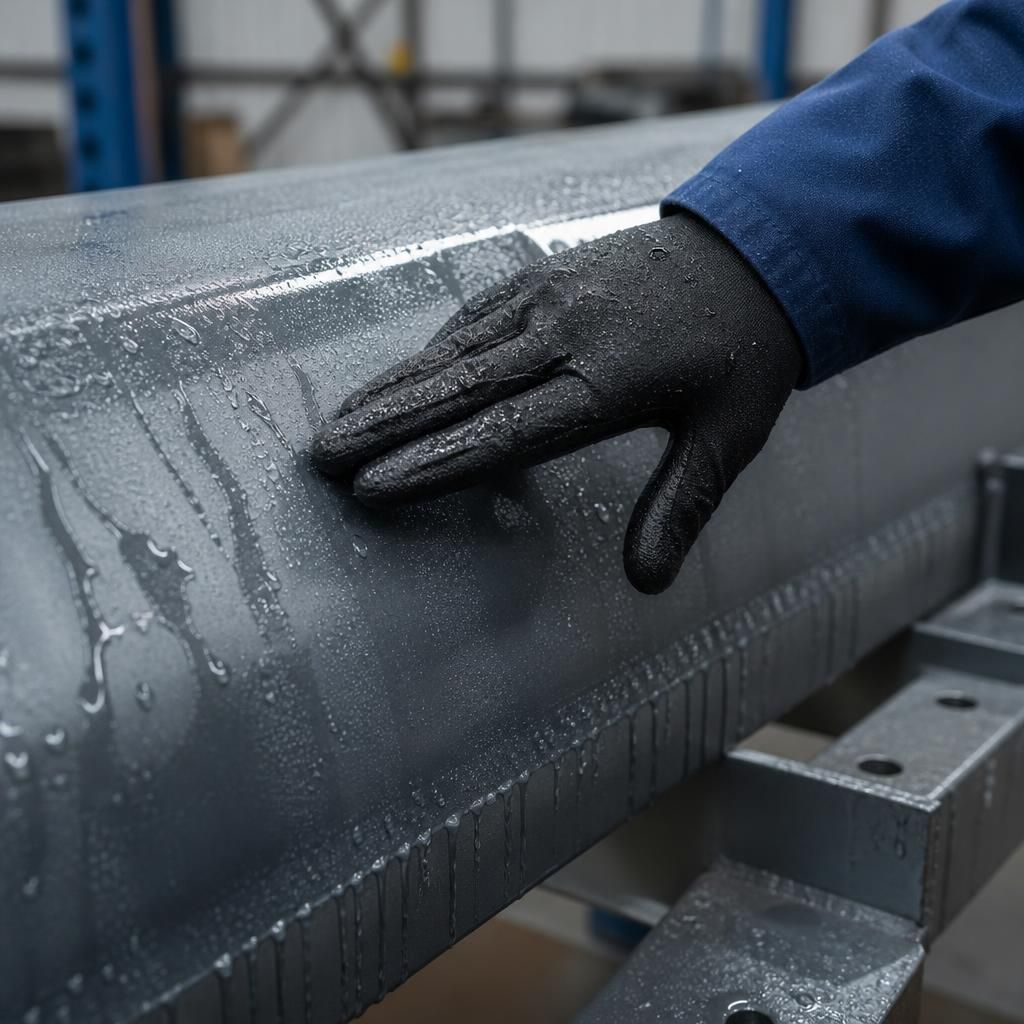
A water-break check is a practical way to assess whether a metal surface has been cleaned effectively before powder coating. After rinsing, water should spread into a continuous film across the prepared area. Beading, breaks or isolated dry patches can indicate remaining oil, grease or other contamination that may interfere with coating adhesion.
This check is useful for identifying localised problems around welds, corners and recessed sections that may appear visually clean. It should support, rather than replace, the agreed cleaning and inspection procedure, particularly where components have complex geometry or demanding corrosion-protection requirements.