

What is the best way to prepare surfaces for powder coating?
The best way to prepare surfaces for powder coating is to remove oil, grease, dirt, rust and existing contamination, then use abrasive blasting or suitable chemical pretreatment to create a clean, slightly profiled surface. The prepared metal should be completely dry and handled carefully before powder is applied, so contaminants do not return and compromise adhesion.
The most reliable surface preparation is a controlled, substrate-specific sequence that leaves the metal chemically clean, mechanically sound and suitable for the chosen powder system. Preparation should also correct physical defects that the coating cannot hide, because powder coating follows the profile of the component rather than filling deep pits, weld spatter, sharp burrs or machining marks.
1. Assess the component before preparation
Begin by identifying the base material and its condition. Mild steel, galvanised steel, aluminium and previously coated components can require different preparation methods. Check for mill scale, corrosion, old paint, oil residues, silicone, adhesive deposits, weld by-products and areas affected by fabrication. The required finish, service environment and powder type should influence the preparation specification.
Inspect the design as well as the surface. Enclosed sections, overlapping joints, drain holes and threaded features can retain water or chemicals. Components should be designed or prepared so that processing fluids can escape and all required surfaces can be reached. If a part has tight tolerances, threaded holes, bearing seats or mating faces, these areas may need suitable masking or protection before coating.
2. Complete fabrication and repair work first
Welding, drilling, grinding and other fabrication should be finished before final preparation. Remove weld spatter, sharp edges, burrs and loose scale, and dress rough welds where the specification requires a smoother appearance. Porous castings and poorly sealed joints may release gas or contamination during curing, which can cause surface defects. These issues should be assessed and addressed before the component enters the coating process.
Edge treatment is particularly important. Very sharp edges can receive a thinner powder deposit and may be more vulnerable to damage. A small, consistent radius or suitable edge break helps the coating cover the profile more evenly. Excessive grinding should be avoided where it could alter dimensions or remove important features.
3. Remove bulk contamination
Loose dirt, swarf, dust and heavy deposits should be removed before wet cleaning or blasting. Oils and greases need a compatible alkaline, solvent-based or other approved cleaning method, selected according to the metal and the contamination. Cleaning is not complete merely because the surface looks bright: a thin invisible film can still interfere with powder adhesion.
Particular attention is needed around welds, recesses, holes and handling points. Any cleaning chemistry must be rinsed or otherwise removed as required by the process. Residues left on the component can cause poor adhesion, staining, blistering or other defects after curing.
4. Select mechanical preparation according to the substrate
Abrasive blasting is often used where the surface needs a more uniform profile or where corrosion, mill scale or an existing coating must be removed. The abrasive, pressure, angle and duration should be selected to clean the surface without embedding media, distorting thin sections or damaging delicate details. The resulting profile should be suitable for the powder system rather than unnecessarily aggressive.
- Steel may require stronger abrasive treatment to remove scale and corrosion products.
- Aluminium and other softer metals need a method that cleans and profiles without excessive erosion or distortion.
- Previously coated parts should be assessed for coating compatibility and the extent to which the old layer can be removed.
- Blasting media must be clean and appropriate; contaminated or unsuitable media can introduce residues that affect the finish.
After blasting, remove dust using a suitable clean-air method or other controlled technique. Avoid touching the prepared surface with bare hands, as skin oils can reintroduce contamination. Blasting is not a substitute for degreasing where oil or grease remains in the substrate.
5. Use chemical pretreatment where appropriate
Chemical pretreatment can improve the condition of the metal and provide an additional foundation for adhesion and corrosion resistance. The sequence may include cleaning, rinsing, conversion treatment and a final rinse, depending on the substrate and the coating specification. The chemicals, concentration, contact time and rinse quality must be controlled; an unsuitable treatment can leave deposits or attack the metal.
Galvanised and zinc-coated components require particular care because the zinc surface differs from bare steel. Aluminium also benefits from a process designed for its oxide layer rather than one intended for ferrous metals. Where the component has a specialist requirement, the pretreatment should be confirmed against the powder manufacturer’s technical guidance and the intended service conditions.
6. Dry the component thoroughly
Moisture must not remain in seams, cavities, threaded holes or folds. Trapped water or pretreatment residue can produce staining, pinholes, blistering or adhesion problems during curing. Drying should therefore include inspection of concealed areas, not just the visible faces. Components should be protected from new condensation and airborne contamination after drying.
Steel can also develop light corrosion if it remains exposed after cleaning, particularly in damp conditions. The interval between final preparation and powder application should be controlled so the surface does not deteriorate before coating. If corrosion or contamination reappears, the affected area should be re-prepared rather than coated over.
7. Inspect before powder application
Final inspection should confirm that the surface is free from visible oil, dust, loose material, corrosion and cleaning residue. Check the component under suitable lighting and examine welds, edges, recesses and masked areas. Where the specification requires it, assess the surface profile and cleanliness using the appropriate inspection method.
Do not rely on the powder layer to conceal preparation defects. Powder can cover minor visual variation, but it will not reliably correct deep corrosion, pinholes, embedded contamination, poor weld finishing or unsuitable geometry. Any defect found at this stage is generally easier and less costly to correct than a defect discovered after curing.
8. Handle and mask the prepared metal correctly
Use clean gloves and suitable handling equipment once the final preparation has been completed. Contact points should be planned so they do not contaminate visible faces or prevent the powder from reaching required areas. Mask threads, electrical contact points, machined faces and other areas that must remain uncoated, using materials that withstand the curing process.
For industrial components, the best preparation specification is therefore a documented process rather than a single cleaning operation. It should identify the substrate, contamination, preparation method, pretreatment, drying requirements, masking points and inspection criteria. Applying that sequence consistently gives the powder a sound surface on which to form an even, durable finish.
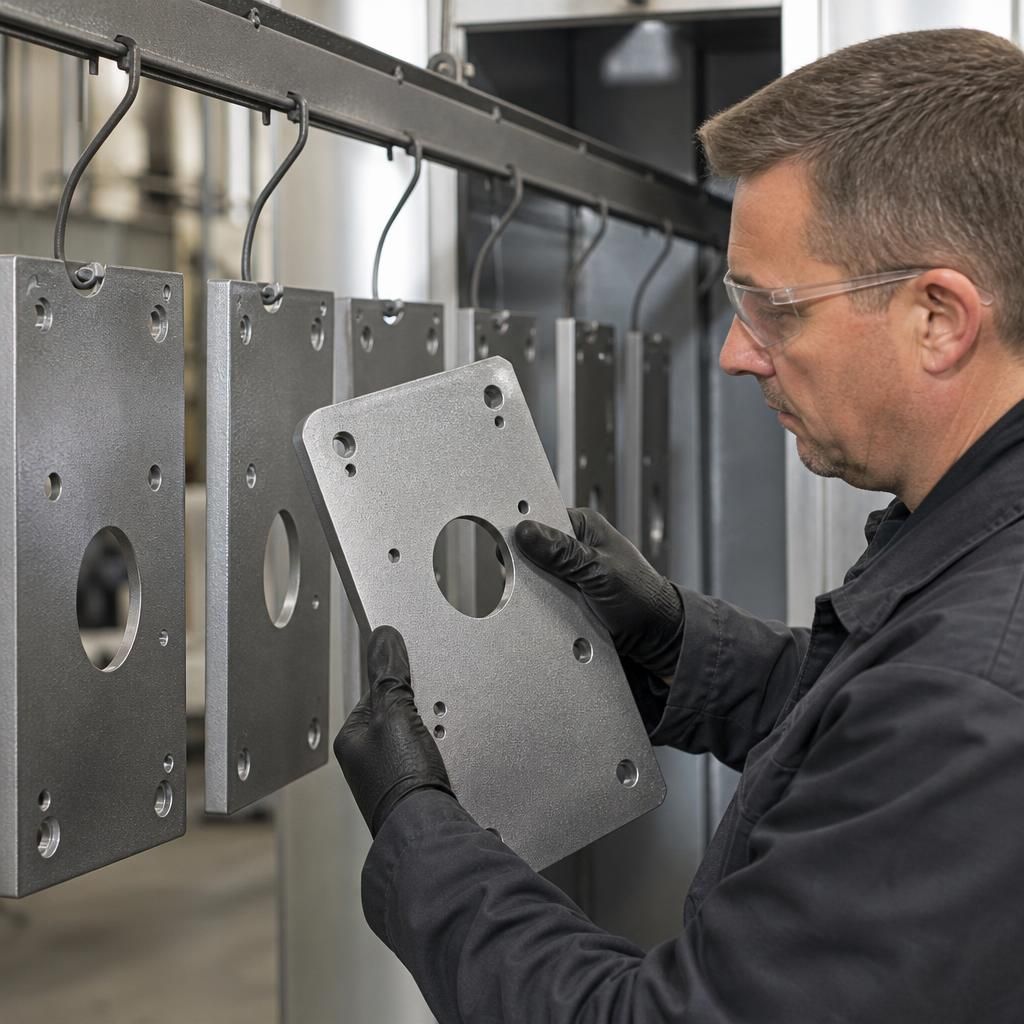
For unfamiliar substrates, mixed-metal assemblies or a new powder specification, preparation should be validated before the full batch is processed. A representative sample or test piece can be cleaned, prepared and coated using the proposed sequence, allowing the finish, coverage and adhesion to be assessed under the intended process conditions.
This is particularly useful where the component includes repaired areas, different surface treatments or features that may respond differently to preparation. Validation can identify an unsuitable cleaning method, pretreatment or coating combination before it affects a larger production run. The agreed method should then be recorded as part of the coating specification, including any areas that require separate preparation or protection.
Discuss the best way to prepare surfaces for powder coating
If you are unsure which preparation sequence suits your components, discuss the substrate, contamination and finish requirements with the powder-coating.co.uk team before processing a full batch. This can help establish a suitable preparation specification for review.