

What are the benefits of using nylon powder coating for metal components?
Nylon powder coating gives metal components a tough, durable finish with strong impact and abrasion resistance, helping protect surfaces exposed to handling, wear and corrosion. Its naturally low-friction surface can also reduce sliding resistance, making it useful for components that need both physical protection and smoother contact.
Nylon powder coating is a thermoplastic finish applied to prepared metal components and heated until the powder forms a continuous protective layer. Its main benefits are electrical insulation, resistance to many chemicals, a smooth non-metallic surface, flexibility and the ability to provide a relatively substantial coating without solvent-based application.
Key benefits for metal components include:
- Electrical insulation: Nylon is non-conductive, so it can help isolate a metal component from electrical contact. This makes it relevant to housings, brackets, guards and other parts where a non-metallic surface is required. The coating system must be selected to suit the component’s voltage, temperature and operating conditions.
- Chemical resistance: Nylon can withstand contact with many oils, greases, cleaning agents and industrial chemicals. The exact resistance depends on the nylon grade, coating thickness, temperature, exposure time and concentration of the substance, so compatibility should be checked before specifying it for an aggressive environment.
- Flexibility: Compared with some harder, more brittle finishes, a suitable nylon coating can accommodate limited flexing and deformation without cracking or flaking. This is useful for components that are handled, clamped or subject to minor movement during service.
- Noise and vibration reduction: The polymer layer can separate contacting metal surfaces and dampen some transmitted noise or vibration. This can be useful on guards, trays, brackets, frames and components used near moving machinery.
- Electrical and thermal separation: As a polymer coating, nylon creates a barrier between the metal substrate and adjacent parts. It can therefore help prevent direct metal-to-metal contact, although it should not be treated as a substitute for a separately engineered insulation system where safety-critical performance is required.
- Consistent, smooth coverage: Nylon can produce an even finish over suitably prepared surfaces, including profiles and edges that would be difficult to protect with a simple adhesive film. The required thickness and edge coverage should be agreed during specification, particularly where parts have holes, threads, sharp corners or close-fitting interfaces.
- Solvent-free application: Powder coating does not require the liquid solvents used in conventional wet-paint systems. This can simplify the coating process and avoid solvent evaporation during application, while the powder still needs to be handled and cured using suitable industrial controls.
- Colour and identification options: Nylon coatings can be supplied in different colours and finishes. Colour may help distinguish components, identify operating zones or improve visual uniformity across a batch, provided the selected coating meets the technical requirements of the application.
The final performance depends on more than the nylon powder itself. Components need to be free from oil, grease, rust, mill scale and other contaminants before coating. Appropriate preparation promotes adhesion and helps prevent defects such as pinholes, lifting or uneven coverage. The metal type, component geometry and intended service conditions should also be reviewed before application.
Design tolerances are particularly important. Nylon adds a measurable coating layer, so the specification should account for holes, threads, bearing seats, mating faces and other areas where a change in dimension could affect assembly. Areas that must remain electrically conductive or dimensionally unchanged may need masking or an alternative finish.
Nylon is not suitable for every operating environment. Continuous high temperatures, strong solvents, prolonged ultraviolet exposure or chemicals outside the coating’s resistance range may require a different powder formulation or coating system. A coating specialist can assess the substrate, preparation requirements, service environment and required finish before recommending the appropriate nylon system for a component or production batch.
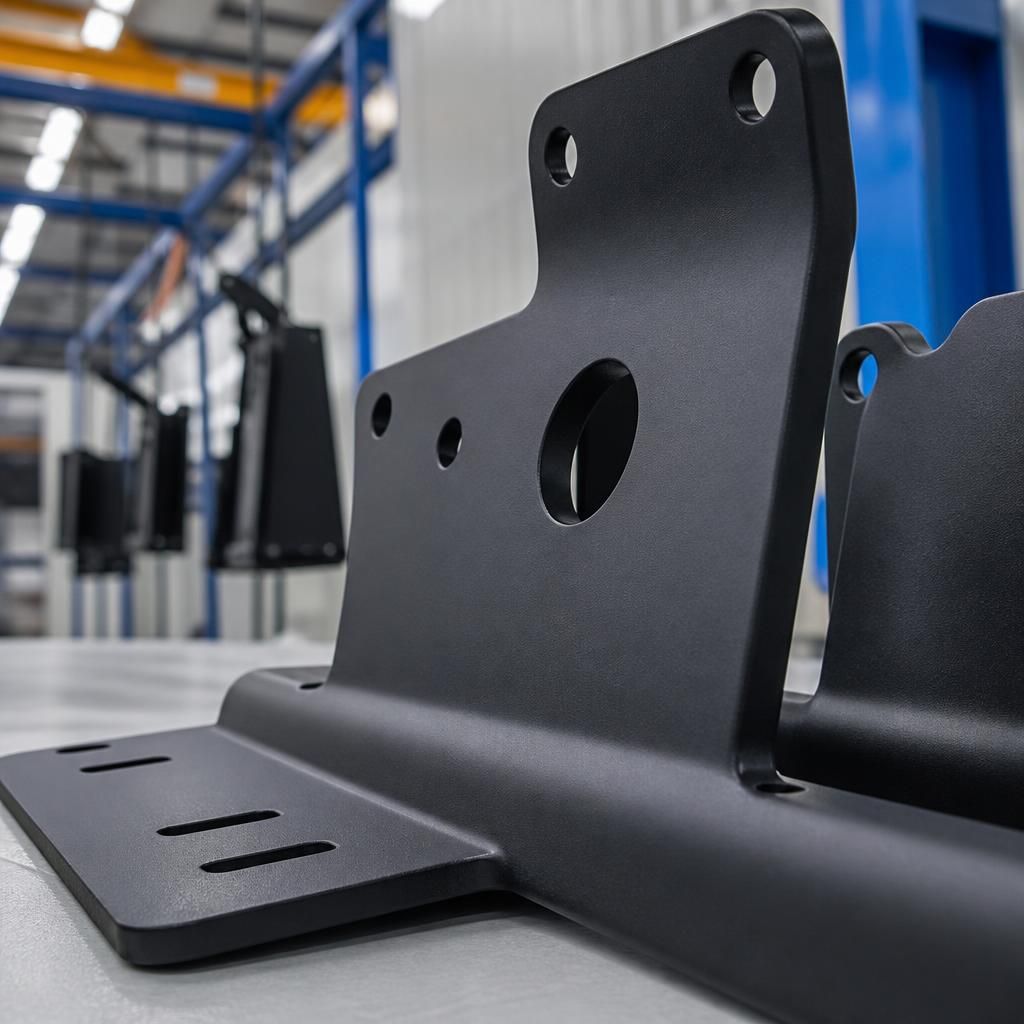
A key benefit of nylon powder coating is that it gives a metal component a functional polymer surface while retaining the strength of the metal beneath. This can be useful where the component must withstand regular contact with other parts but should not present a bare metallic interface. The nylon layer can help separate mating surfaces and provide a more forgiving contact surface for items such as guards, brackets, trays and formed components. Its suitability still depends on the required coating thickness, geometry and operating conditions, so clearances and contact areas should be considered before specification.