

How does stainless steel shot blasting media compare to other media in terms of environmental impact?
Stainless steel shot generally has a lower environmental impact over repeated blasting cycles than expendable mineral, glass or slag media because it is durable, reusable and recyclable, producing less spent abrasive waste. Its manufacture requires more energy than some single-use alternatives, so the environmental advantage depends on recovery, cleaning and reuse within an efficient blasting process.
Stainless steel shot blasting media has a lower environmental impact when its long service life, controlled recovery and reduced risk of surface contamination are considered across the whole blasting process. Its initial manufacture can be resource- and energy-intensive, so the environmental result depends on the complete system: media selection, blast pressure, recovery equipment, cleaning, storage, transport and disposal.
Comparison with expendable mineral and slag media
Mineral abrasives such as aluminium oxide, garnet and some slag-based products are commonly used for aggressive surface preparation. They can provide a useful cutting action, but are normally consumed more rapidly and become mixed with removed coatings, rust and substrate material. This creates a larger stream of spent abrasive requiring controlled handling.
Stainless steel shot takes a different approach. It is intended for repeated circulation through a blast machine, provided the equipment can recover, clean and classify the shot effectively. The environmental benefit is therefore strongest in well-managed production systems where the media is not unnecessarily lost with dust or overspray. A poorly adjusted recovery system can reduce this advantage, regardless of the media selected.
Comparison with glass bead
Glass bead is a non-metallic option often selected where a smoother or less aggressive finish is required. It can be appropriate for certain components, but it gradually breaks down during use. The resulting fine particles increase dust loading and eventually form part of the spent abrasive stream. Stainless steel shot generally produces a different waste profile because it remains as a recoverable metallic media rather than being progressively pulverised in the same way.
Glass bead may still have a lower-impact role where its surface effect avoids excessive removal of metal or prevents a component from being over-processed. Choosing a more durable medium is not automatically better if it is too aggressive for the substrate and causes unnecessary material removal.
Comparison with carbon steel shot
Carbon steel shot is also designed for repeated use, so the environmental comparison is more balanced than it is with single-use abrasives. The key distinction is the risk of ferrous transfer. Residual carbon steel particles can become embedded in stainless steel, aluminium or other sensitive surfaces and may contribute to staining or corrosion-related defects. Stainless steel shot is often preferable where avoiding this contamination prevents additional cleaning, rework or rejected components.
For ordinary carbon steel parts, the environmental difference may be less pronounced. In that situation, the correct choice depends on the required surface profile, equipment efficiency, media consumption and the consequences of any contamination. The least impactful option is usually the one that achieves the specification without repeat processing.
Dust, air quality and waste handling
Media selection affects the composition and quantity of dust captured by extraction and filtration equipment. Fine mineral or glass particles can place greater demands on dust collection, while removed paint, rust and other residues must be assessed separately from the unused abrasive. Stainless steel shot does not eliminate dust: the coating being removed and the condition of the metal still determine much of the airborne waste.
Waste should be segregated where practical. Mixing recoverable metallic shot with spent coating residues, sweeping waste or other abrasives makes recovery more difficult and can complicate disposal. Suitable extraction, sealed transfer points and regular housekeeping help prevent media loss and limit the spread of contaminated dust.
Energy and process efficiency
The environmental assessment should include the electricity used by blast turbines, compressed-air systems, extraction fans, separators and conveyors. Stainless steel shot can support an efficient process when its size distribution is maintained and the machine is correctly adjusted. Worn or incorrectly sized media can require longer blasting, increase energy use and produce an inconsistent surface.
Recovery equipment should separate usable shot from fines and removed coating material. Regular checks of separators, filters and reclaim systems help maintain this distinction. Over-cleaning, excessive air flow or poor adjustment can carry usable media into the waste stream, while insufficient cleaning can return contaminants to the workpiece.
Transport and lifecycle considerations
Transport is another part of the comparison. A dense metallic medium may require careful planning for delivery and internal movement, whereas lightweight expendable abrasives can occupy more packaging volume for an equivalent production requirement. The relevant assessment is based on the actual quantity consumed, not simply the weight of one delivery.
When selecting a medium, compare the full lifecycle rather than focusing only on whether the material is natural, recycled or recyclable. Consider its manufacturing impact, expected consumption, dust characteristics, recovery rate, cleaning requirements, disposal route and effect on the subsequent coating process.
Practical selection for powder coating preparation
- Use stainless steel shot where repeated processing, clean recovery and low risk of ferrous transfer are important.
- Use a mineral or glass medium where the required surface texture or cutting action cannot be achieved appropriately with shot.
- Match shot size and blasting intensity to the component so that unnecessary metal removal and repeat treatment are avoided.
- Keep abrasive streams separate when different materials are used, particularly where cross-contamination could affect coating quality.
- Record media additions, waste collections and recovery-system checks so that avoidable losses can be identified.
For industrial powder coating preparation, stainless steel shot is environmentally advantageous when the process is designed around recovery and controlled use. It is not automatically the best choice for every component: substrate sensitivity, required profile, coating residue, equipment design and the available waste route all need to be assessed together.
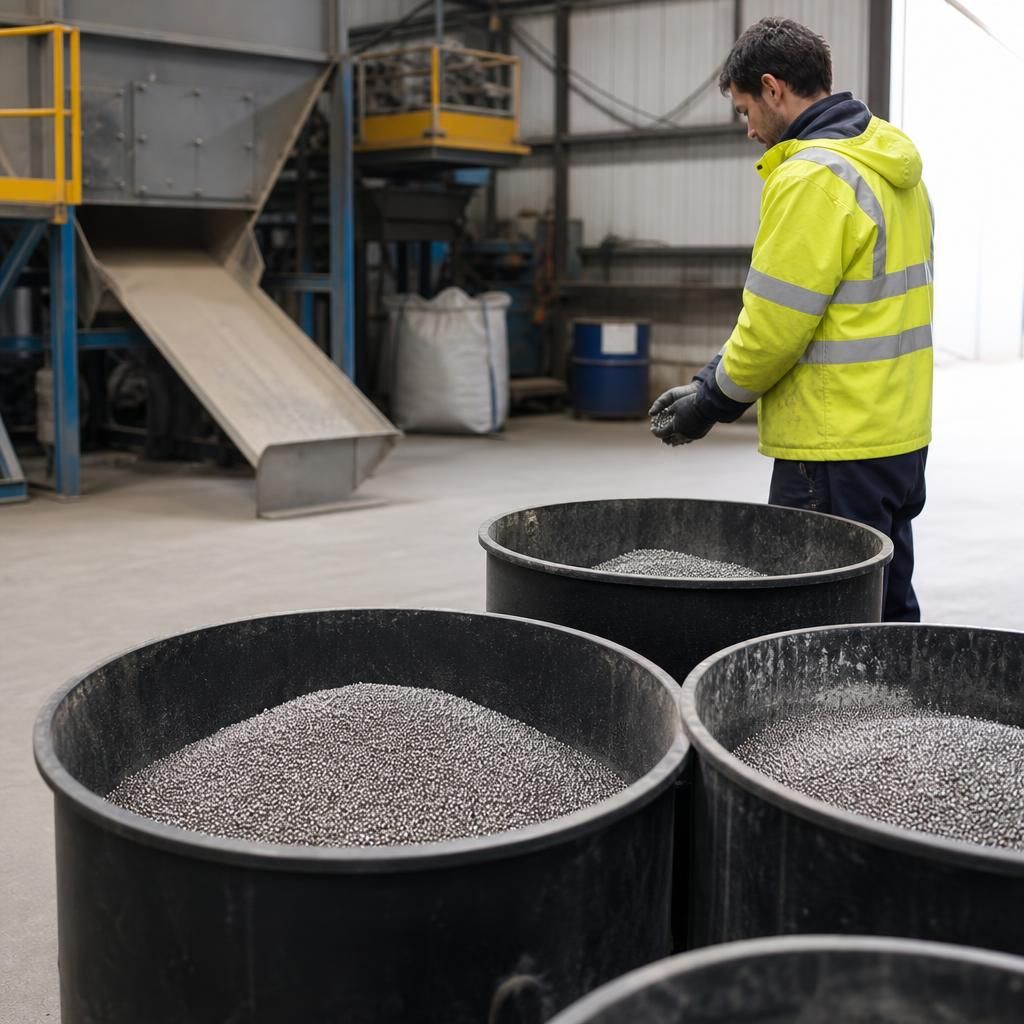
At the end of its usable life, stainless steel shot may still have a recovery route as a metallic material, but its environmental benefit depends on how it is managed. Shot kept separate from paint residues, rust, dust and other abrasive types is easier to assess and send for appropriate recycling. Once mixed with contaminated blast waste, its material value is reduced and disposal requirements may become more complex.
For this reason, an environmental comparison should consider both in-process reuse and end-of-life segregation. Clear collection arrangements, separate waste containers and records of media disposal help determine whether stainless steel shot is being recovered effectively rather than lost in general blasting waste.
Assess Stainless Steel Shot Blasting Media for Your Process
Discuss your components and surface-preparation requirements with the Powder-coatings.co.uk team to assess whether stainless steel shot is suitable for your process. Collection and delivery options are available for businesses across the Midlands and surrounding areas.