

What safety precautions should be taken when using shot blasting sand and media?
Safe use of shot blasting sand and media requires a documented risk assessment, trained operators, suitable respiratory and protective equipment, enclosed blasting equipment, effective ventilation and controlled access to the work area. Inspect equipment and media before use, handle and store abrasives safely, and dispose of used material in accordance with applicable waste requirements.
Safe use of shot blasting sand and media depends on controlling respirable dust, pressure-related hazards, noise, flying particles and contaminated residues throughout the blasting process. The material’s safety data sheet, the blasting system’s operating instructions and the site’s control procedures should be followed together, because different abrasives create different health and handling risks.
Identify the hazards of the chosen abrasive. Some mineral sands contain respirable crystalline silica, which can cause serious lung disease when fine dust is inhaled. Do not assume that a material sold as “sand” is safe for blasting. Check its composition, particle size, classification and safety data sheet before it is introduced into the process. Where the application permits, select a lower-dust or non-silica abrasive. Media containing heavy metals, coatings or other hazardous substances may create additional risks after use, particularly when blasting painted or plated components.
Apply the relevant workplace controls. In the UK, substances that may cause harm should be assessed under the Control of Substances Hazardous to Health Regulations (COSHH). This includes the abrasive itself and any dust or residue produced when it removes paint, scale, rust, oil or plating. The control method should cover loading, blasting, clearing blockages, cleaning the equipment and dealing with used media, rather than focusing only on the moment when blasting is taking place.
Control compressed-air and hose hazards. Abrasive blasting systems operate at substantial pressure. Operators should use the correct nozzle, couplings, hoses and pressure settings for the equipment, and should never improvise repairs or connect incompatible components. Whip checks or equivalent hose restraints can help limit movement if a connection fails. A properly functioning dead-man control should stop abrasive flow when the operator releases the control; the nozzle must never be left pointing towards another person, even when it appears inactive.
Compressed air should not be used to blow dust from clothing, skin, machinery or floors. This can drive particles into the air and create an avoidable inhalation or eye hazard. Use the site’s approved vacuum or wet-cleaning method instead. Before disconnecting or opening any part of a pressurised system, isolate the supply and release stored pressure in accordance with the equipment manufacturer’s procedure.
Manage noise and visibility. Blasting can produce damaging noise from the nozzle, compressor, workpiece and rebound of the abrasive. A noise assessment may indicate the need for hearing protection, restricted exposure and health surveillance under the Control of Noise at Work Regulations. Do not rely on shouting or hand signals where the operator cannot see other workers clearly; use agreed signals or communication equipment suitable for the environment.
Lighting should allow the operator to see the workpiece, nozzle position and any obstructions without opening the enclosure or creating unnecessary exposure. A build-up of dust on viewing panels, lights or camera lenses can impair visibility, so cleaning should be carried out using a controlled method that does not disperse the settled material.
Prevent unauthorised entry and accidental start-up. Interlocked doors, access controls and warning indicators should be used where provided. The blasting cycle should not start if a door, hatch or access panel is open. Anyone entering an enclosure for maintenance or cleaning should follow isolation and lock-off procedures, including isolation of compressed air, electrical power and any automatic abrasive feed. Only the person carrying out the work, or another authorised person under a controlled procedure, should remove a lock or isolation device.
Keep the work area orderly. Spilled abrasive can create a slip hazard and may damage bearings, electrical equipment or other machinery if it is allowed to migrate. Keep walkways, emergency exits, controls and access points clear. Remove settled residue using the approved collection method rather than sweeping it dry. Do not allow used media or removed coating fragments to accumulate where they can be disturbed by vehicles, foot traffic or air movement.
Use safe loading and unloading practices. Abrasive bags, drums and bulk containers can be heavy or awkward to move. Use suitable lifting equipment and team-handling procedures where necessary, and avoid cutting containers in a way that releases dust or causes the contents to fall unexpectedly. Keep media dry when the equipment requires dry abrasive, but prevent damp material from entering systems where it could cause blockages, corrosion or irregular pressure. Never reach into a hopper, reclaim system or blast cabinet while moving parts or stored pressure remain present.
Check the component as well as the media. Blasting can dislodge sharp scale, brittle coatings and embedded contamination. Components should be secured so they cannot shift, rotate or fall when struck by the abrasive. Fragile sections, threaded areas, machined faces and openings may require masking or a different blasting approach. Confirm that the workpiece is suitable for the selected pressure and abrasive, particularly where distortion, surface damage or retained abrasive could affect a later coating process.
Plan for emergencies. Operators should know how to stop the blast system, isolate energy sources, summon assistance and report an exposure or injury. Eye or skin contamination should be dealt with promptly using the site’s emergency arrangements, and suspected inhalation of hazardous dust should be reported rather than dismissed as ordinary nuisance dust. First-aid provisions, eyewash facilities and emergency contact details should be accessible without requiring someone to enter the blasting zone.
Finally, record the abrasive used, the material removed and any abnormal event such as a hose failure, loss of containment or unexpected dust release. This information helps determine whether the existing controls remain suitable and whether the used media requires a different waste classification. A safe process is therefore not just a matter of wearing protective equipment: it combines correct abrasive selection, controlled equipment operation, energy isolation, dust management, noise control and traceable handling of contaminated residues.
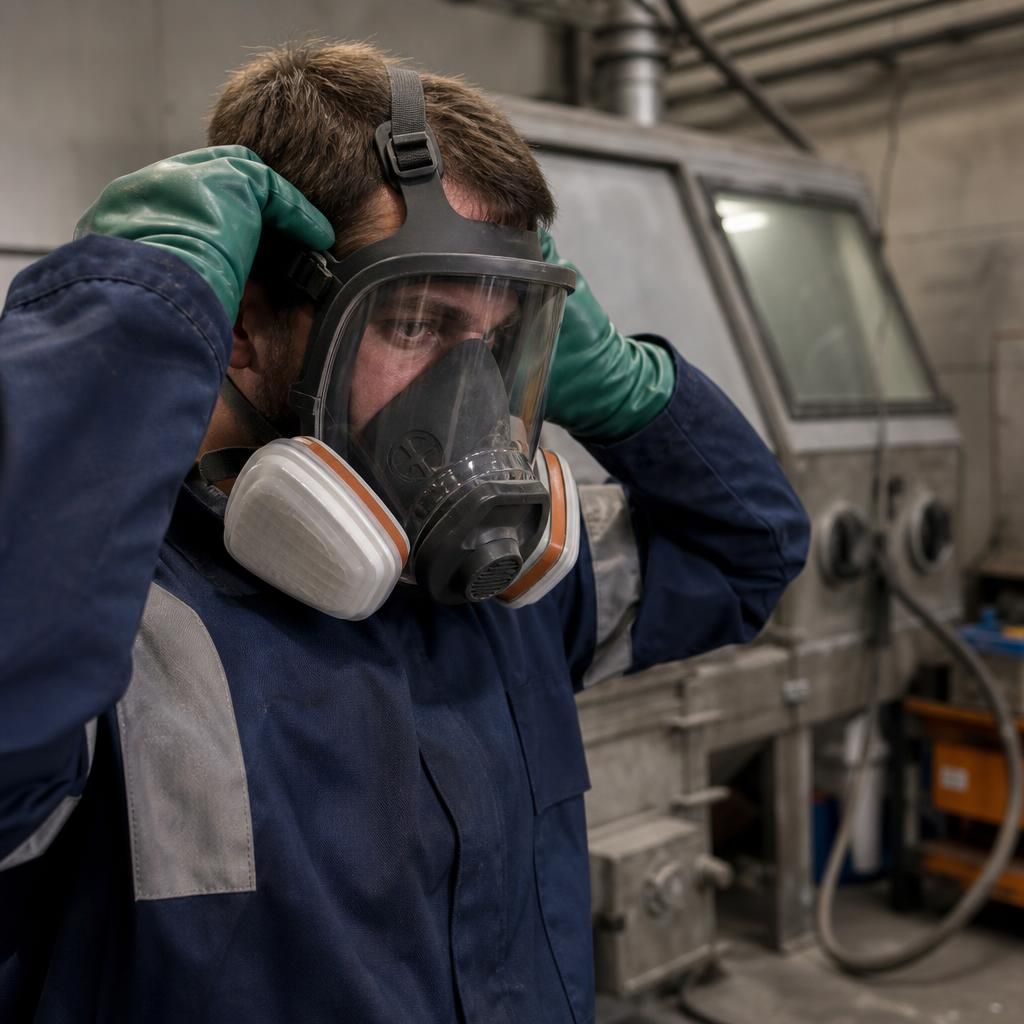
Respiratory protective equipment (RPE) must be selected for the specific dust and residue created by the blasting process, rather than chosen by appearance alone. A risk assessment should establish whether the selected equipment provides suitable protection against respirable silica, metal residues, paint dust or other contaminants. Tight-fitting masks and respirators require a suitable face-fit test for the individual wearer; facial hair, glasses or other obstructions within the sealing area can prevent an effective fit.
RPE should be stored clean and dry, inspected before use and maintained in line with the manufacturer’s instructions. Filters and disposable components must be replaced when damaged, contaminated or due for replacement under the site’s control procedure. Respiratory protection supplements enclosure, extraction and dust-control measures; it should not be used as the only safeguard against airborne blasting dust.
Discuss your shot blasting safety requirements
Contact powder-coatings.co.uk to discuss the shot blasting media, component condition and safety controls relevant to your project. Providing details of the material being removed and the required surface finish will help establish suitable handling requirements.