

What are the specific advantages of using shot blasting before powder coating?
Shot blasting before powder coating removes rust, mill scale, old coatings and other contaminants while creating a clean, textured surface for the powder to bond to. This improves coating adhesion and finish consistency, helping reduce defects such as flaking, blistering and premature corrosion.
Shot blasting offers advantages beyond removing visible contamination and creating a surface profile. It provides a controlled mechanical preparation method that can improve process reliability, reduce manual preparation, reveal substrate issues and help establish a more predictable foundation for powder coating.
- Removes tightly bonded surface material: Mechanical impact can dislodge scale, corrosion products, weld residue and remnants of previous finishes that may be difficult to remove by hand. This helps expose the actual condition of the metal before the coating process begins.
- Reduces reliance on chemical preparation: Where the component and coating specification are suitable, shot blasting can reduce the need for aggressive chemical cleaners or stripping treatments. This may simplify handling and avoid leaving residues that could interfere with subsequent processing.
- Produces repeatable preparation: Blasting parameters such as abrasive type, pressure, nozzle distance, angle and exposure time can be controlled. Compared with inconsistent hand preparation, this gives the finishing process a more standardised starting point across batches.
- Helps identify manufacturing defects: Once loose material and surface deposits have been removed, issues such as pits, weld irregularities, sharp edges, inclusions or areas requiring repair are easier to inspect. These problems can then be addressed before powder is applied, rather than being concealed beneath the finished coating.
- Can reduce preparation labour and rework: For suitable components, blasting can treat substantial areas more efficiently than manual abrasion. A properly specified process can therefore reduce the amount of hand preparation required and help limit avoidable rework caused by missed surface contamination or uneven preparation.
- Supports demanding industrial applications: A properly prepared substrate is important where coated parts will face handling, abrasion, outdoor exposure, moisture or industrial use. Shot blasting forms part of a preparation system designed to help the complete coating specification perform as intended; it is not a substitute for selecting the correct powder and application process.
- Can preserve component detail when correctly controlled: Appropriate equipment and settings can prepare complex metalwork without the broad, uncontrolled abrasion that may result from unsuitable grinding methods. This is particularly relevant where edges, profiles, holes or mating surfaces must remain within specification.
- May reduce chemical waste: In suitable applications, using a mechanical preparation method can reduce dependence on liquid stripping agents and the associated handling and disposal requirements. Abrasive recovery and disposal still need to be managed correctly, particularly where the removed coating or substrate may contain hazardous material.
The advantages depend on matching the blasting process to the component. Abrasive selection, impact energy and exposure time must reflect the base metal, its thickness, geometry and condition. Excessive blasting can roughen delicate surfaces, alter edges, distort thin sections or embed abrasive particles, while insufficient treatment may leave firmly attached material in place.
Preparation should therefore be followed by appropriate inspection before powder coating. The component should be checked for remaining residues, defects, unacceptable roughness and areas that were not adequately reached. Any required masking, repair or additional preparation should be completed before coating so that the final specification is based on the actual condition of the metal.
For manufacturers and fabricators, the main practical benefit is greater control over the preparation stage. Shot blasting does not guarantee a particular coating result on its own, but when its settings, abrasive and inspection requirements are properly defined, it can make the overall powder coating process more consistent, easier to assess and better suited to repeat production.
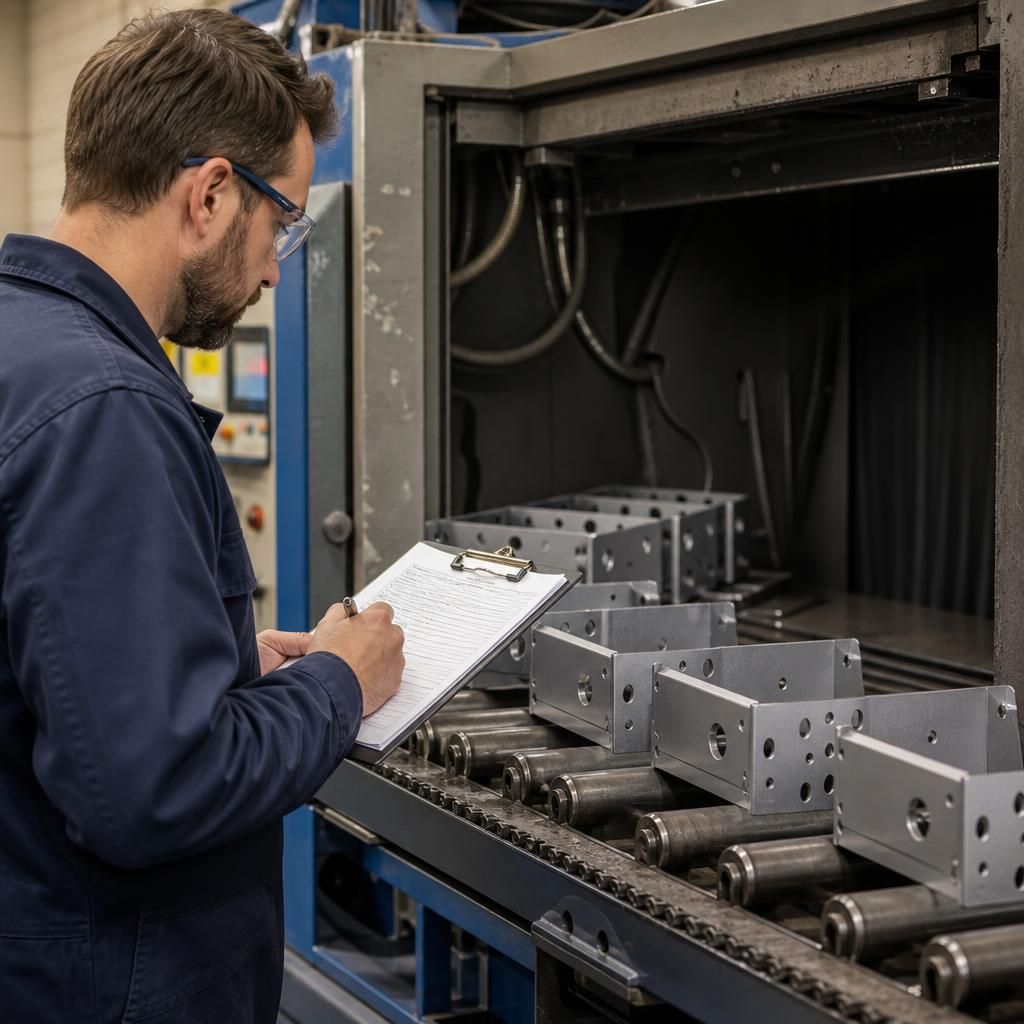
Another advantage of shot blasting is that it makes coating problems easier to diagnose. When the preparation method is controlled and documented, the powder coating process begins from a more consistent baseline. If a defect appears, such as local loss of finish or uneven coverage, the investigation can distinguish between preparation, application and curing issues rather than treating every failure as a general surface problem.
This is particularly useful for repeat production. A defined blasting specification can be checked alongside powder application and curing records, helping manufacturers identify whether a problem is isolated to certain components, areas of a part or a particular stage of processing. Shot blasting therefore supports not only surface preparation, but also more effective quality control across a coating programme.
Discuss shot blasting before powder coating
If you are assessing whether shot blasting is suitable for your components, discuss the substrate, geometry, existing condition and powder coating requirements with the team. They can help identify an appropriate preparation approach for your specification.