

What are the critical considerations for ensuring optimal surface preparation before powder coating?
Optimal surface preparation before powder coating requires the metal to be clean, dry and free from oil, grease, rust, mill scale and other contaminants. The preparation method should suit the substrate and coating requirements, while surface profile, masking of areas that must remain uncoated, and prompt application after preparation should be controlled to support consistent adhesion and finish quality.
Optimal surface preparation before powder coating is a controlled sequence of inspection, preparation, treatment and handling that gives the coating a stable base. The key considerations are the metal type and condition, the component’s design, the required coating system, pretreatment compatibility, environmental control, curing requirements and the acceptance standard agreed before work begins.
Inspect the components before selecting a preparation process. Examine the substrate for existing paint, plating, galvanising, weld residue, oxidation, pitting, sharp edges, burrs and embedded debris. Components that look similar may require different preparation because aluminium, galvanised steel, mild steel and previously coated metal do not respond in the same way. The inspection should also identify damage that coating will not conceal, such as deep corrosion, dents or uneven welds.
Consider the component’s design. Hollow sections, box assemblies, threaded holes, folded returns and overlapping joints can retain preparation chemicals or moisture. Drainage and vent holes may be needed where appropriate, particularly on enclosed fabrications. Long, narrow or complex parts also need suitable support during preparation and coating to prevent distortion, contact marks or difficulty reaching recessed areas. Edges should be reviewed because very sharp corners can result in thinner coverage and may need suitable rounding or edge treatment.
Manage welds and fabrication residues. Weld spatter, slag, anti-spatter products and grinding dust can interfere with coating adhesion and appearance. Welds should be continuous and suitably finished where the specification requires a uniform appearance. Silicone-based products and some marking materials are especially problematic because small residues can cause craters, fisheyes or areas of poor coverage. Fabricators should identify any products used during manufacture so that the preparation process can account for them.
Match chemical pretreatment to the substrate and end use. Chemical conversion treatments can improve the bond between the metal and powder coating, but the chemistry must be compatible with the substrate and the required service conditions. A process suitable for steel may not be appropriate for aluminium or galvanised material. Rinsing quality, bath control and complete drying are important because retained chemicals or rinse water can lead to staining, blistering or loss of adhesion beneath the finished film.
Control difficult substrates carefully. Galvanised steel may require treatment that accounts for the zinc surface, while aluminium can be affected by unsuitable abrasion or aggressive chemistry. Previously coated components need assessment to determine whether the old coating can be removed and whether residues remain. Castings and porous materials may release trapped air or process oils during heating, causing pinholes or bubbles. Where outgassing is a risk, the preparation and coating plan may need additional cleaning, preheating or the use of a suitable coating approach.
Protect prepared surfaces during handling. Once preparation is complete, parts should be handled with clean equipment and suitable gloves where necessary. Contact with bare hands, dirty racks, workshop dust or unprotected storage surfaces can reintroduce contamination. Prepared components should be kept separate from unprepared work, with appropriate packaging or support used to prevent abrasion and contact damage before coating.
Control the working environment. Temperature, humidity, airborne dust and condensation can affect the condition of prepared metal. The part should not be coated when moisture is likely to form on its surface, and prepared components should be allowed to reach a suitable temperature before coating. Cleanliness around the preparation and application areas is also important, since dust or fibres can become embedded in the powder film and spoil the finish.
Define masking and contact requirements in advance. Areas such as threads, bearing seats, electrical contact points, drain holes and precision-machined faces may need to remain free from powder. Masking materials must tolerate the coating process and be fitted consistently. Rack contact points should be planned so that the component is held securely while limiting visible marks and maintaining an effective electrical path during powder application.
Coordinate preparation with the coating specification. The required finish, colour, gloss, film thickness, edge coverage and corrosion resistance should be established before work starts. A decorative indoor finish may have different preparation requirements from a coating intended for outdoor exposure, industrial equipment or automotive components. The specification should also state which areas are acceptable for rack marks, how concealed surfaces are treated and what visual defects are unacceptable.
Control the transition from preparation to curing. Preparation is only one part of the process. The powder must be applied at the specified film thickness and cured according to the powder manufacturer’s requirements, taking the actual metal temperature into account rather than relying only on oven air temperature. Incorrect curing can leave the film under-cured, over-cured or inconsistent, even where the prepared surface was suitable.
Use inspection and documentation to maintain consistency. For repeat or batch work, preparation controls should be recorded alongside substrate details, pretreatment, masking arrangements and coating requirements. Inspection may include visual checks, coating-thickness measurements, adhesion testing and cure verification where required by the specification. Test pieces or a first-off inspection can be useful for unusual components, new substrates or finishes where appearance is particularly important.
For manufacturers and fabricators, providing accurate drawings, material details, weld information, masking points and service conditions helps the coating provider choose an appropriate preparation route. A Midlands powder coating specialist handling industrial batches can then assess the parts before processing and identify design or preparation issues that might otherwise affect the finished coating.
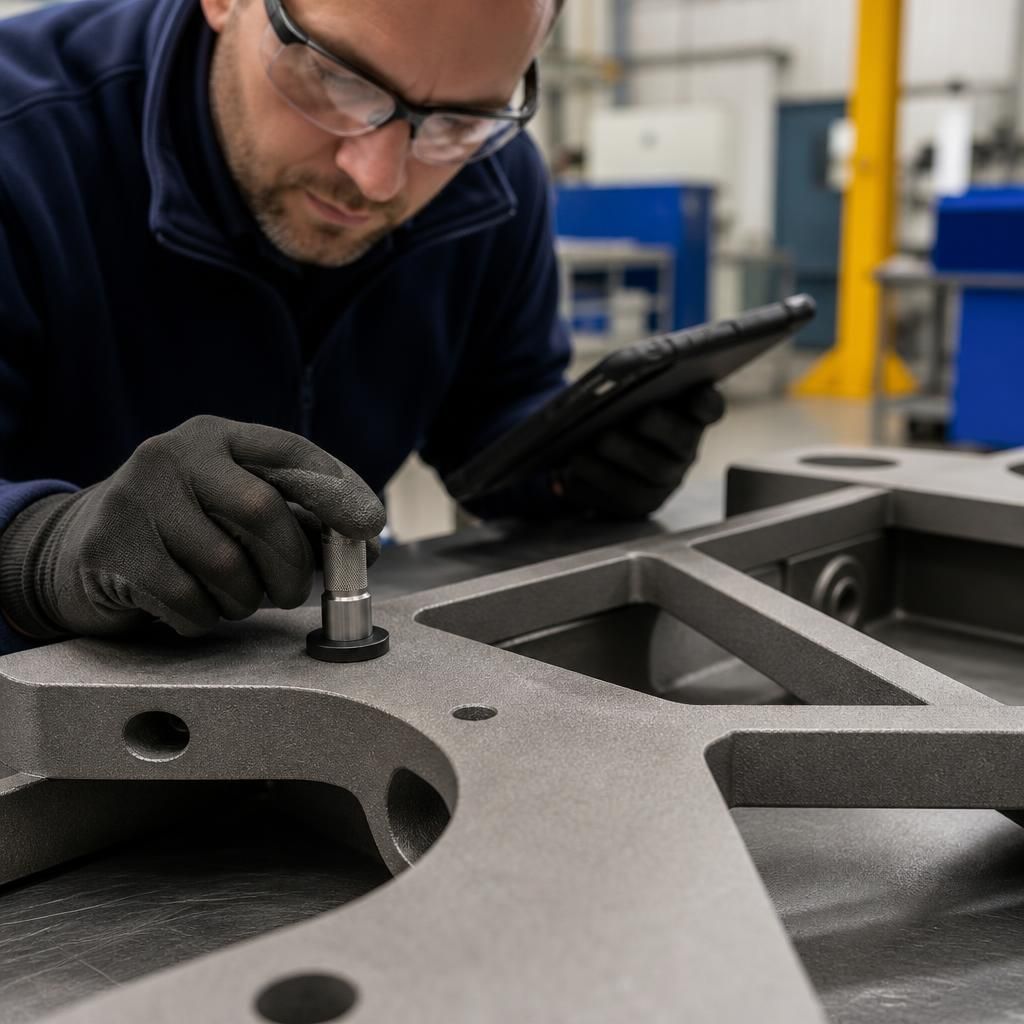
Surface profile is a critical part of preparation because it affects how securely the powder coating can key to the metal. A surface that is too smooth may provide insufficient mechanical adhesion, while an excessively rough profile can leave peaks with reduced film coverage and a coarse appearance. The profile should therefore be suitable for the metal, coating system and required film thickness rather than being made as rough as possible.
After blasting or abrasive preparation, the surface should be checked for remaining dust, loose particles and abrasive residue. These contaminants can become trapped beneath the powder film or interfere with the finish. Profile and cleanliness checks should be carried out consistently across repeat batches, with any areas that do not meet the agreed preparation standard reprocessed before coating.