

How does the choice of shot blasting media impact the efficiency and cost-effectiveness of powder coating processes?
The choice of shot blasting media affects powder coating efficiency by determining how quickly contaminants are removed, how consistently the required surface profile is produced and how much preparation is needed before coating. The correct media can reduce rework, abrasive consumption, equipment wear and application costs, while an unsuitable choice may damage the substrate, create an inconsistent finish or require additional processing.
Shot blasting media affects powder coating efficiency and cost-effectiveness by influencing the complete preparation cycle, from loading and blasting through to inspection, cleaning and coating. The most economical option is not necessarily the media with the lowest purchase price; it is the one that produces the required preparation result with predictable operating costs, suitable production rates and minimal disruption to subsequent stages.
Media choice and production throughput
Different abrasives transfer energy to the workpiece in different ways. Steel shot is commonly used where a controlled impact is required on robust steel components, while sharper grit can provide a more aggressive cutting action. Softer or less aggressive media may be appropriate for lighter preparation or substrates that could be marked by heavier impacts. Selecting a medium that matches the component prevents the blasting operation from becoming unnecessarily slow or requiring repeated passes.
Throughput also depends on the geometry of the parts. Complex fabrications, recessed areas and welded assemblies may need a media and blasting method that can reach the relevant surfaces without excessive manual handling. If operators must change settings, reposition components repeatedly or carry out extensive manual preparation, labour becomes a significant part of the total process cost. A practical assessment therefore considers the shape, size, batch quantity and handling requirements of the parts, rather than evaluating the abrasive in isolation.
Consumable and operating costs
The purchase cost of an abrasive is only one element of its economic impact. A useful comparison should include:
- the quantity of media required for the planned workload;
- how often the blast system needs replenishing or cleaning;
- the energy required to accelerate and recover the abrasive;
- dust extraction and waste-handling requirements;
- labour involved in loading, blasting, inspection and preparation; and
- the cost of maintaining equipment and replacing worn components.
Media durability and recyclability can materially affect the cost per component. Some abrasives can be recovered and reused through suitable blasting equipment, whereas others break down more quickly and generate additional fines. Breakdown can affect visibility in the cabinet or booth, filtration demand and the consistency of the blasting environment. The relevant measure is the cost of achieving an acceptable prepared surface, not simply the cost per bag, drum or delivery.
Effect on downstream powder coating
Powder coating relies on a clean, suitably prepared substrate. The blasting stage must therefore be assessed alongside the rest of the coating process. Residual dust, embedded abrasive, corrosion products or contamination can interfere with handling and coating application. They may also increase inspection requirements before powder is applied. Media that is chemically unsuitable, contaminated or poorly maintained can introduce unwanted material to the surface, making cleaning and process control more demanding.
Surface texture also has an economic dimension. A profile that is too pronounced may increase powder usage on some components or make it harder to obtain an even appearance on edges and recessed areas. A profile that is too slight may not provide the intended key for the coating system. The correct target should be established from the substrate, component specification and coating requirements, then checked using an appropriate inspection method. This avoids selecting an abrasive solely because it produces a visibly rough surface.
Equipment efficiency and maintenance
Media characteristics affect the operating conditions of blast pots, cabinets, wheels, nozzles, hoses, recovery systems and extraction equipment. Hard, angular abrasives can be effective for demanding preparation but may impose greater wear on components that are not designed for them. Conversely, a media that is too mild for the application may encourage longer blasting cycles and more handling. Both situations can increase the cost of production.
Maintaining the abrasive mix is also important. As particles fracture or become rounded, their cutting or impact behaviour changes. A stable operating process requires appropriate separation of fines, removal of unsuitable material and controlled replenishment. Monitoring pressure, abrasive flow, recovery performance and equipment condition helps identify whether a cost problem originates with the selected media or with the way the system is being operated.
How to compare options before production
A controlled trial is generally more informative than relying on the initial purchase price or a general claim about media performance. The trial should use representative components and record the preparation time, media consumption, handling effort, cleaning requirements and inspection results. It should also confirm that the prepared surface is compatible with the intended powder coating system.
A useful evaluation sequence is:
- Define the substrate, existing condition, required surface profile and acceptable visual finish.
- Identify media types that are compatible with the material and blasting equipment.
- Run a representative test using consistent pressure, nozzle or wheel settings and operator instructions.
- Record process time, replenishment needs, waste, cleaning effort and any equipment issues.
- Inspect the prepared surface and follow it through the coating process where practical.
- Compare the total cost per acceptable coated component rather than the abrasive price alone.
For batch work, the preferred option may be the media that provides the most stable result across successive loads. For one-off or varied work, flexibility and compatibility with different component types may carry more weight than maximum blasting speed. The best choice can therefore differ between a fabricator handling mixed jobs and a manufacturer running repeatable production batches.
In practice, cost-effectiveness comes from matching media aggressiveness, particle shape, durability and recovery characteristics to the component and the required powder coating specification. A documented trial, consistent equipment settings and routine checks provide a sound basis for selecting media that supports efficient preparation without adding avoidable costs elsewhere in the coating process.
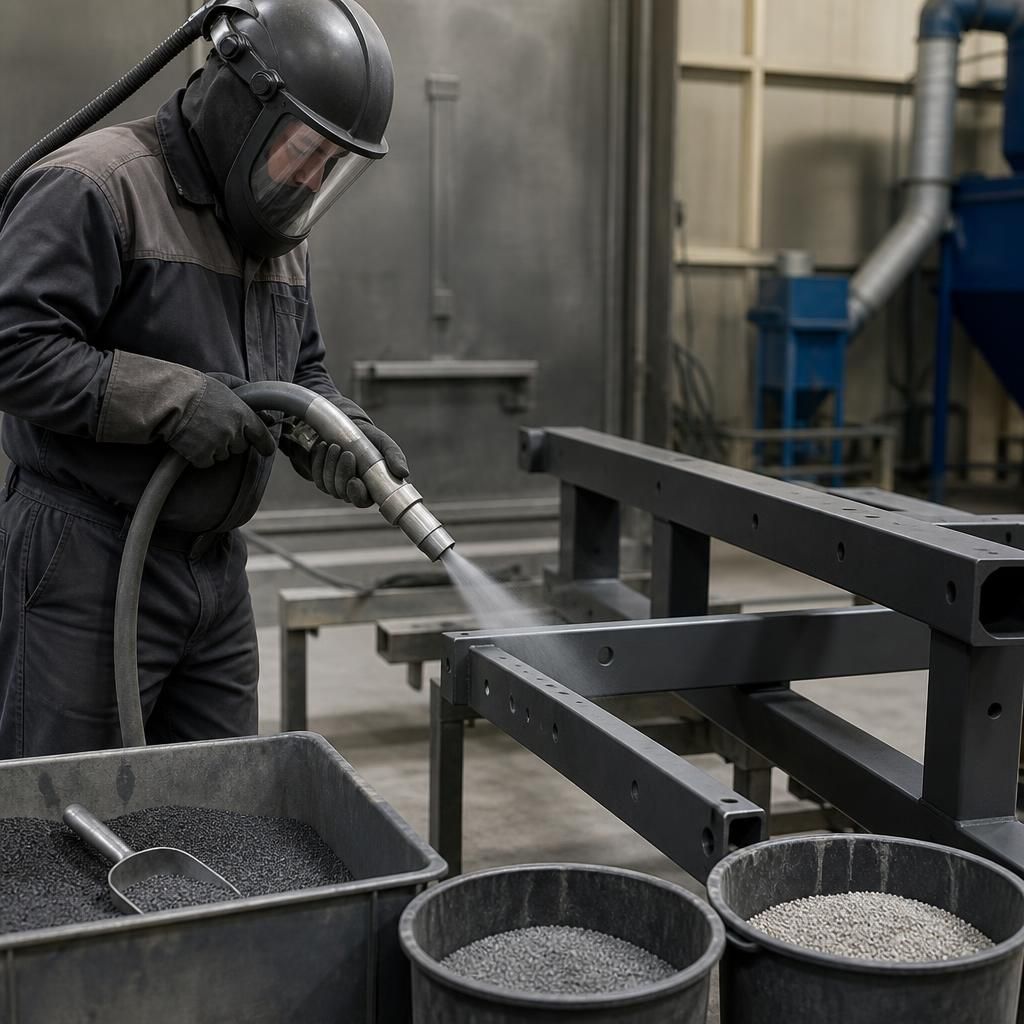
Consistency between abrasive batches is an important but often overlooked cost factor. Media with a controlled particle-size range produces more predictable impact and cutting behaviour, allowing blasting settings to remain stable as new material is introduced. If the size distribution varies significantly, operators may need to adjust pressure, flow or exposure time to achieve the same preparation result, increasing process variation and inspection effort.
For repeat powder coating work, record the media specification and monitor changes in surface preparation when replenishing the system. Keeping unsuitable fines and foreign material out of the working mix helps maintain consistent operation and makes production costs easier to forecast. This is particularly relevant where multiple batches of similar components must meet the same coating specification.