

Why is shot blasting essential for achieving optimal powder coating results?
Shot blasting is essential before powder coating because it removes rust, mill scale, old coatings and other contaminants while creating a suitable surface profile. This gives the powder coating a cleaner, more receptive base, supporting consistent adhesion, finish quality and long-term protection of the metal component.
Shot blasting is essential for optimal powder coating results because it creates a controlled, repeatable starting condition for the entire coating process. Powder coating cannot compensate for unstable substrate conditions, uneven preparation or damage introduced during handling, so the blasting stage has a direct influence on coating consistency, service life and the risk of rework.
It reduces variation between components. In a batch of fabricated parts, surfaces may differ because of welding, forming, storage, previous handling or exposure to the environment. If these differences are left unmanaged, the powder coating may behave differently from one area to another. A properly selected shot blasting process brings the surfaces into a more consistent condition, helping the coater apply and cure the powder against a more predictable substrate.
It exposes defects that would otherwise remain hidden. Blasting can reveal weld spatter, sharp edges, pinholes, laminations, tooling marks and other fabrication issues before powder is applied. This matters because powder coating is not a substitute for fabrication quality. A defect that is visible before coating can be assessed and corrected; once covered, it may become more difficult to identify and can affect the appearance or performance of the finished component.
It prepares complex geometries more effectively than simple manual treatment. Metal components often include welds, recesses, brackets, profiles and difficult-to-reach faces. The blasting method must be selected and controlled so that these areas receive appropriate treatment without excessive attack on edges, thin sections or precision features. This is particularly important for fabricated assemblies, where inconsistent preparation can produce differences between exposed faces, joints and partially shielded areas.
The process also has to account for the metal itself. Steel, galvanised surfaces, aluminium and other substrates do not respond identically to the same abrasive, pressure or blast angle. Excessive treatment can alter dimensions, round edges or create an unnecessarily coarse surface, while insufficient treatment may leave areas unsuitable for the next stage. Appropriate media, equipment settings and part presentation therefore form part of the coating specification rather than being interchangeable production details.
Surface condition after blasting must be protected. Once a component has been prepared, contact with bare hands, dirty supports, moisture or workshop contamination can compromise the work already completed. Parts should be inspected, handled with suitable precautions and transferred into coating without avoidable delay or exposure. Where a prepared surface develops visible corrosion or contamination, coating over it can conceal the issue rather than resolve it.
Inspection is an important reason why shot blasting should be treated as a defined process rather than a purely cosmetic operation. Checks may include:
- confirming that the specified areas have been treated;
- examining welds, edges, recesses and joints for missed or damaged areas;
- checking that the surface is free from visible residue and loose material;
- assessing the surface profile against the requirements of the coating system;
- verifying that dimensions, threads, mating faces and masking points remain suitable for assembly.
The relationship between blasting and powder application is also critical. Powder is electrically charged and sprayed onto the prepared component before being cured in an oven. Problems in the substrate may affect how evenly the powder is deposited, while unsuitable residues or an inconsistent surface can contribute to defects such as uneven coverage, pinholing, poor edge definition or localised coating breakdown. Curing can develop the powder’s properties, but it cannot correct an incorrectly prepared substrate or remove material trapped beneath the coating.
Good preparation is especially important where components will experience handling, outdoor exposure, moisture, chemicals, abrasion or repeated changes in temperature. A coating system is only as reliable as its weakest interface or untreated area. If preparation varies across a component, deterioration can begin at those vulnerable points and may spread beyond the original defect. Shot blasting therefore supports the protective function of the complete system, not simply its initial appearance.
The method should be agreed with the intended powder coating system and the component’s specification. Useful information for the coater includes the metal type, component thickness, fabricated or cast construction, critical dimensions, areas requiring masking, previous surface treatment and the expected operating environment. Parts with delicate features or tight tolerances may require a more controlled approach than robust structural items.
For manufacturers and fabricators, the practical benefit is greater process control: fewer variables are carried into powder application, inspection decisions can be made before coating, and unsuitable parts are less likely to proceed through an expensive downstream process. A specialist powder coating provider can review the component design and preparation requirements as part of the work, particularly where batch consistency or specialist protective performance is important.
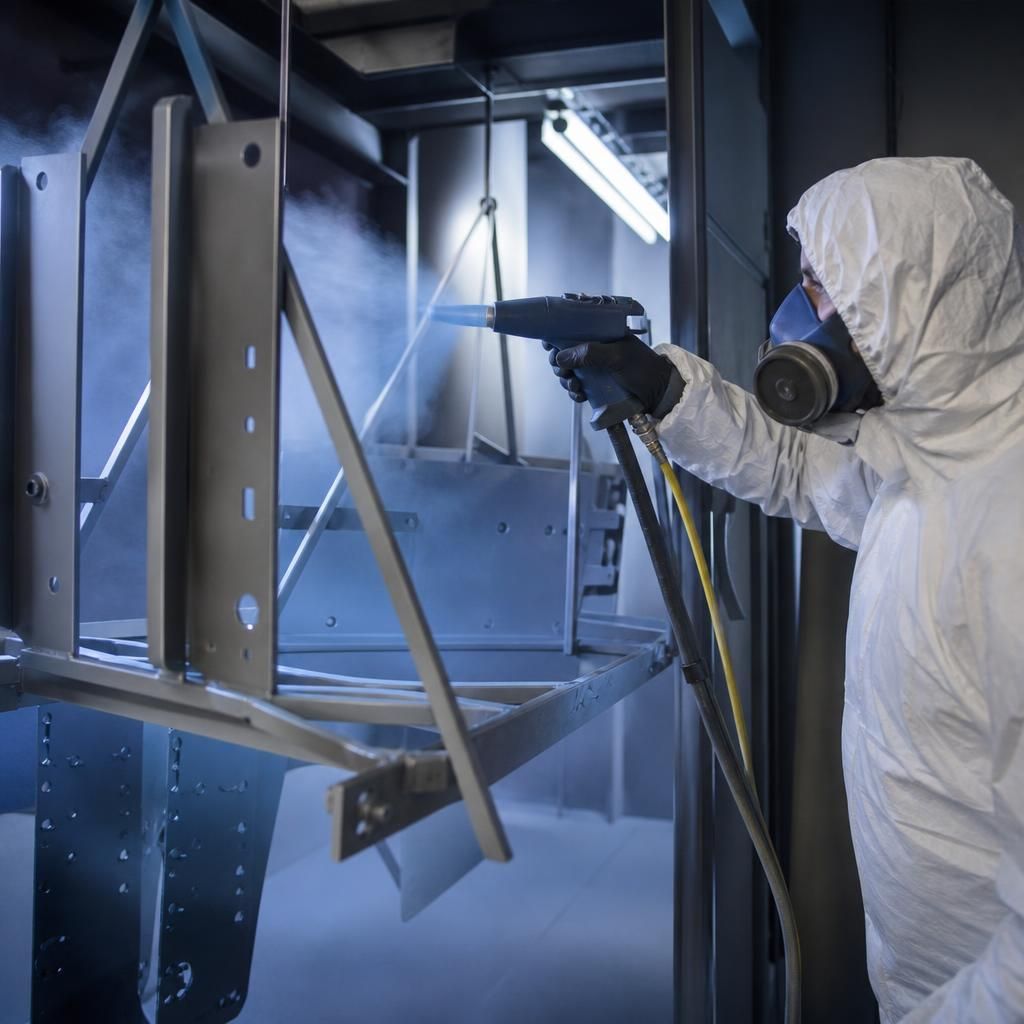
Shot blasting can also support the electrostatic application of powder by removing insulating oxide layers, residual coatings and loose surface material from the metal. The component must still be correctly grounded during spraying, but a clean, exposed substrate gives the charged powder a more consistent surface to cover. This is particularly relevant to fabricated parts with welds, joints and mixed surface conditions, where differences in electrical continuity or residual material can contribute to uneven powder deposition. Blasting is therefore an important part of preparing the component for both the physical and electrical requirements of the coating process.
Discuss Your Shot Blasting and Powder Coating Requirements
Discuss your component specification with the powder-coating.co.uk team to establish suitable shot blasting and powder coating requirements. Include details such as the metal type, dimensions, critical tolerances and intended operating environment.